
Office Administrative Skills Course
KNOWLEDGE MANAGEMENT COURSE
“I wish we knew what we know” - Lew Platt, Chairman Hewlett-Packard
Knowledge management is based on the idea that an organization’s most valuable resource is the knowledge of its people. Therefore, the extent to which an organization performs well, will depend, among other things, on how effectively its people can create new knowledge, share knowledge around the organization, and use that knowledge to best effect.
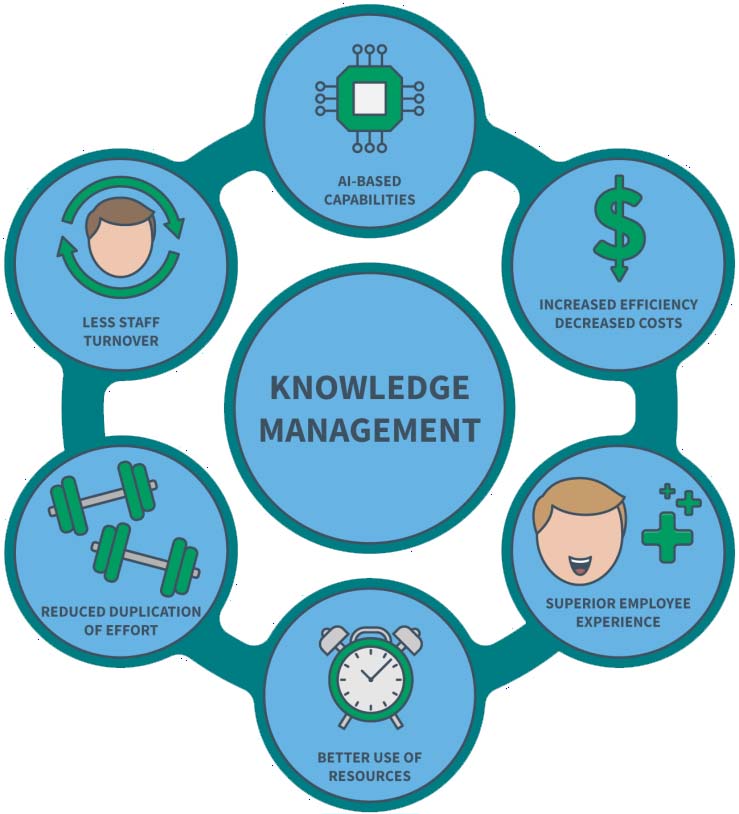
Day-by-day, the boundaries of innovation for any organization are shifting… Companies that used to organize Research & Development (R&D) internally are now relying more and more on corporate partnering and external sources…Companies are thus opening their doors to reach out for new ideas and knowledge that complement their own. What can bear the prized fruit is a continuous effort!
While Innovation and invention are critical capabilities for companies today, but how good a job do most companies do in exploiting the intellectual assets they have already created? By effectively managing the knowledge environment, companies can rely on the existing corporate memory and tap onto the corporate collective wisdom. "An idea is nothing neither more nor less than a new combination of old elements." This is the backbone of creativity, as expressed by Jack Foster in the book "How to Get Ideas." Mixing up old ideas, i.e., existing knowledge (best practices, lessons learned, tips, tricks, and traps) to breed/produce new ideas and knowledge requires companies to look, listen, remain curious, and be bold.
Knowledge-Based Innovation and Transformation involves combining and integrating high-level strategic thinking and futures thinking along with other improved decision-making skills. This is essential in order to anticipate, encourage, and take advantage of innovation. Operating from these trinity perspectives of Knowledge (KM) Strategy, Innovation, and Transformation promotes fast learning, flexibility, responsiveness, and robustness against the unexpected. The fruit is the organization that is agile that promotes an ongoing and never-ending positive customer experience management!
COURSE OBJECTIVES
- Effectively Managing the Organization’s Knowledge Environment
- Harnessing & Reusing the Corporate Collective Wisdom
- Promoting Ideation based on Corporate Knowledge
- Managing Ideas Program – Towards Gaining New Knowledge and/or
- Ideas Achieving Organizational Excellence via KM and Business Intelligence
TARGET AUDIENCE
- General Management Personnel
- Corporate Human Resources Team& Champions
- Corporate Knowledge Management Team& Champions
- Corporate Biz Analytics & Biz Intelligence Management Team
- Corporate Innovation Management Team& Champions
- Corporate Quality Management Team& Champions
- Corporate Learning, Education & Training Management Team& Champions
- Business Managers – Sales, Marketing & Biz Development Team With Champions
WHAT DO THE PARTICIPANTS STAND TO GAIN?
- Participants can get on to hands-on Innovation & KM Program Management
- Participants can Promote Innovation & KM Program Management via Change & Culture Perspectives
- Participants can gain Practitioner Insights to Business – People – Process – Technology Perspectives of how to effectively manage the knowledge environment and promote Ideation
- Participants Can Learn To Achieve Business Excellence via KM
COURSE CONTENT
1. Effectively Managing the Organization’s Knowledge Environment
- Explicit, Embedded and Tacit Knowledge: SECI (Socialization – Externalization – Combination – Internalization)
- Data – Info’ – Knowledge – Intelligence – Wisdom Perspectives
- Enterprise Document – Content – Information – Portal – Dashboard Perspectives
- Employee – Expert – Community – Collaboration – Knowledge Connectivity
- Enabling KM by Organization Culture & Change Management
2. Harnessing & Reusing the Corporate Collective Wisdom – Audit / Map / Gap
- Communities of Interest – Communities of Practice (Practitioners) – Centers of Competency – Centers of Excellence – Centers of Services
- Business Strategy Audit – Knowledge Needs Audit – KM Readiness Audit – Knowledge Audit – Knowledge Maps & Gaps – Tools – Techniques – Standards
3. Harnessing & Reusing the Corporate Collective Wisdom – Change Management
- KM Program Management: Organization-wide KM – Roles & Responsibilities, Critical Success Factors & Key Result Areas
- KM Case Studies & Classroom Break Out Presentations
4. Harnessing & Reusing the Corporate Collective Wisdom – Maturity & Returns
- KPO – Business Research / Analytics / Intelligence, Intellectual Capital Management, Intellectual Property Rights, Copy Rights / Patent Management
- Knowledge Management Maturity Models (KMMM)
- KM Measures & Metrics – RoI, RoKI (Return on Knowledge Invested) and VoI
5. Promoting Ideation based on Corporate Knowledge – KM Performance Management
- Education, Training, Learning, Knowledge & Innovation Continuum
- Knowledge-Based Innovation Lifecycle: Create – Capture – Organize – Access – Use/Reuse – Ideate
- Gartner’s Innovation Scorecard – Participants’ Introspection & Retrospection: Strategic Management – Human Capital Management – Knowledge Management – Innovation Management – IC Lifecycle Management
- Case Study Walk-Through WRT Innovation Lifecycle
6. Managing KM &Ideation Programs – Effective Execution of Deep Dive Initiatives
- Suggestions – Tips, Tricks & Traps; Kaizen – Continuous Improvement – Best Practices and Lessons Learned; Innovation – Next Practices and Radical Invention
- Project Knowledge Enlivenment; Project After Action Reviews; Project Knowledge Harvesting
- Effective Brainstorming, Creative & Lateral Thinking Alternatives to promote ideation
7. Managing Ideas Program – Towards gaining new knowledge and/or ideas
- Innovation – How to promote Ideation Programs within Corporate and Large Organizations? – Video
- Creative Thinking Using Six Thinking Hats – Participant Exercise
8. Achieving Organizational Excellence via KM and Business Intelligence
- Top 10 KM &Innovation Myths
- Top 5 KM &Innovation Barriers
- Knowledge Based Innovation Stories – Corporate Case Studies – Participants’ Introspection & Retrospection: – Infosys / Canon / Nokia / Xerox / Procter & Gamble – GE – Google – Lokus Design – Microsoft – MindTree
9. KM Methodology - Full Life Cycle
- Business (Basis BSC - Balanced Scorecard)
- Operations (Basis Dashboard & Scorecards)
- Delivery (Basis VoC - Voice of Customer)
- Process (Basis TQM / CMMi / Six Sigma / Lean)
- Technology (Basis Enterprise Biz Intelligence & BPM - Business Performance Management)
- APQC Road Map: Get Started
- Develop Integrated Strategy
- Launch Value Chain KM Pilots - Integrate, Expand & Support - Institutionalize
10. Managing KM Initiatives – Planning and Management
- Biz Case - Budget - Governance
- Organizational - People - Process - Purpose - Technology Perspectives
- Planning for Pervasive (Personal - Process - Project - Program - Partner Perspective) KM SKIPs’ (Strategic Knowledge Initiatives for Performance)
- Managing KM Pilots & Scaling Up Across Organization - Nuances for the First 90 Days Plan - Sustenance Plan to Manage the Knowledge Environment
11. KM Performance Management
- Exhibiting Performance Oriented Knowledge Management: Managing & Developing Teams - Forming / Storming / Norming / Performing, Vision - Mission - Strategic Objectives - Goals - KPI - KRI - Plan / Do / Check / Act
- Traversing Towards KM Effectiveness Outcomes: Motivation, Mentoring & Coaching
12. Change Management with KM
- 5 R's & 5 C's Model - Why It's Important?
- Key Questions To Address - Ideas On How To Do It! - Suggested Steps For Action
- Change Management Index
- Change Leader Road Map - Leading Change & Transformation Management via/for Knowledge Management! - Best Practices
13. KM Program Audit & Returns
- KM Audit Tools, Techniques, Standards
- Strategy Audit - Eliciting Knowledge Needs
- Content/Knowledge/Artifacts Audit - Evaluation of As-Is Existing Knowledge Assets
- Knowledge Gap Audit
- Knowledge Map Audit: Strategic - Expertise - Tacit - Competency - Learning Needs - Technical - Functional - Document - Job/Role Maps
14. KM RoI & Metrics
- Benchmarks - Tangible & Intangible Returns - Gartner Perspective on VoI (Value of Investment) & RoKI (Return on Knowledge Investments)
- People - Process - Technology Metrics: Artifacts / Contribution Based & Knowledge Reuse Metrics
- KM Program Metrics Framework: CoI - CoP - CoE Metrics; Business Impact - Soft Vs Hard Dollar Gain Measures Via KM SKIPs
- Next Practices & Transformation Metrics - Fail Fast & Future Forward Perspective KM RoI
WORKSHOP DURATION
ONLINE:The duration of the training program will be 10 days - 2 Hours per day
ONSITE:The duration of the training program will be 3 days
TRAINING METHODOLOGY
- LIVE Interactive online / Onsite facilitation
- Videos
- Group Activities
- Case Studies
- Home work every day after each module
- Specific ACTION plan for each individuals
The following will be provided by your organization
- Laptop / Desktop for each participants
- Stable Internet connection since session deliver online.