Enter the scenario
Hear the escape-room story, objective and rules before examining the challenge. How quickly did a discovered clue become shared information?
Learning focusReading the scenario
A team follows a trail of linked clues. Progress depends on pooling discoveries from different parts of the room and ruling out explanations that no longer fit.
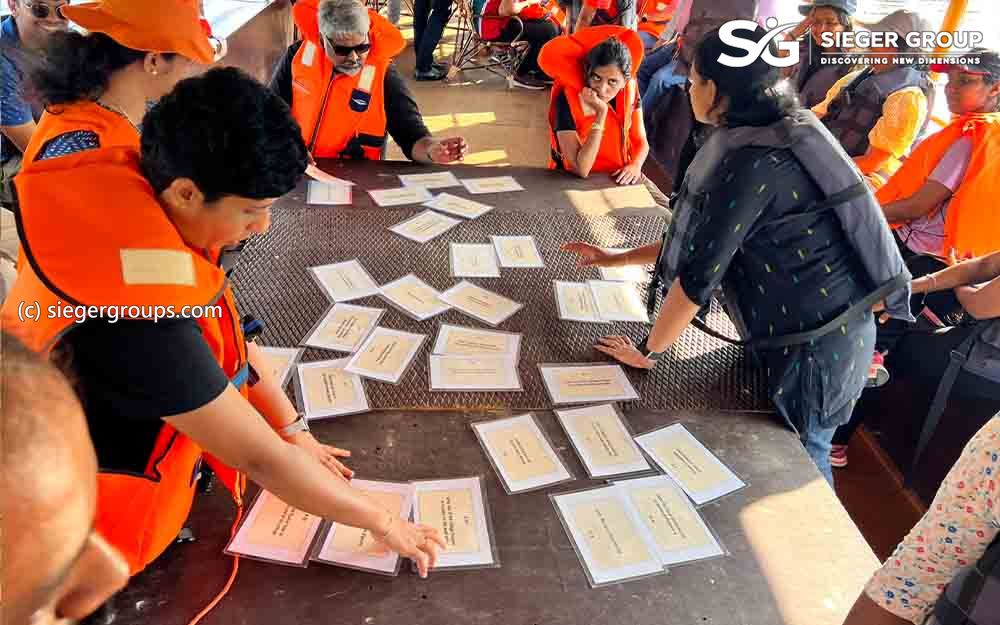
A team enters a themed scenario with clues distributed across the room or activity stations. Someone may hold the observation that makes another group’s puzzle solvable. Participants decide what to share, which theory to test and how to keep track of discoveries.
Keep solved clues visible alongside open questions so two teams avoid repeating the same work.
In Crack the Code, teammates pool clues and agree on an answer. The recording offers a comparison for the puzzle-solving element of a mystery brief.
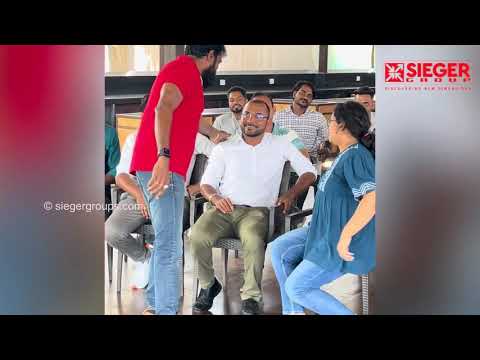
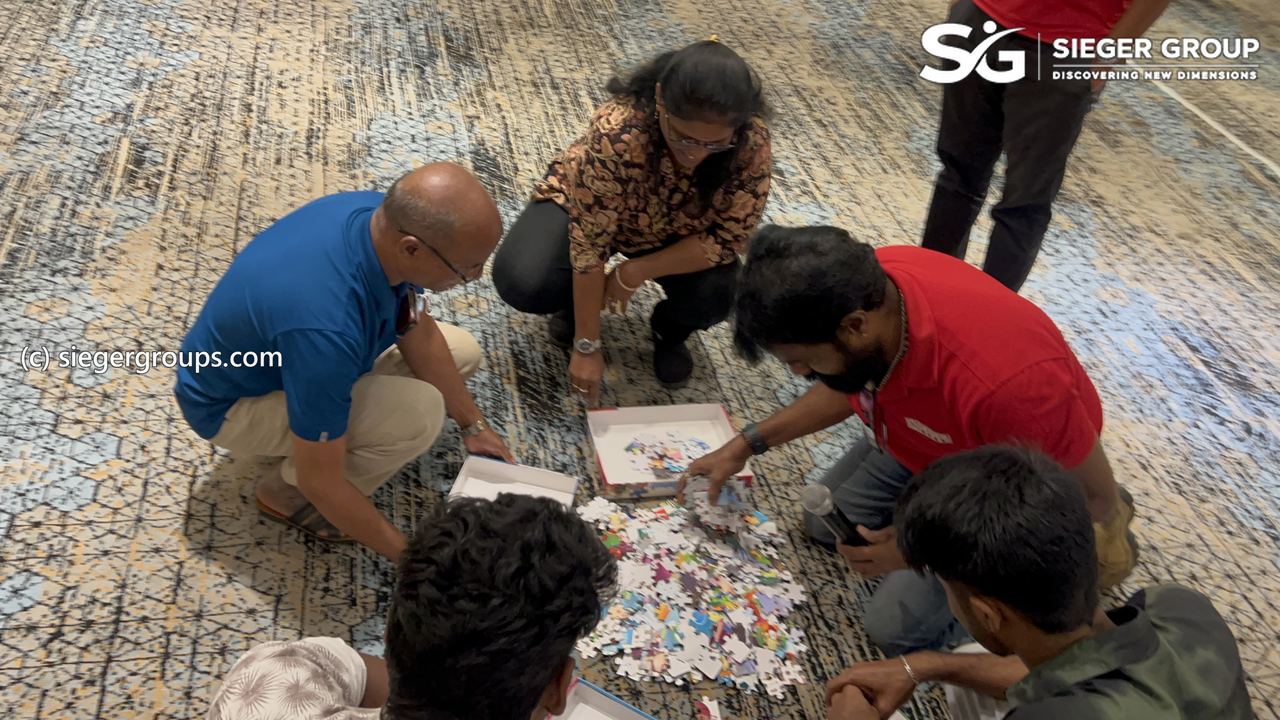
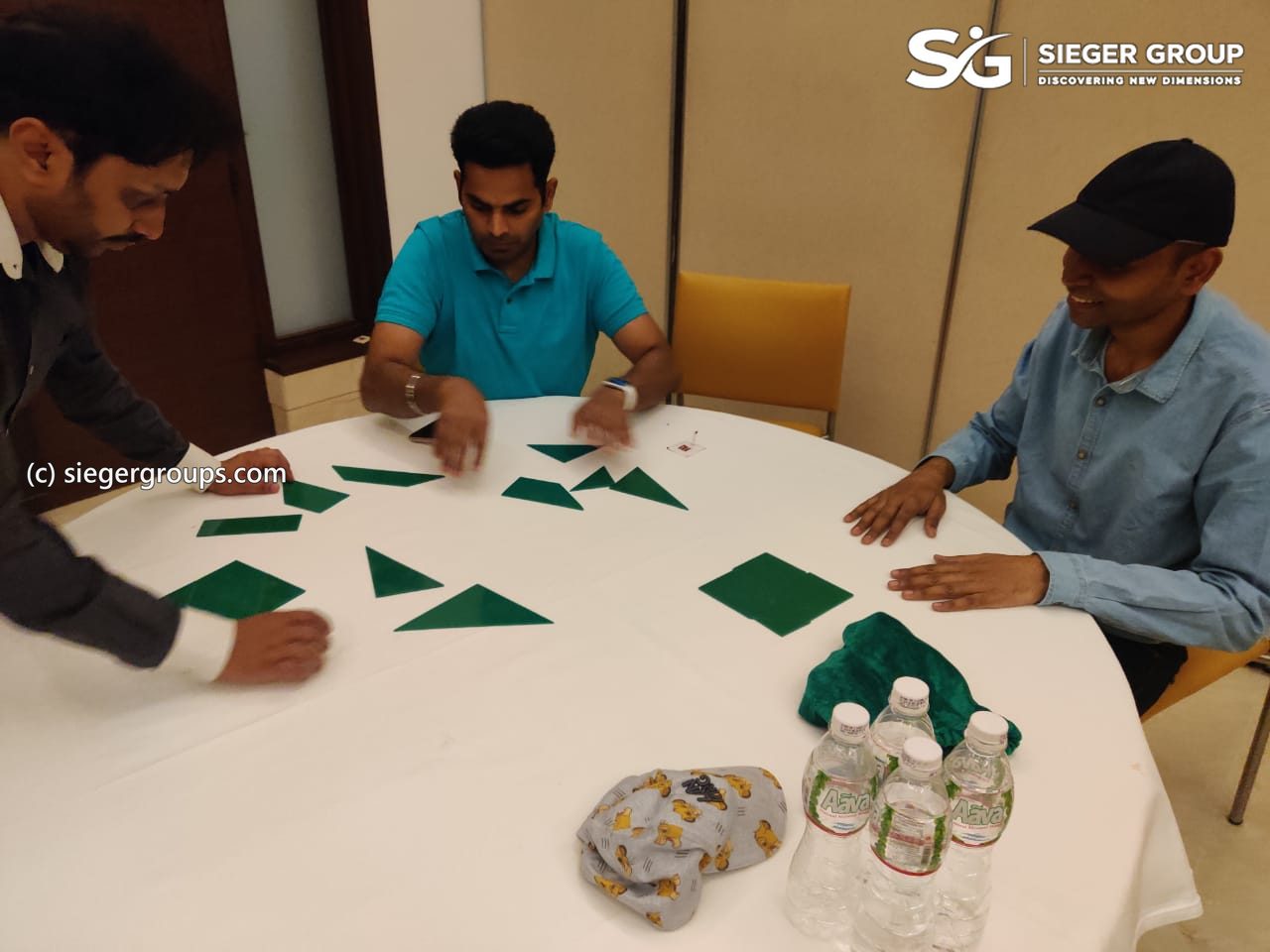
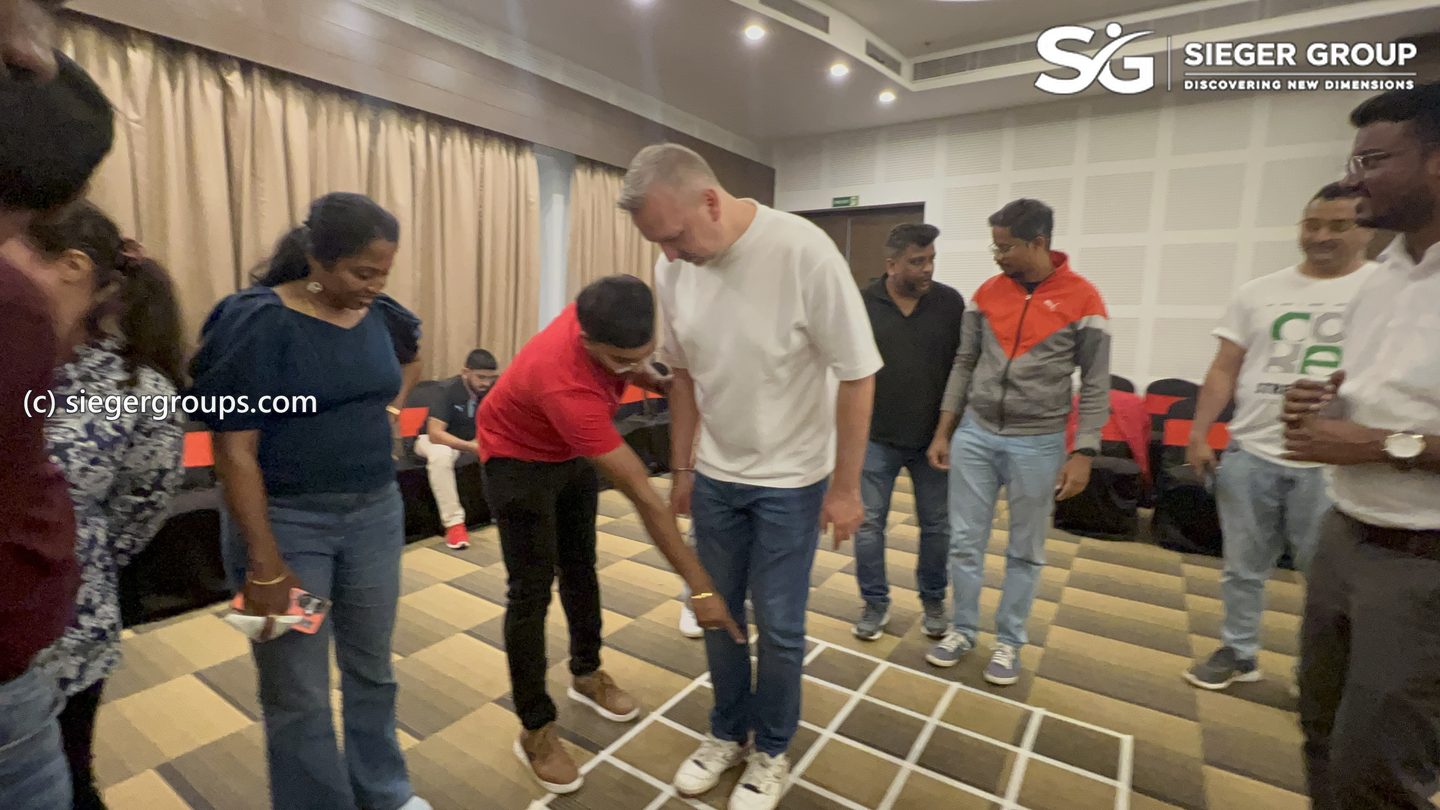
These photographs show related team sessions from the Sieger Group library.
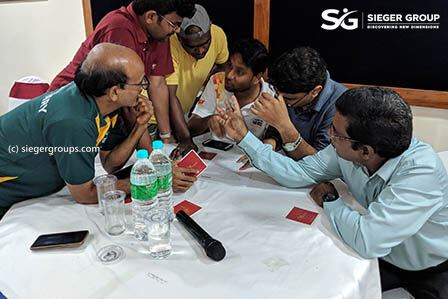
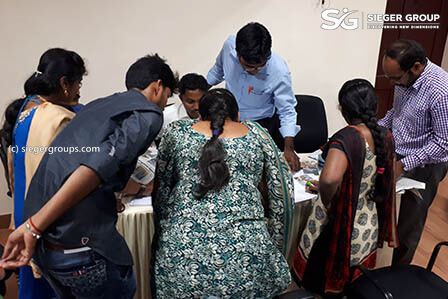
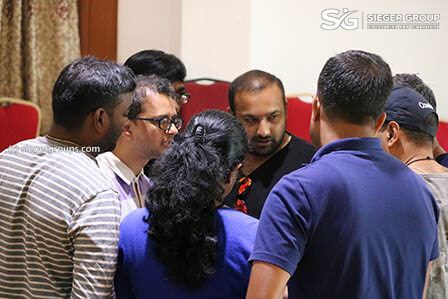
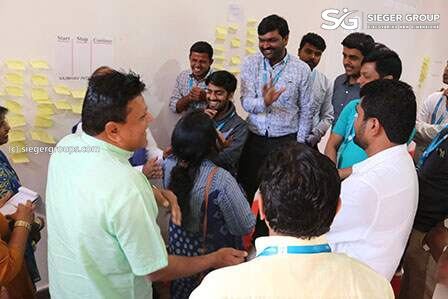
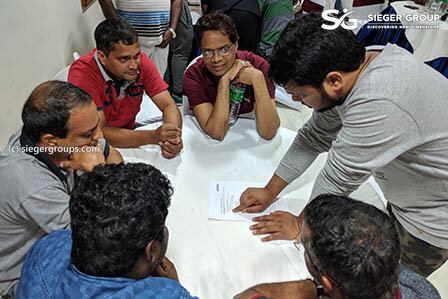
Hear the escape-room story, objective and rules before examining the challenge. How quickly did a discovered clue become shared information?
Bring clues and observations into a common picture so information does not remain with one person. What helped the team connect evidence from different puzzles?
Compare possible solutions against the available evidence and revise unsuccessful theories. When did participants decide to revisit an assumption?
Discuss how the team organised information and decided which lead to pursue. How did the group manage attention as the time limit approached?
Use these points to draw out what colleagues can learn from Corporate Escape Room.
Consider when a persuasive suggestion needed to be checked against a clue.
Reflect on how discoveries became useful only when the group shared them.
Confirm the room layout, team sizes, clue visibility and any language or accessibility adjustments to the brief.
Compare possible solutions against the available evidence and revise unsuccessful theories.
Reflect on how discoveries became useful only when the group shared them.
Bring clues and observations into a common picture so information does not remain with one person.
How quickly did a discovered clue become shared information?
Keep solved clues visible alongside open questions so two teams avoid repeating the same work.
Compare how colleagues handle partial information and build a shared explanation.
Work on the handover between the people who discover evidence and the people who act on it.
Notice how a group questions a popular theory before committing to a decision.
An illustrative running order for Corporate Escape Room. Confirm timings, breaks and participation arrangements in your event brief.
Our intriguing themes help to set the scene for the escape room team building activities, helping to build suspense and excitement that continues throughout your event.
Sieger Group supports organisations with team-building experiences and facilitated programmes.
A team follows a trail of linked clues. Progress depends on pooling discoveries from different parts of the room and ruling out explanations that no longer fit.
Keep solved clues visible alongside open questions so two teams avoid repeating the same work.
Enter the scenario, Share discoveries, Test the connections, Debrief the investigation. The final selection is agreed with the organiser.
Project teams and cross-functional groups can use this experience. Compare how colleagues handle partial information and build a shared explanation.
This activity is designed for groups of 20–500. Share your expected headcount and venue so Sieger Group can confirm a suitable arrangement.
Allow 60–90 minutes for the activity session. Sieger Group can confirm the timing against your event schedule and agreed format.
Confirm the room layout, team sizes, clue visibility and any language or accessibility adjustments to the brief.
Share access requirements and preferences when planning the session. The facilitator can discuss roles such as observing, recording decisions or presenting the group’s findings.
Hear the escape-room story, objective and rules before examining the challenge.
Reflect on how discoveries became useful only when the group shared them.
Yes. Share the purpose of the offsite and which part of Corporate Escape Room you would like to emphasise. The facilitator can discuss how to fit the chosen elements into the wider event.
Use the enquiry form or contact Sieger Group with your preferred date, city, headcount, venue and learning objective. Include any participation or access requests in the brief.
Share your date, city, group size and the outcome you want colleagues to take away.
Request a tailored proposalTell us what you have in mind. We will help you explore a programme that fits your people and your occasion.
Still finalising the details? Share what you know.
Every team is different. Share your people, purpose and preferred setting, and we’ll translate your brief into an experience designed to connect, engage and create lasting impact.
Share your brief and preferred contact details.