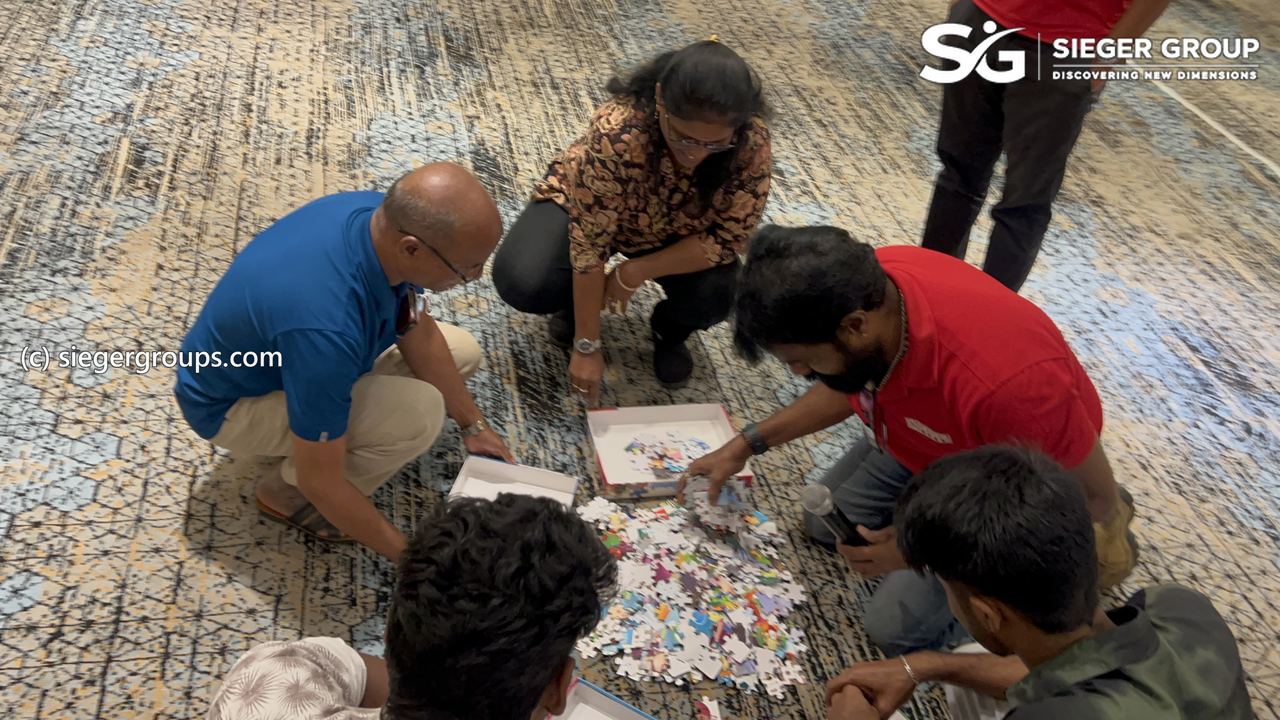
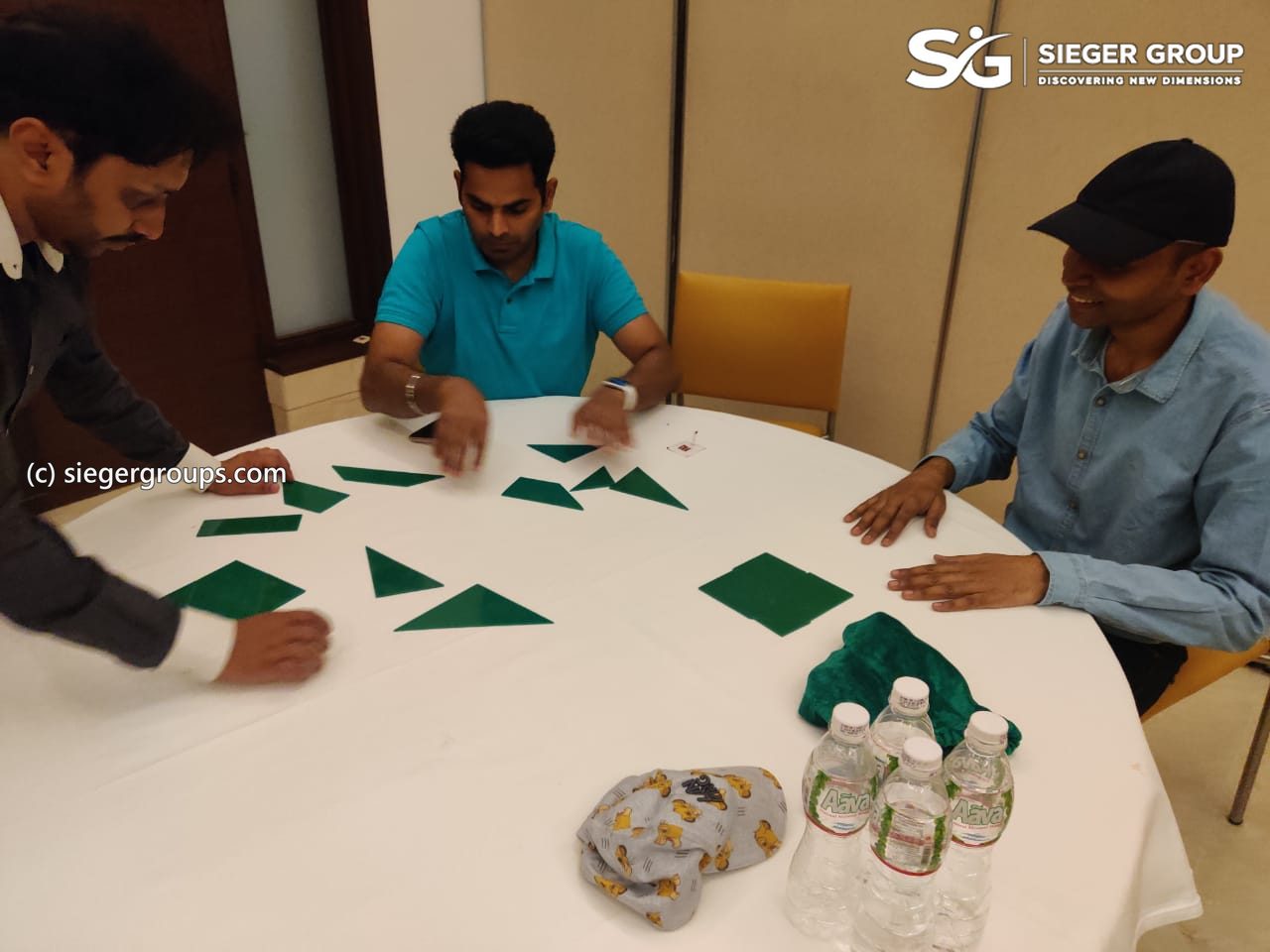
Examine the picture pieces
Review the available image fragments and the shared picture challenge. How did the team interpret the assembly problem?
Learning focusReading visual fragments
Teams examine fragments of a picture and piece together the larger image. A detail that looks obvious at one table may be invisible to the next.
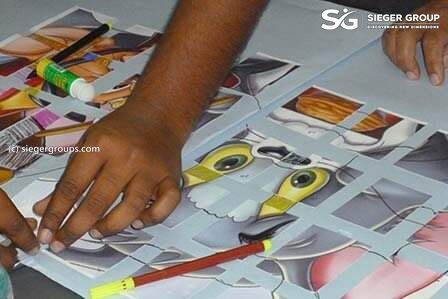
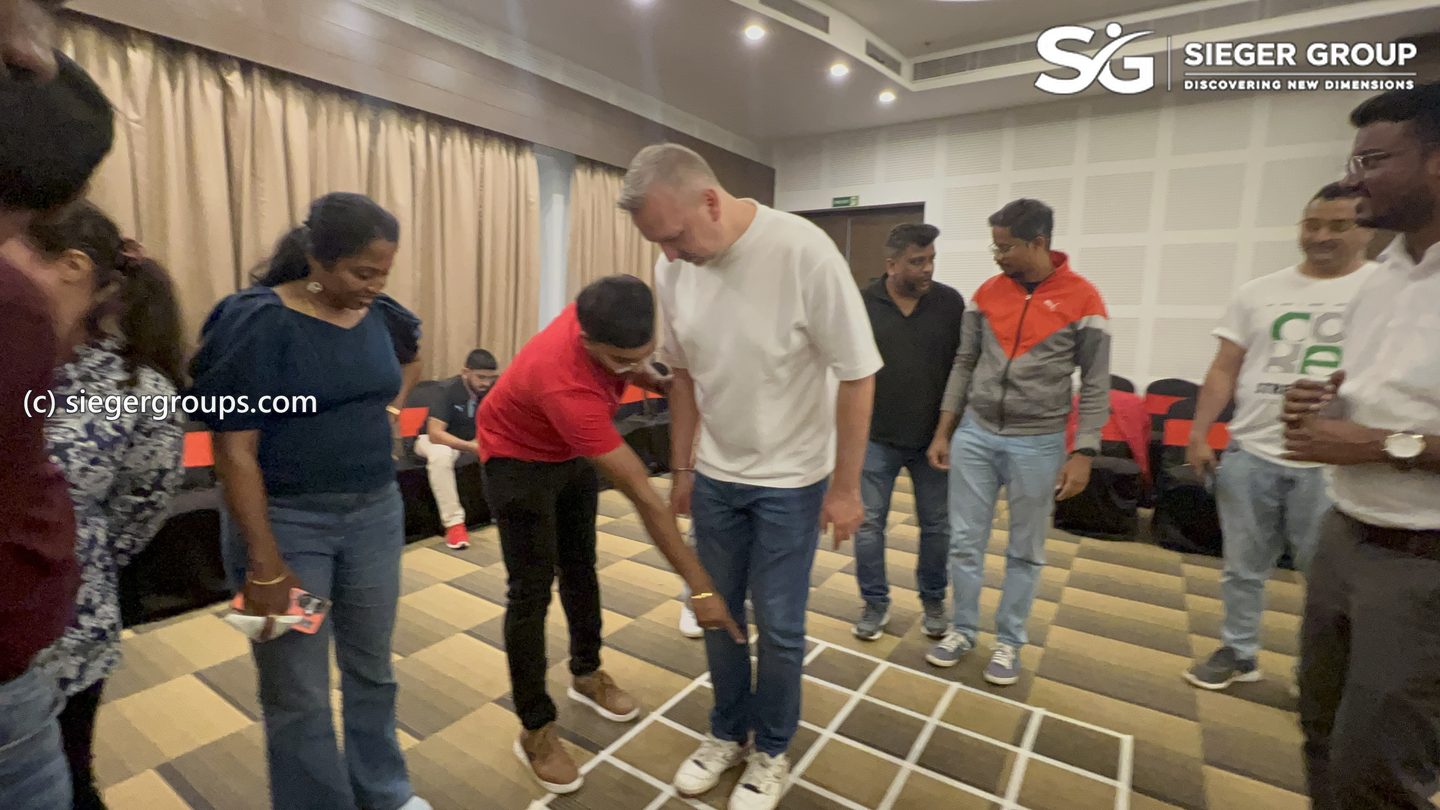
Each person holds one of a series of pictures within pictures. They describe their own image without showing it and work out where it belongs in the sequence. A single change in scale or viewpoint can alter the story the group thinks it has assembled.
Describe a fragment before showing it and compare the pictures different listeners imagined.
Watch another facilitated puzzle session to compare how a group organises its first attempt and responds when an approach stalls.

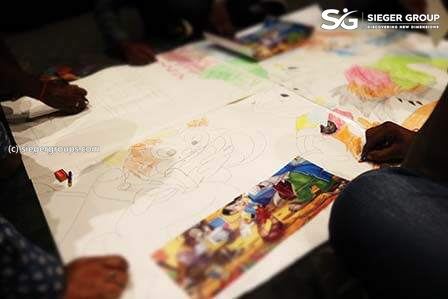
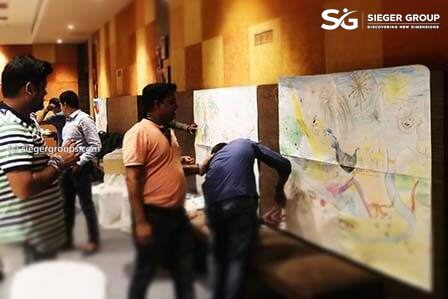
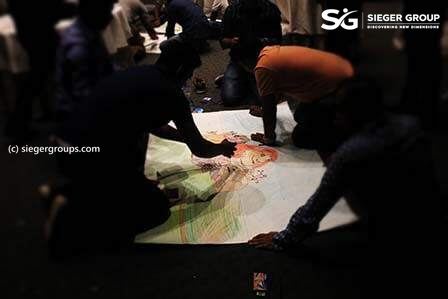
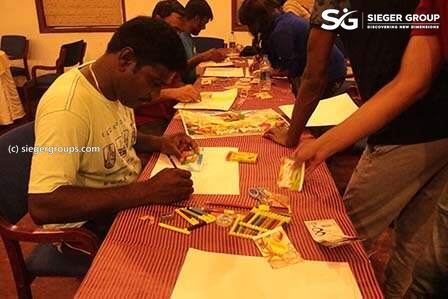
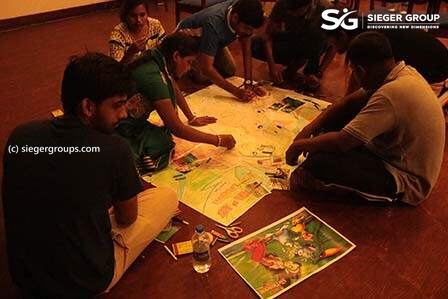
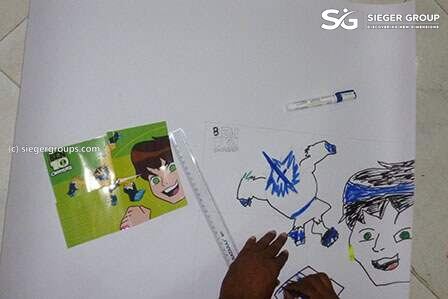
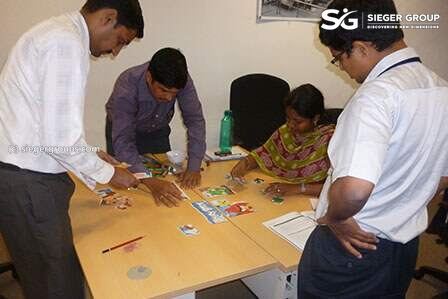
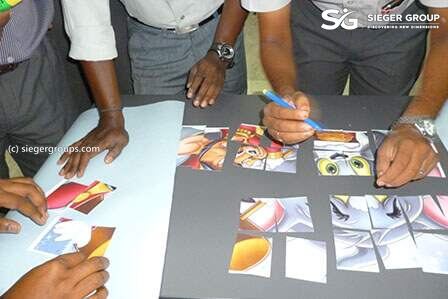
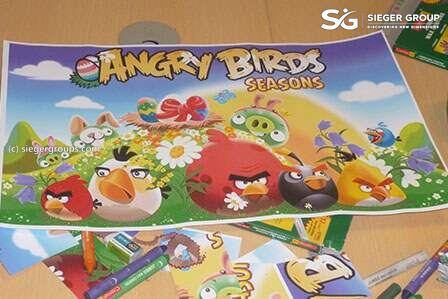
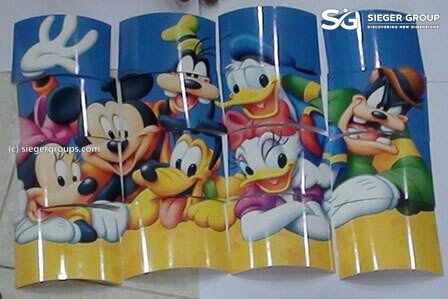
Review the available image fragments and the shared picture challenge. How did the team interpret the assembly problem?
Compare colours, edges and details so the group can form a workable arrangement. Which missing connections became clear through hands-on work?
Bring partial solutions together and check how each piece changes the overall picture. How were parts and responsibilities shared?
Discuss what helped the team recognise a useful connection or revisit an early assumption. What helped the group revise a solution that did not fit?
Use these points to draw out what colleagues can learn from Fix It Picture Challenge.
Reflect on how one person's fragment gained value through comparison with others.
Consider how the developing image helped the group check its ideas.
Confirm the room layout, team sizes, clue visibility and any language or accessibility adjustments to the brief.
Bring partial solutions together and check how each piece changes the overall picture.
Consider how the developing image helped the group check its ideas.
Compare colours, edges and details so the group can form a workable arrangement.
How did the team interpret the assembly problem?
Describe a fragment before showing it and compare the pictures different listeners imagined.
Compare how colleagues handle partial information and build a shared explanation.
Work on the handover between the people who discover evidence and the people who act on it.
Notice how a group questions a popular theory before committing to a decision.
An illustrative running order for Fix It Picture Challenge. Confirm timings, breaks and participation arrangements in your event brief.
The activity becomes more complex with a large number of participants as there are more pieces of the story-puzzle that they have to put into sequence. It also works well with smaller groups with the use different variations.
Sieger Group supports organisations with team-building experiences and facilitated programmes.
Teams examine fragments of a picture and piece together the larger image. A detail that looks obvious at one table may be invisible to the next.
Describe a fragment before showing it and compare the pictures different listeners imagined.
Examine the picture pieces, Pool the visual clues, Build the connected image, Review the missing information. The final selection is agreed with the organiser.
Project teams and cross-functional groups can use this experience. Compare how colleagues handle partial information and build a shared explanation.
This activity is designed for groups of 20–1000. Share your expected headcount and venue so Sieger Group can confirm a suitable arrangement.
Allow 60–90 minutes for the activity session. Sieger Group can confirm the timing against your event schedule and agreed format.
Confirm the room layout, team sizes, clue visibility and any language or accessibility adjustments to the brief.
Share access requirements and preferences when planning the session. The facilitator can discuss roles such as observing, recording decisions or presenting the group’s findings.
Review the available image fragments and the shared picture challenge.
Consider how the developing image helped the group check its ideas.
Yes. Share the purpose of the offsite and which part of Fix It Picture Challenge you would like to emphasise. The facilitator can discuss how to fit the chosen elements into the wider event.
Use the enquiry form or contact Sieger Group with your preferred date, city, headcount, venue and learning objective. Include any participation or access requests in the brief.
Share your date, city, group size and the outcome you want colleagues to take away.
Request a tailored proposalTell us what you have in mind. We will help you explore a programme that fits your people and your occasion.
Still finalising the details? Share what you know.
Every team is different. Share your people, purpose and preferred setting, and we’ll translate your brief into an experience designed to connect, engage and create lasting impact.
Share your brief and preferred contact details.