Read the maze rules
Review the hidden-route challenge and how the group will receive feedback. How did the team record useful information about the maze?
Learning focusReading movement rules
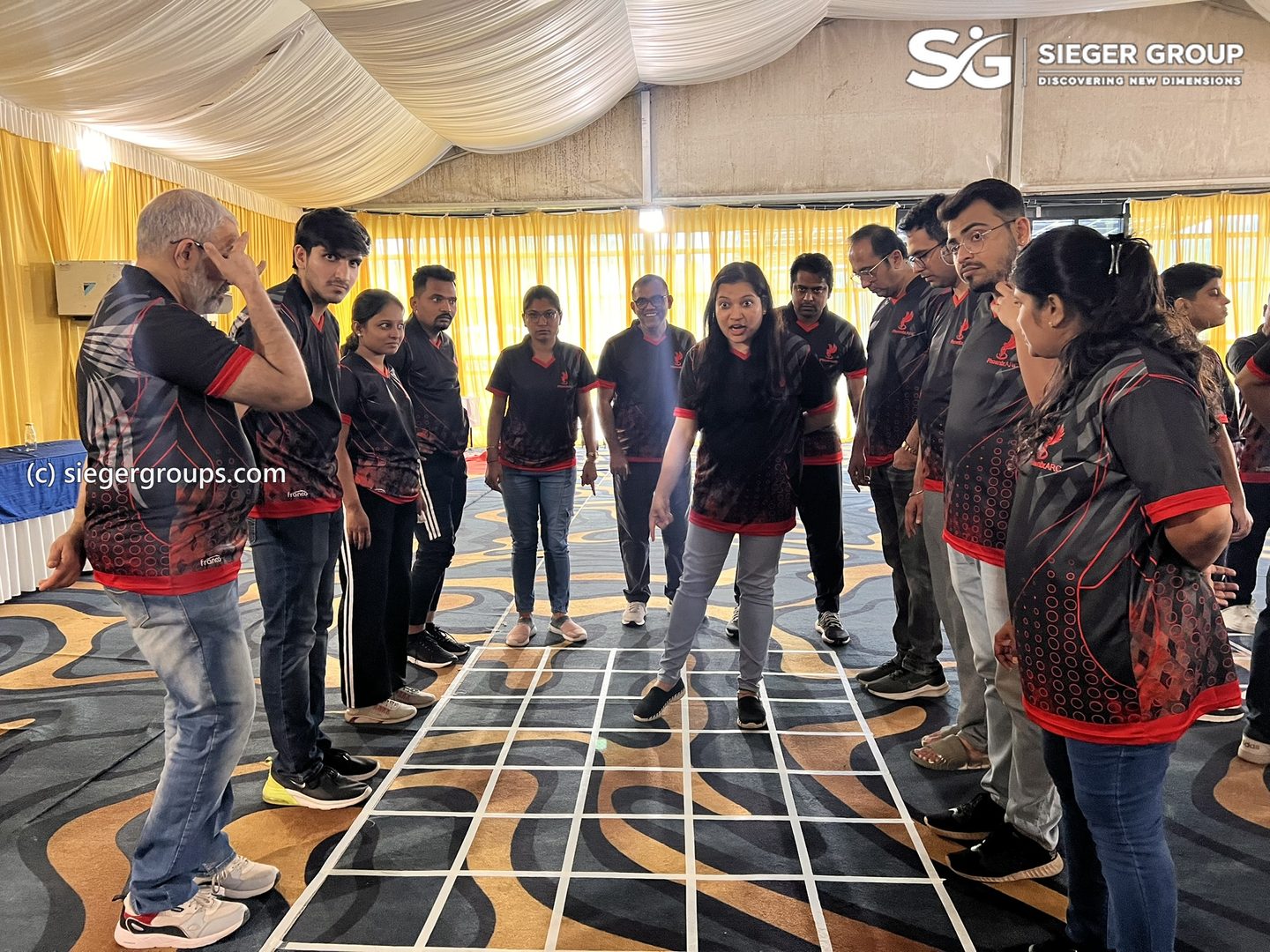
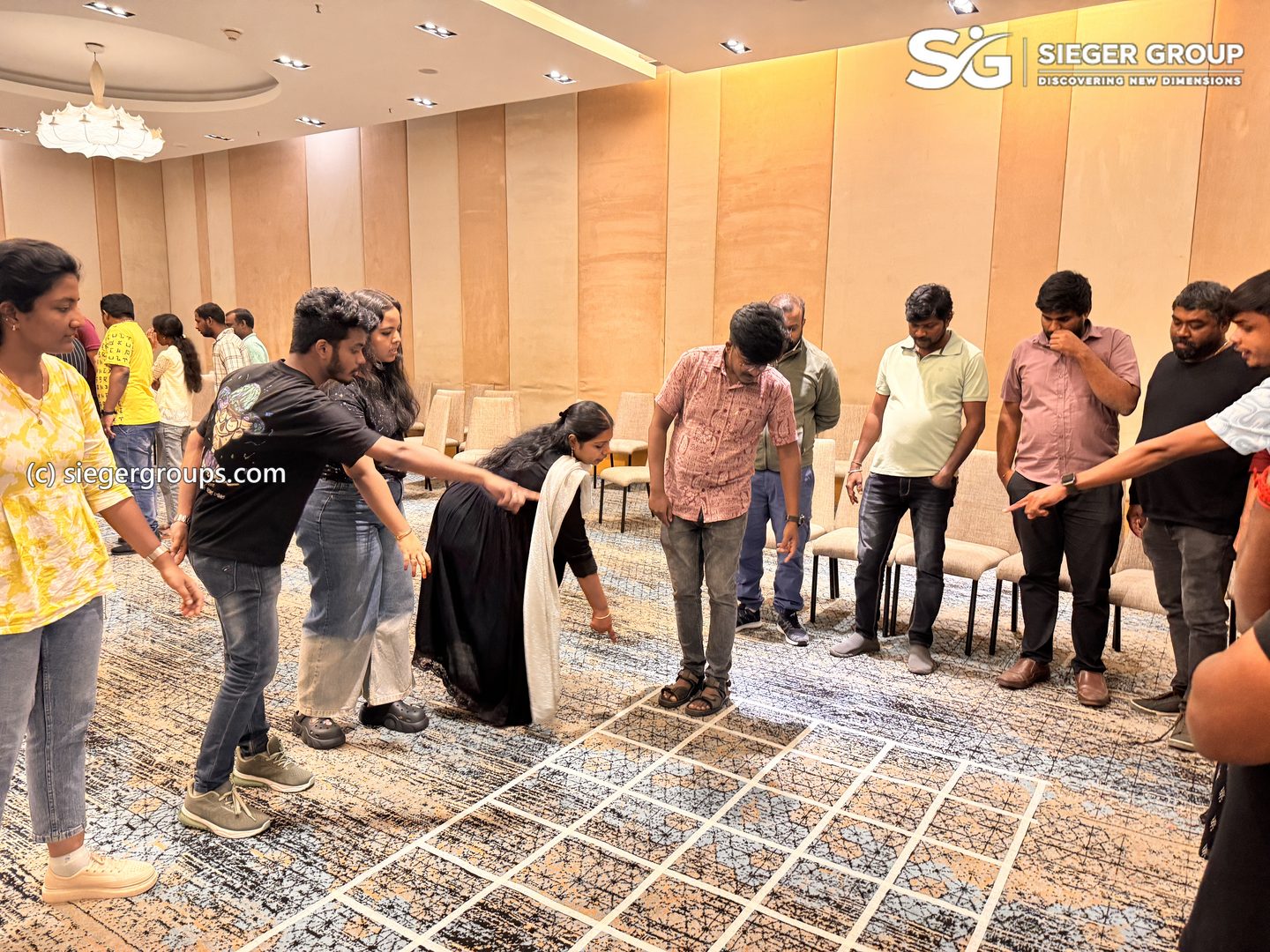
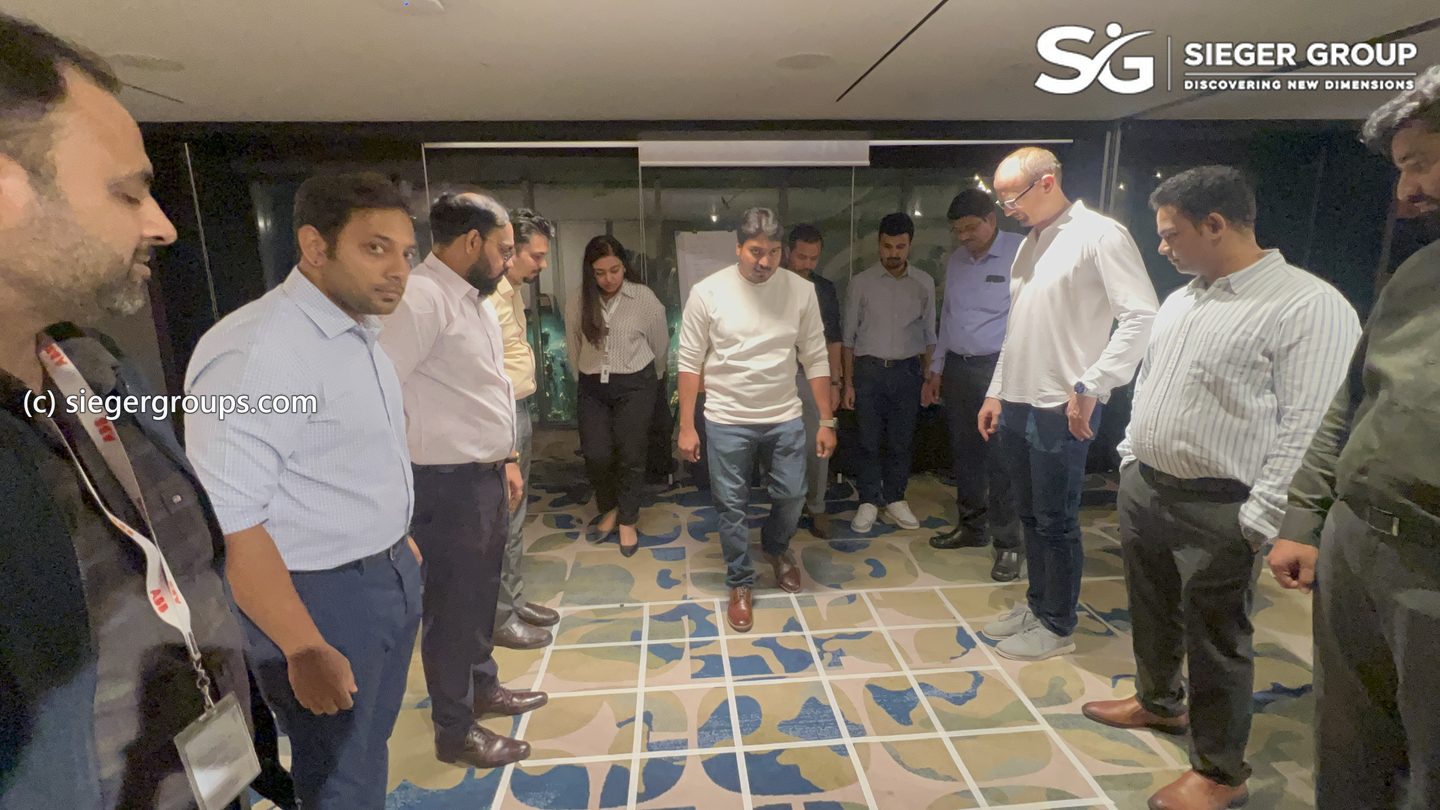
Maze Escape is a team Labyrinth on a marked floor grid. Players take turns finding a hidden route, using silent signals to pass each discovery to the next teammate.
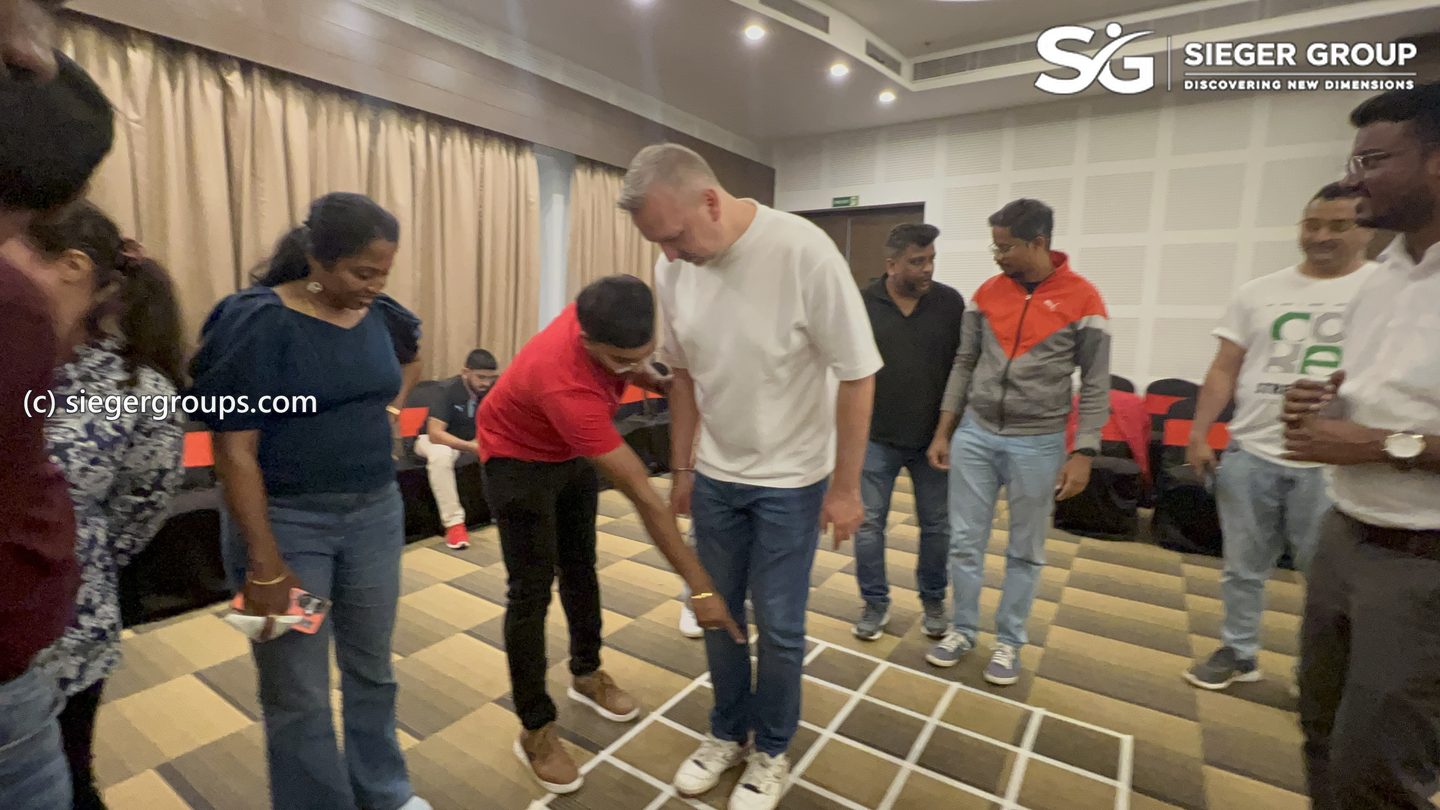
The facilitator knows a path of connected squares from one edge of the grid to the other. One person steps onto the grid while colleagues watch from the sides. A step off the path ends that turn. The next player starts again, using what the group remembers. During the silent round, a well-timed gesture can help a colleague choose a square.
Record a rejected route as carefully as a successful one so the next person can use both.
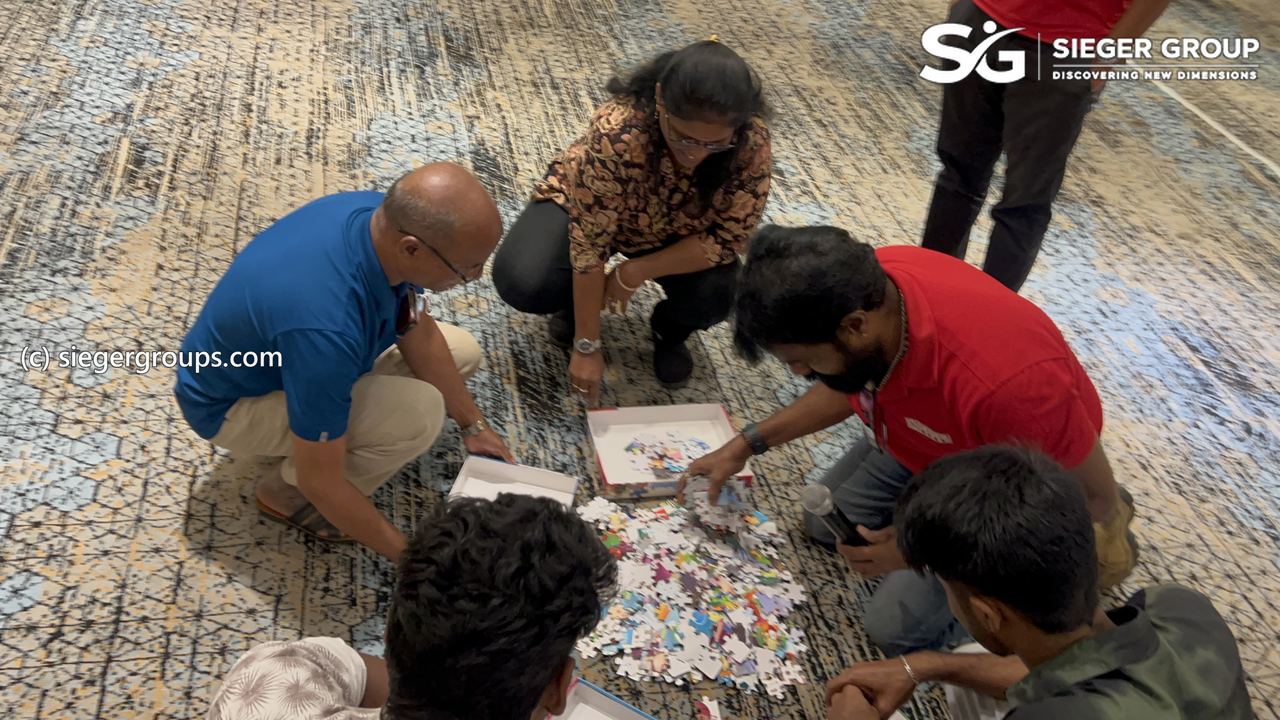
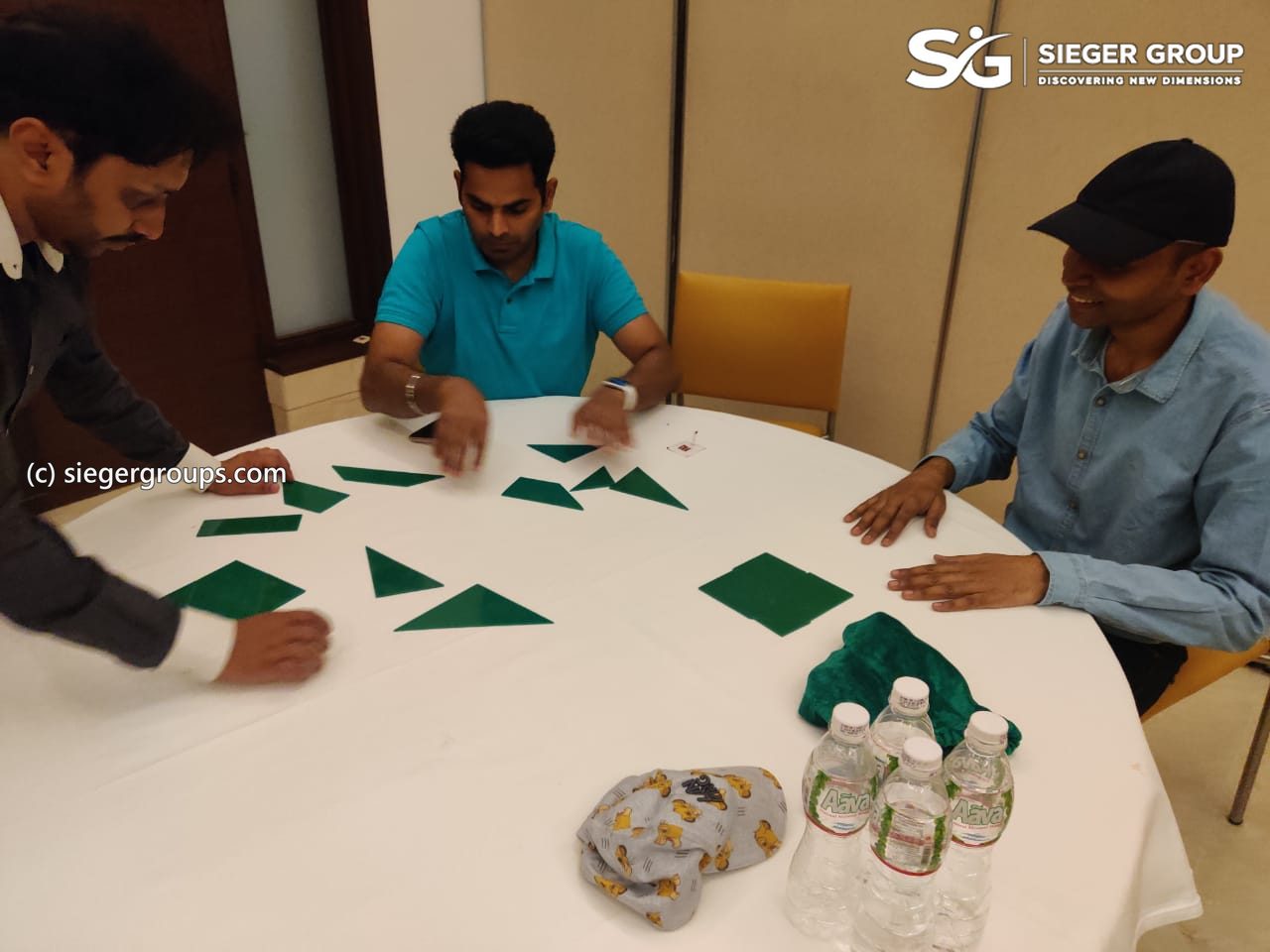
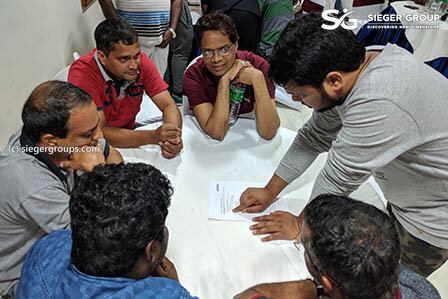
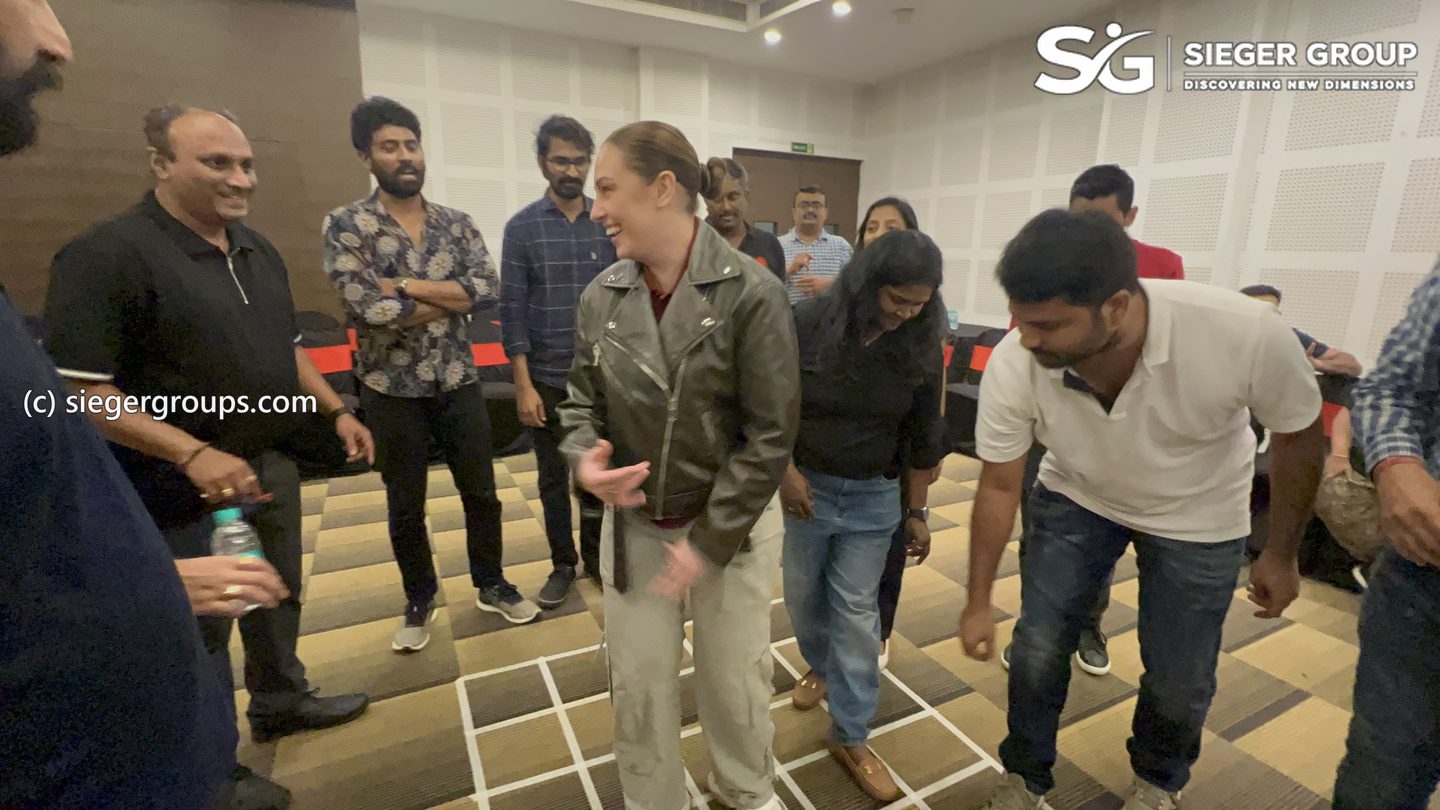
Two maze recordings show the task from different team events. Watch how a group keeps track of earlier attempts and passes that knowledge to the next person.


Follow the tape lines in these photographs. The player on the grid chooses a square while teammates at the edges point, pause and watch for feedback.
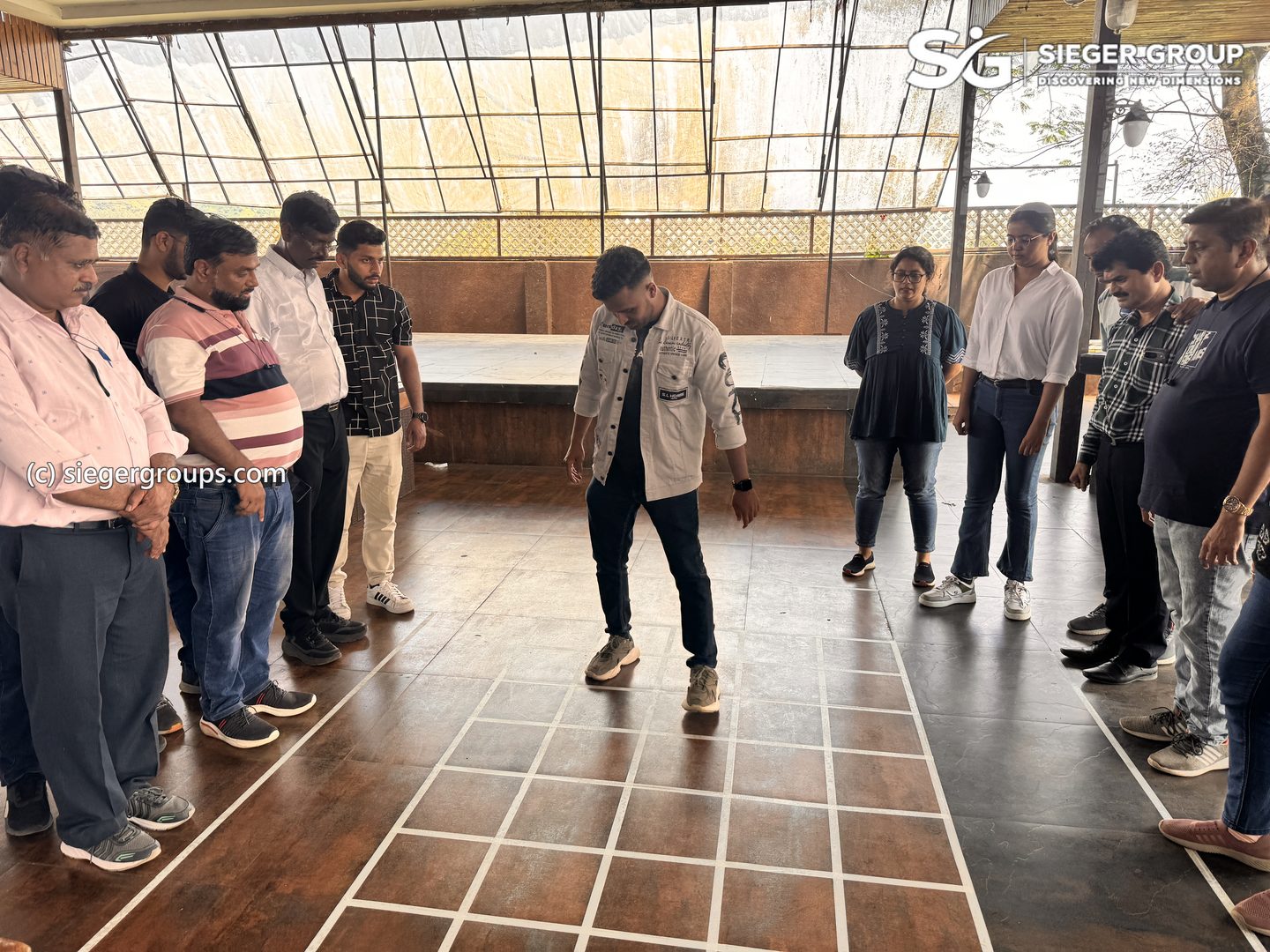
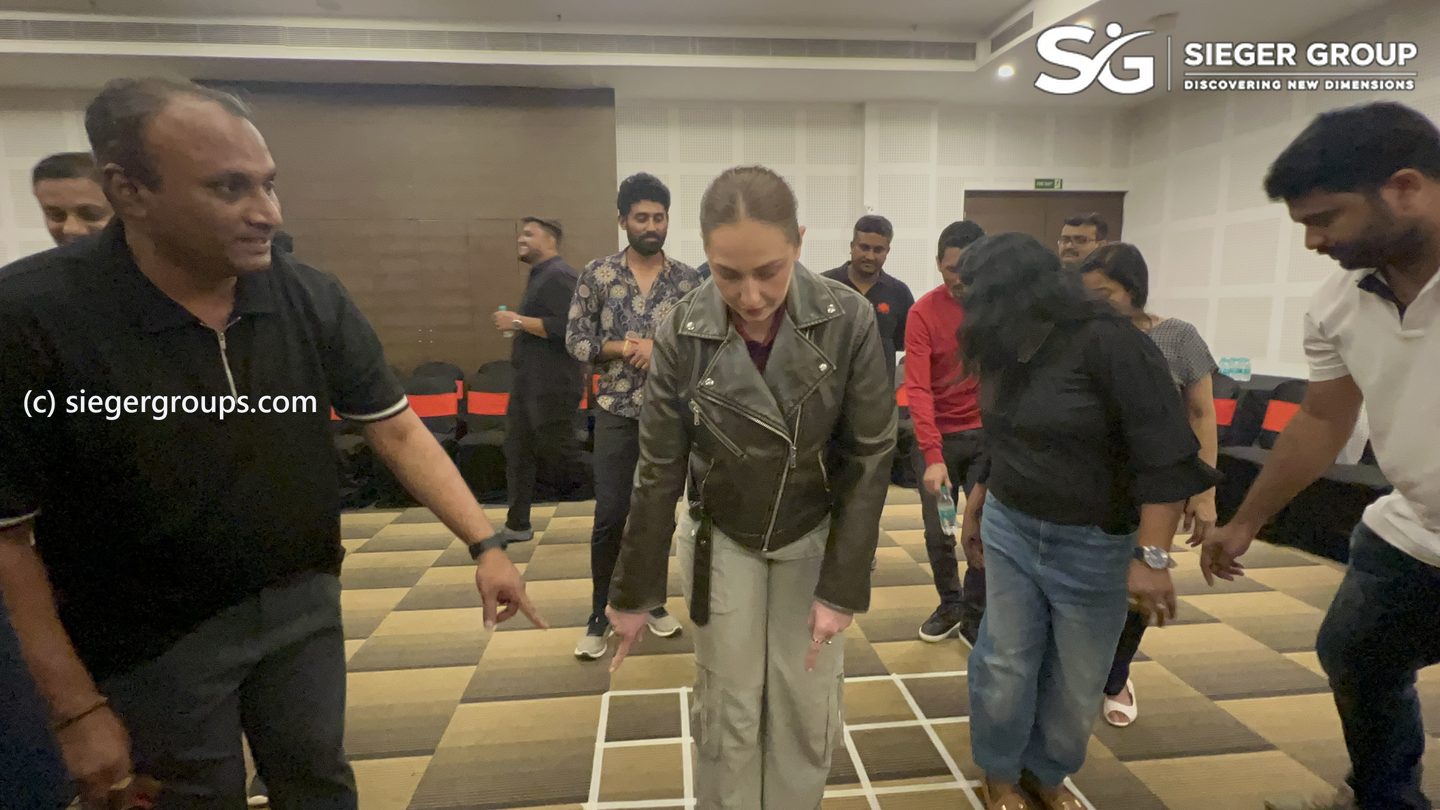
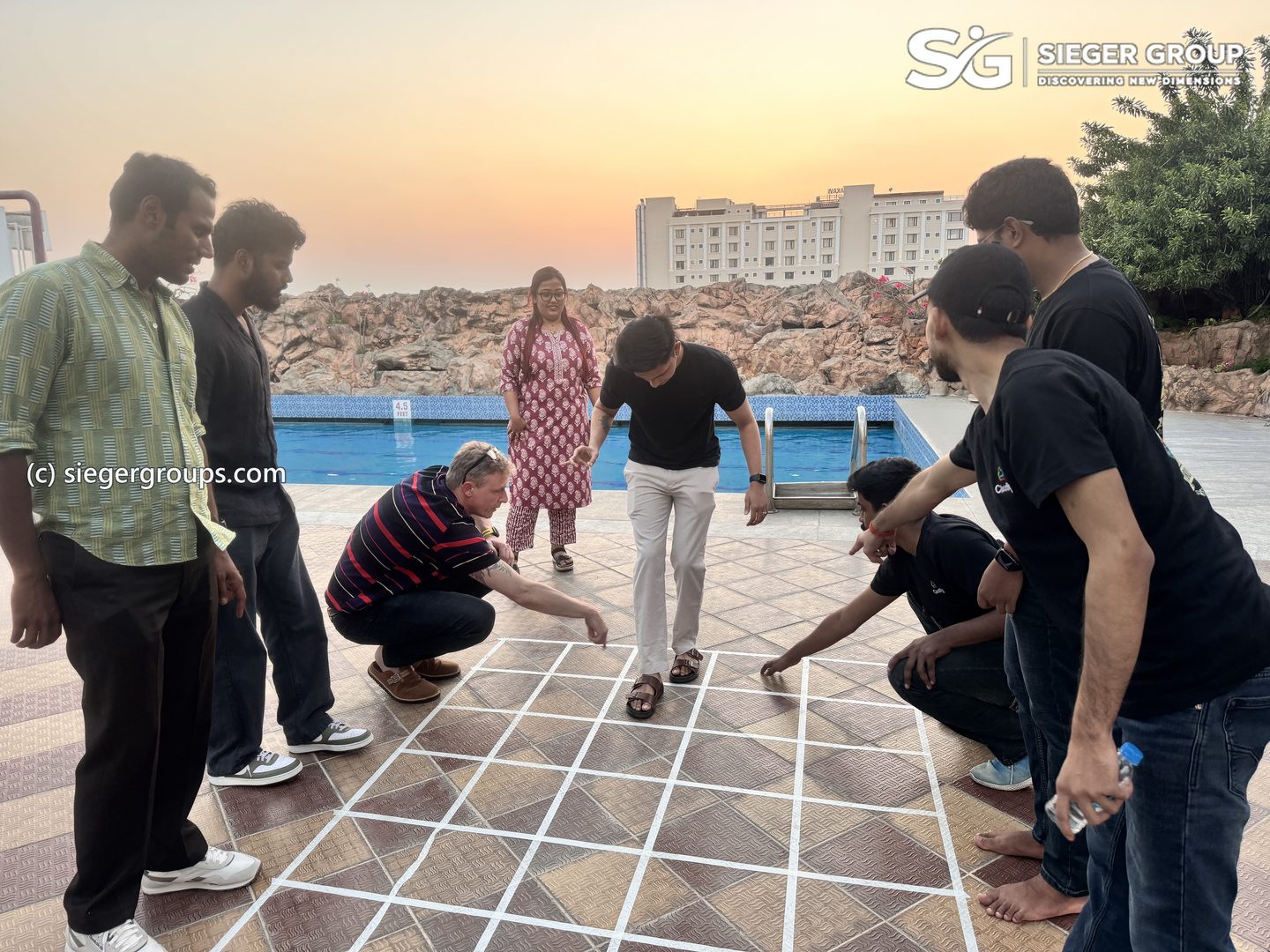
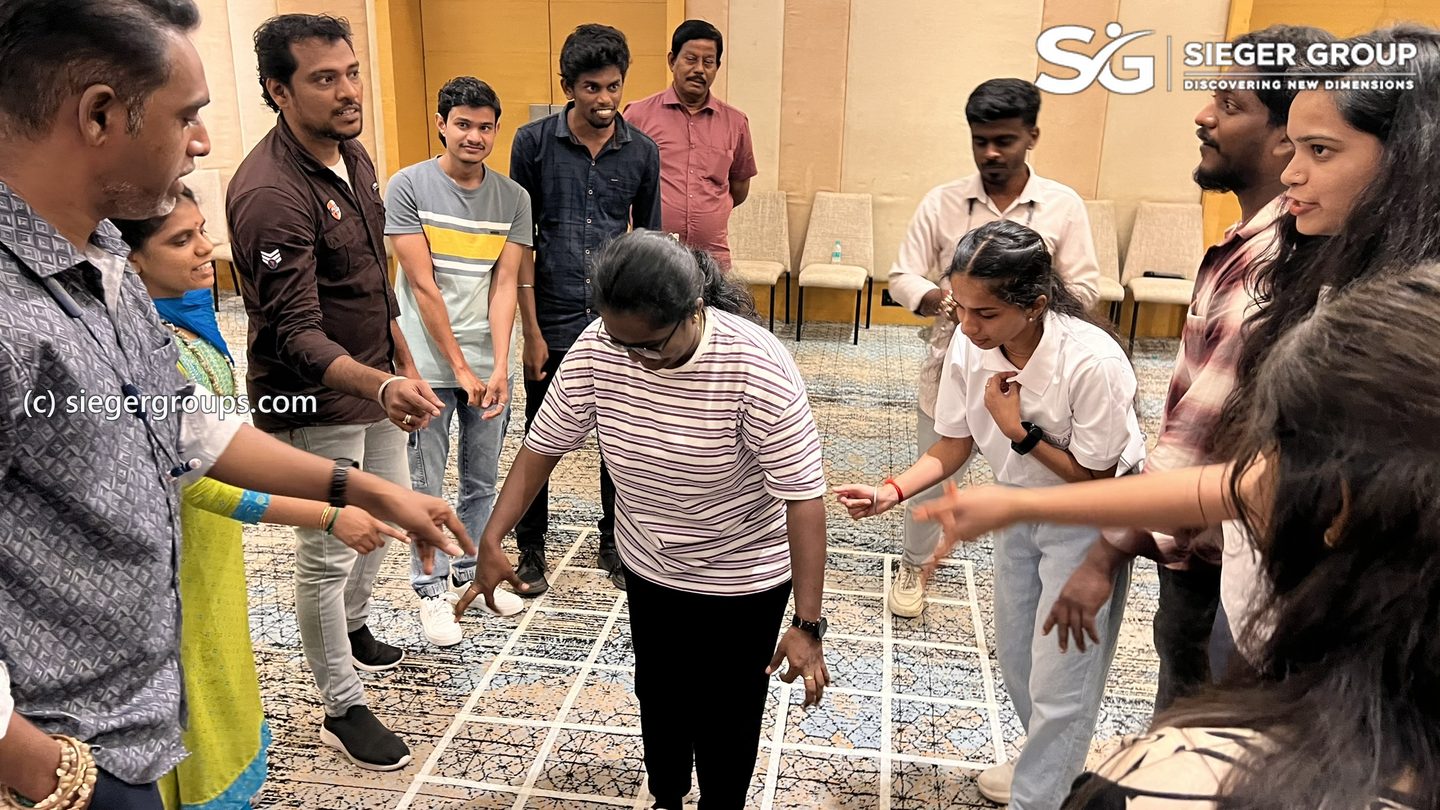
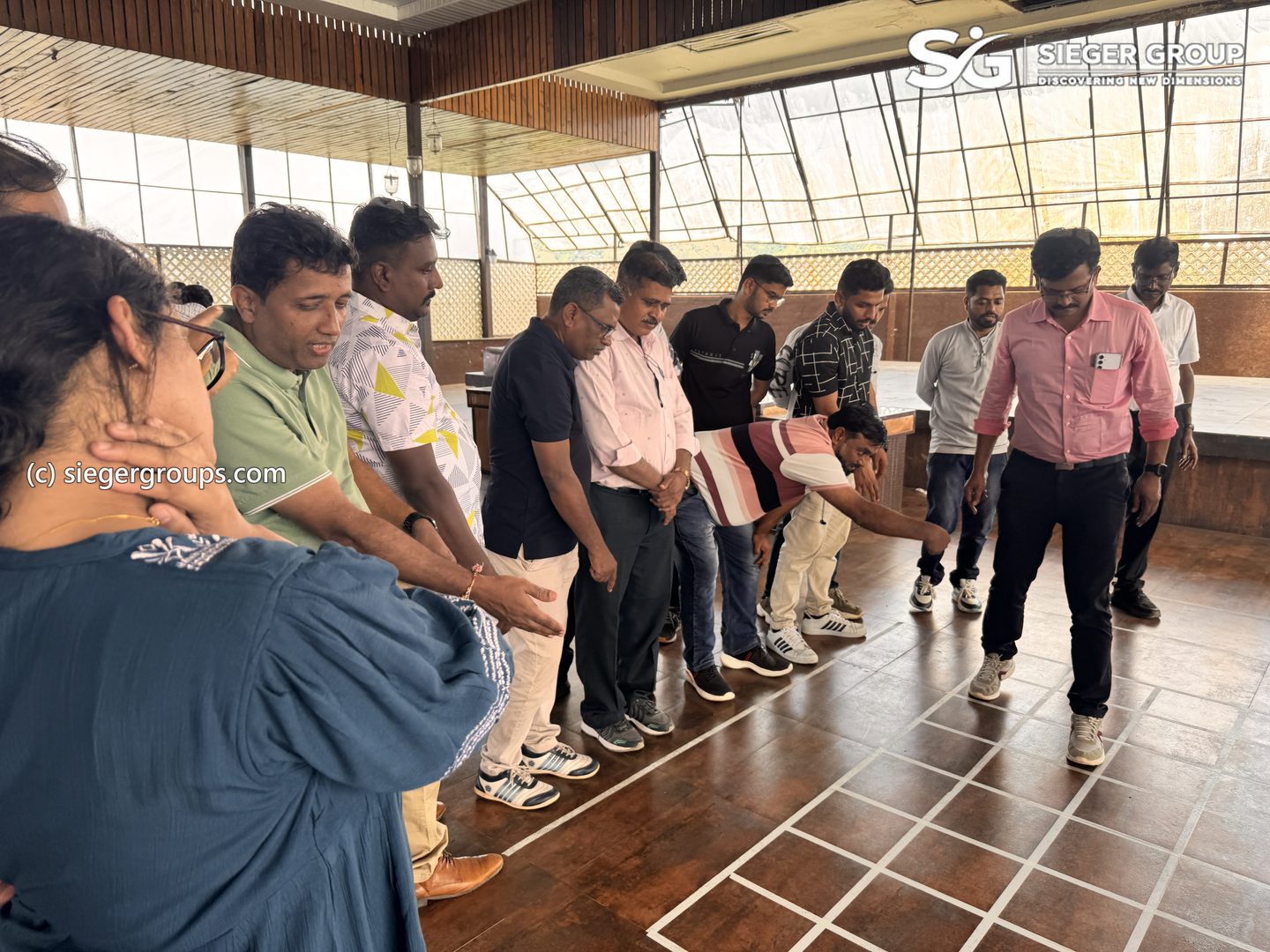
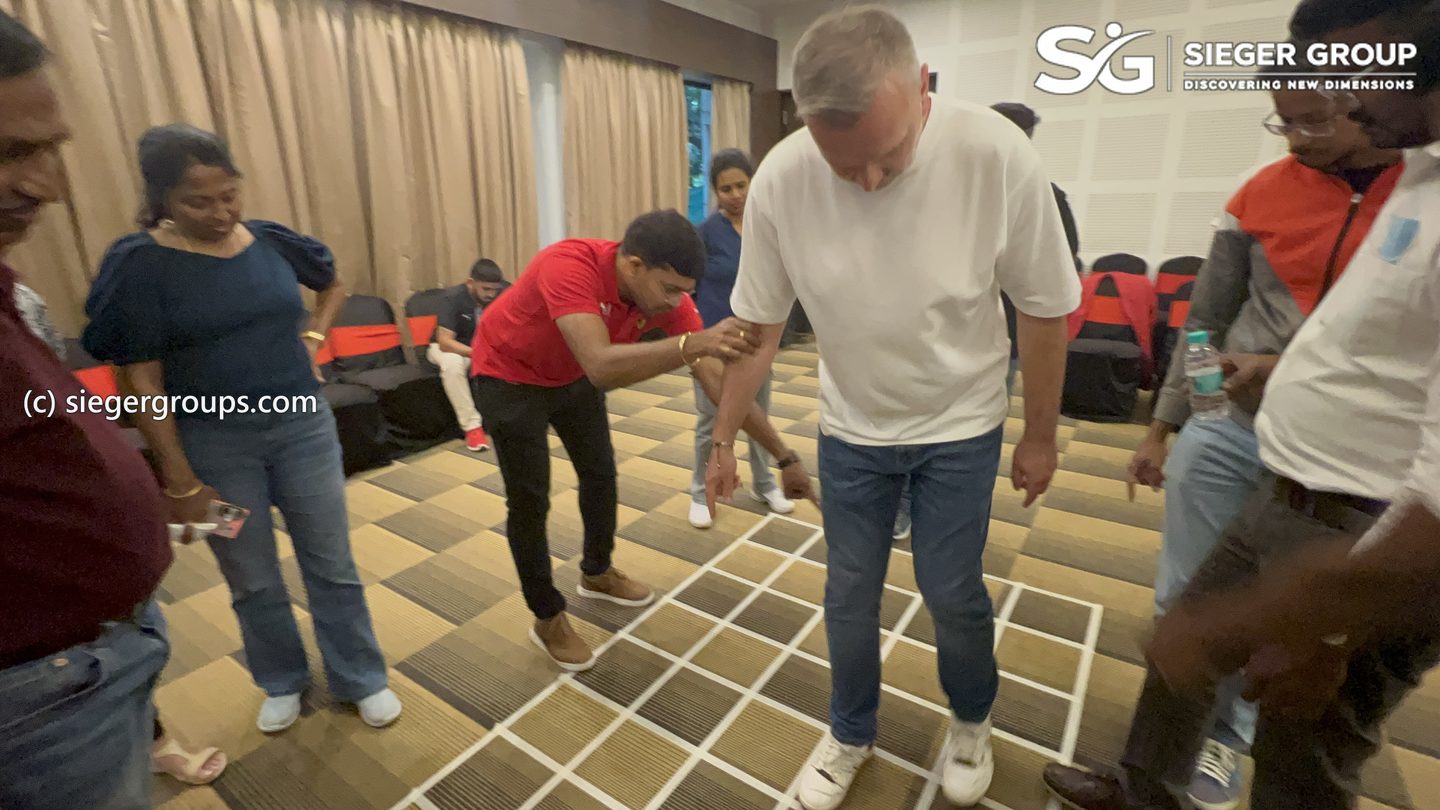
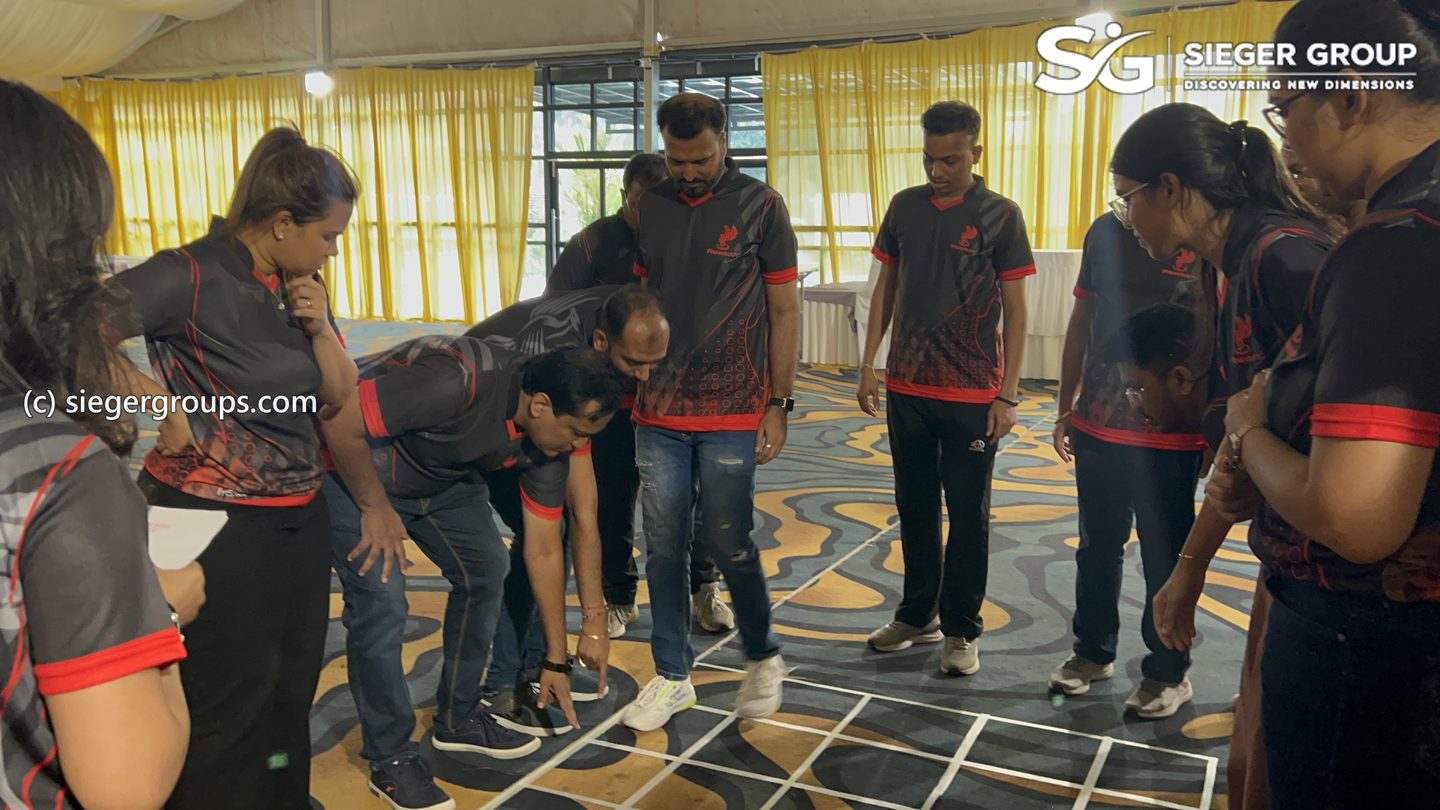
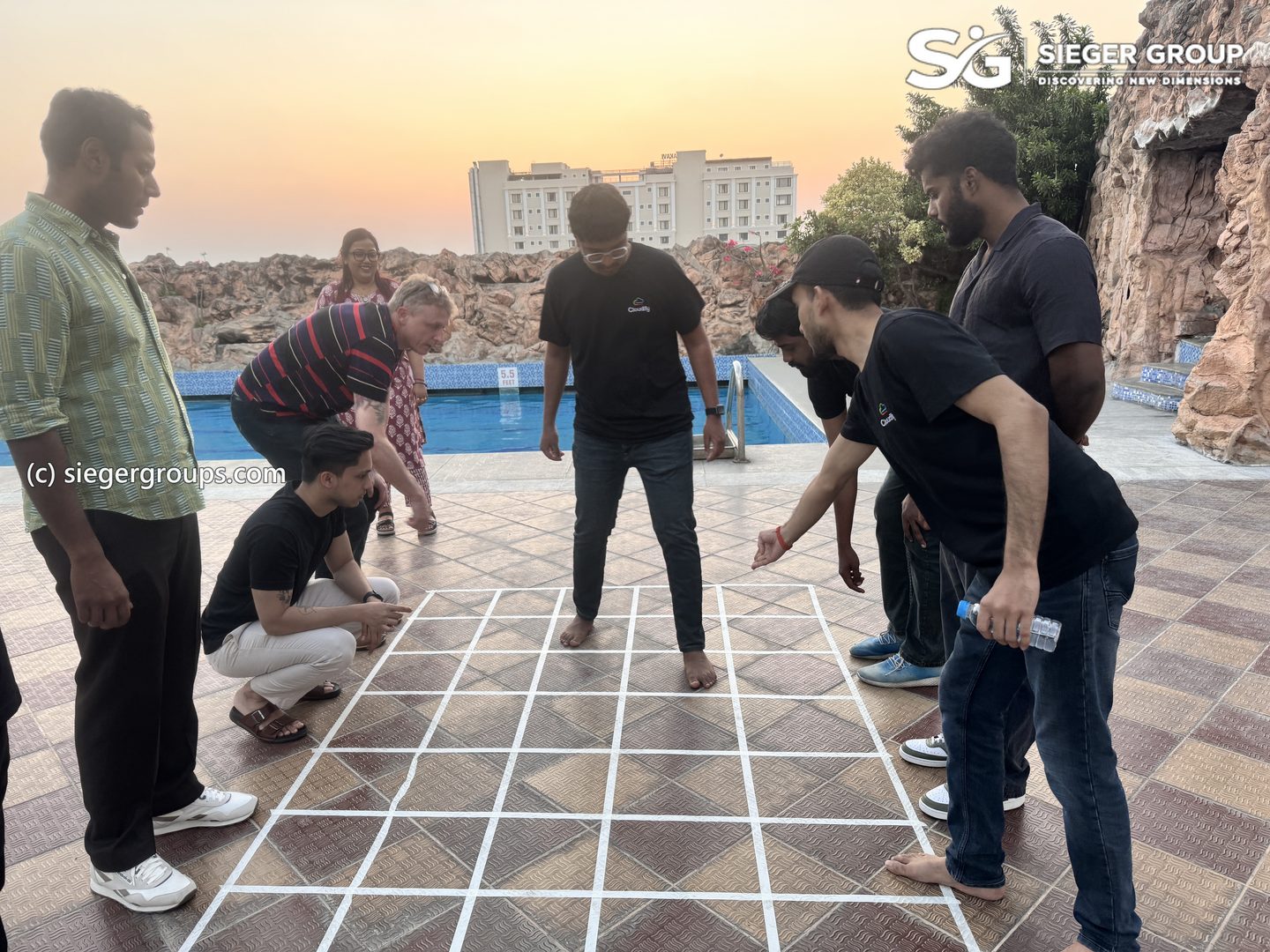
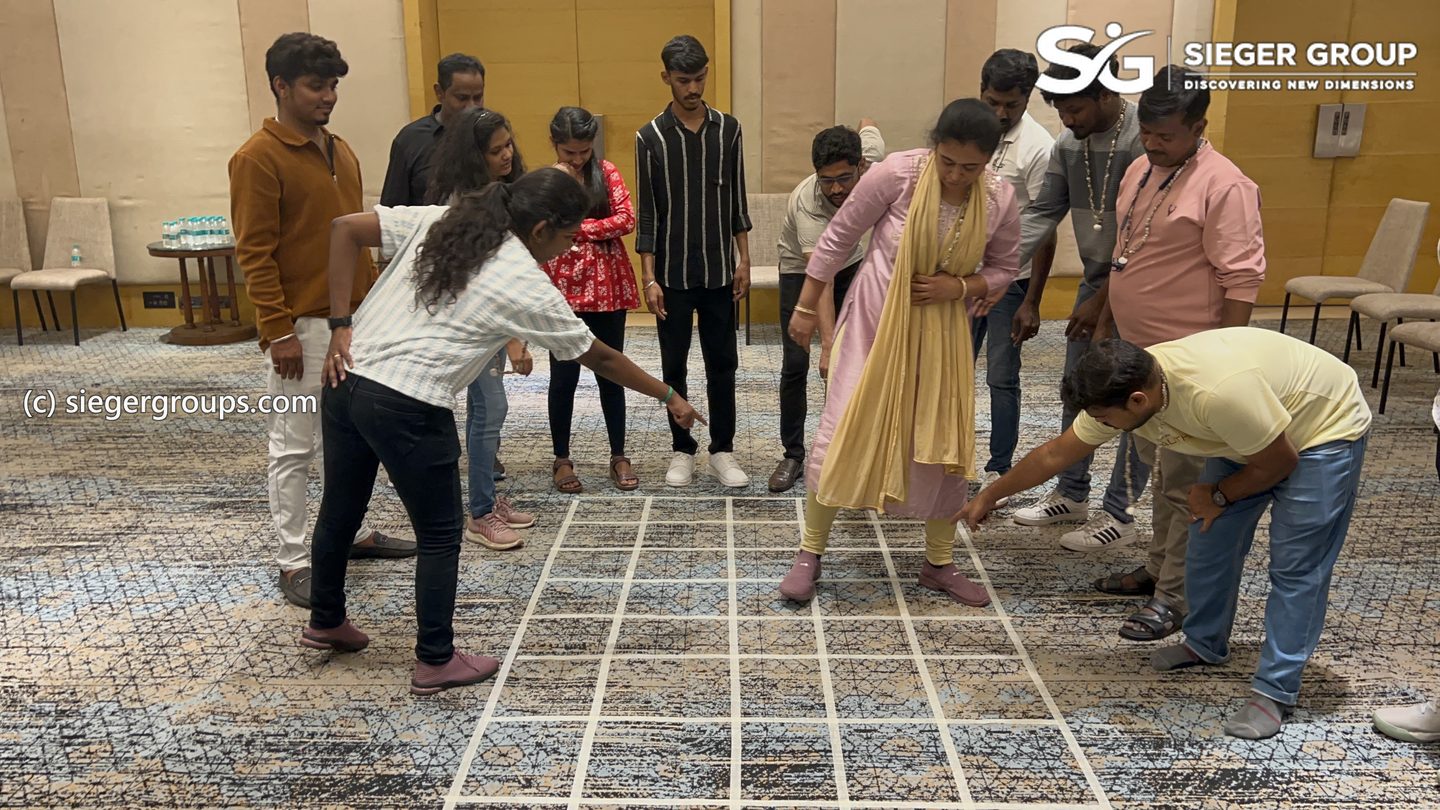
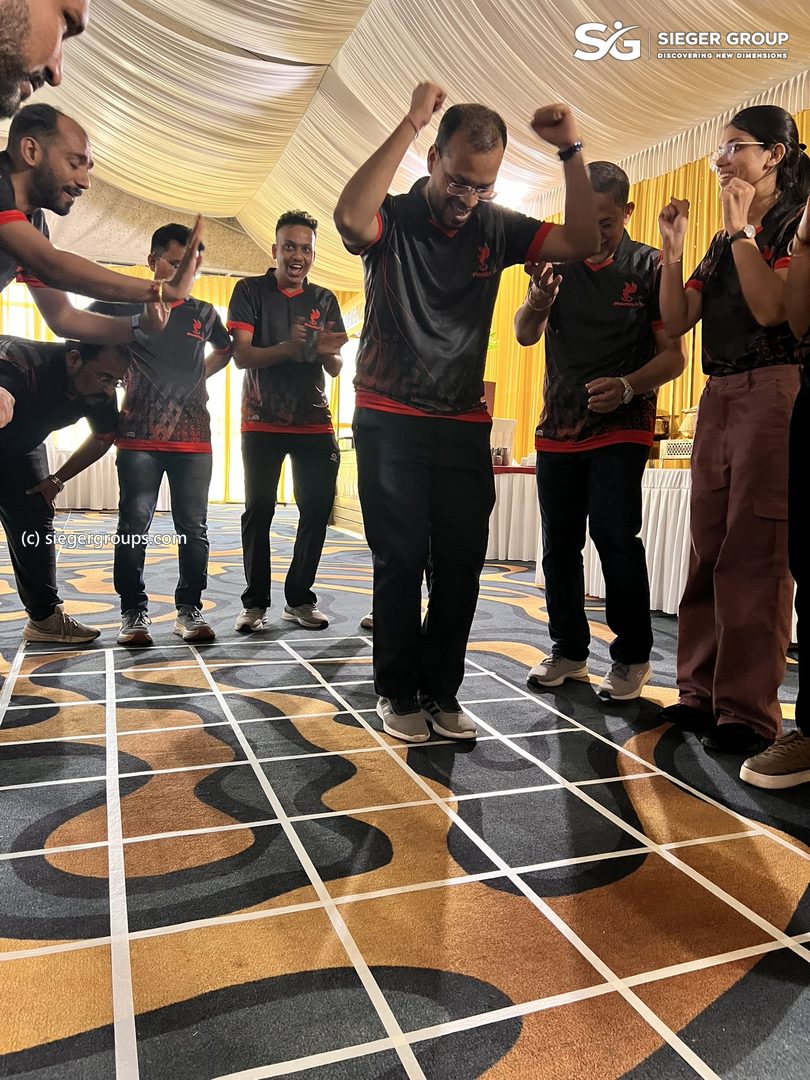
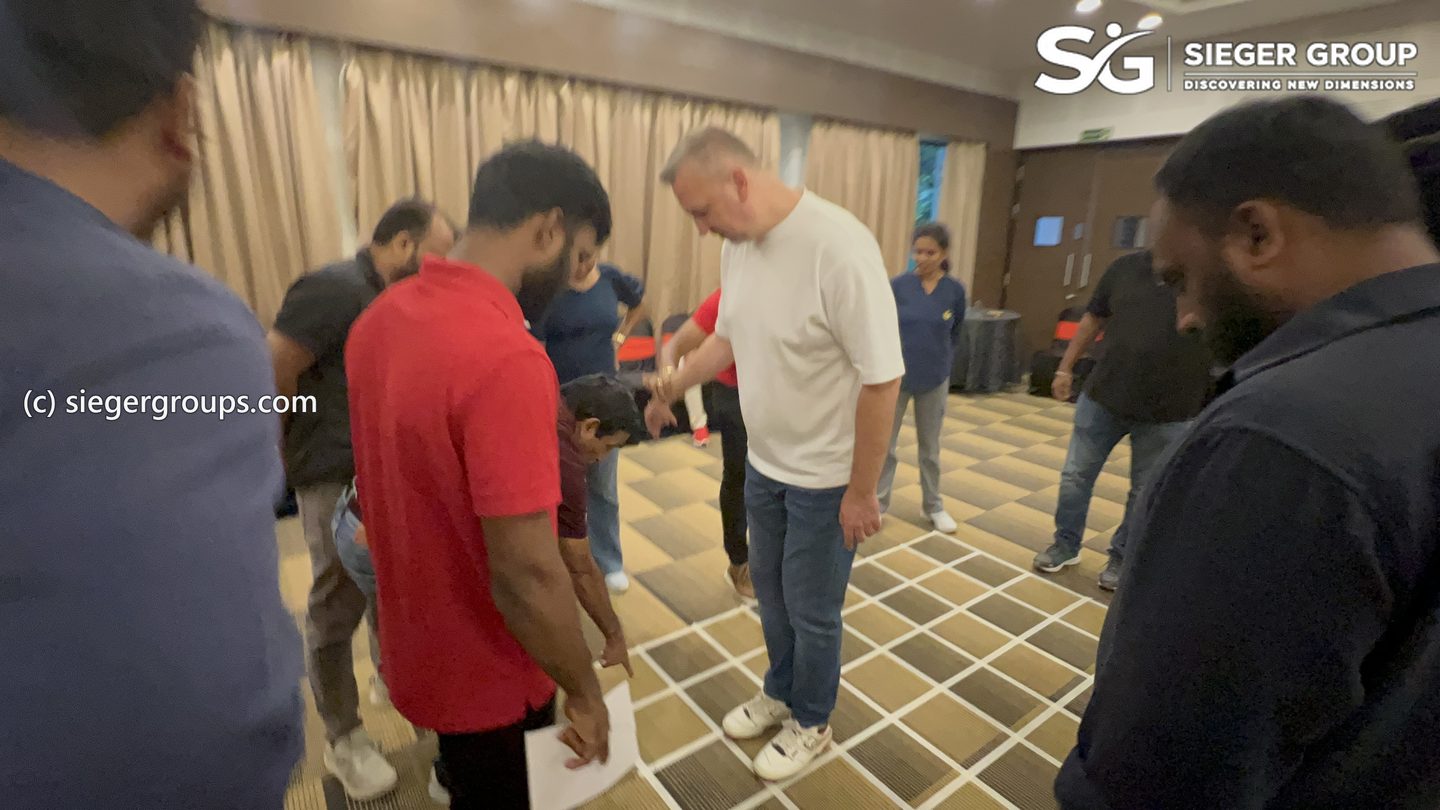
Review the hidden-route challenge and how the group will receive feedback. How did the team record useful information about the maze?
Collect observations from attempts so discoveries are available to everyone. What helped participants avoid repeating an unsuccessful route?
Use the feedback to test the route and avoid repeating unhelpful assumptions. Which discoveries needed to reach the next teammate?
Discuss how the group retained learning and coordinated its next attempt. How did the group revise its route as the pattern became clearer?
Use these points to draw out what colleagues can learn from Maze Escape.
Reflect on how one person's discovery became a usable guide for others.
Consider what made a failed move informative rather than merely frustrating.
Allow space for the floor grid and for colleagues to observe from its edges. Agree on visible signals and an observer role for anyone who prefers to take part from the side.
Use the feedback to test the route and avoid repeating unhelpful assumptions.
Consider what made a failed move informative rather than merely frustrating.
Collect observations from attempts so discoveries are available to everyone.
How did the team record useful information about the maze?
Record a rejected route as carefully as a successful one so the next person can use both.
Compare how colleagues handle partial information and build a shared explanation.
Work on the handover between the people who discover evidence and the people who act on it.
Notice how a group questions a popular theory before committing to a decision.
An illustrative running order for Maze Escape. Confirm timings, breaks and participation arrangements in your event brief.
Ultimately it will create feelings of euphoric success demonstrating what the team can achieve when they work together. The game can be scaled by having multiple teams play simultaneously, creating a competition.
Sieger Group supports organisations with team-building experiences and facilitated programmes.
Maze Escape is a team Labyrinth on a marked floor grid. Players take turns finding a hidden route, using silent signals to pass each discovery to the next teammate.
Record a rejected route as carefully as a successful one so the next person can use both.
Read the maze rules, Build a shared route memory, Revise the next move, Explain the route discovered. The final selection is agreed with the organiser.
Project teams and cross-functional groups can use this experience. Compare how colleagues handle partial information and build a shared explanation.
This activity is designed for groups of 18–100. Share your expected headcount and venue so Sieger Group can confirm a suitable arrangement.
Allow 45–60 minutes for the activity session. Sieger Group can confirm the timing against your event schedule and agreed format.
Allow space for the floor grid and for colleagues to observe from its edges. Agree on visible signals and an observer role for anyone who prefers to take part from the side.
Share access requirements and preferences when planning the session. The facilitator can discuss roles such as observing, recording decisions or presenting the group’s findings.
Review the hidden-route challenge and how the group will receive feedback.
Consider what made a failed move informative rather than merely frustrating.
Yes. Share the purpose of the offsite and which part of Maze Escape you would like to emphasise. The facilitator can discuss how to fit the chosen elements into the wider event.
Use the enquiry form or contact Sieger Group with your preferred date, city, headcount, venue and learning objective. Include any participation or access requests in the brief.
Share your date, city, group size and the outcome you want colleagues to take away.
Request a tailored proposalTell us what you have in mind. We will help you explore a programme that fits your people and your occasion.
Still finalising the details? Share what you know.
Every team is different. Share your people, purpose and preferred setting, and we’ll translate your brief into an experience designed to connect, engage and create lasting impact.
Share your brief and preferred contact details.