Read the decision game
Review the scoring rules and the choices available to each group. How did the team define success before making its choices?
Learning focusUnderstanding the decision rules
Repeated choices ask teams to balance their own score with the wider group result. Earlier decisions influence how much confidence colleagues place in the next agreement.
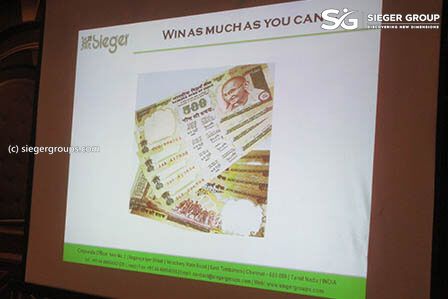
Teams make a series of choices whose scores depend on what other groups decide. A strategy that looks rewarding in one round can change the way colleagues respond in the next. The final score gives the room a shared record of cooperation and competition.
Compare the stated intention behind a choice with the message the other team received.
Crack the Code offers a comparison for team decision-making. The scoring game focuses on how one group’s choices affect the results of others.
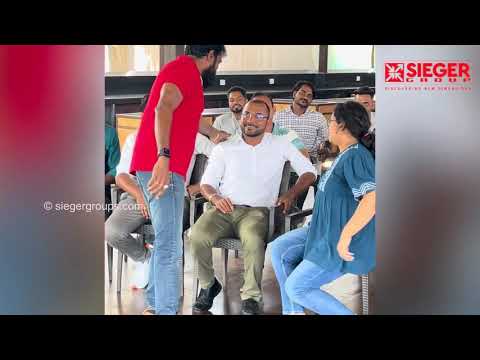
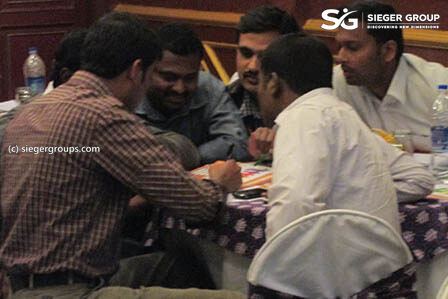
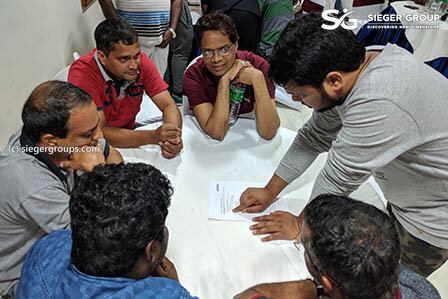
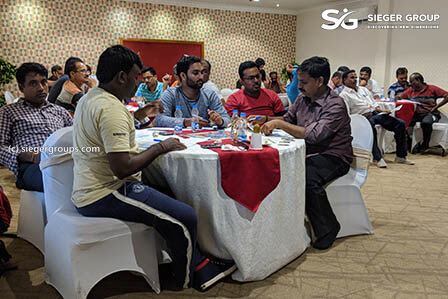
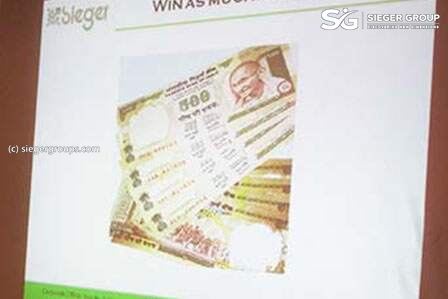
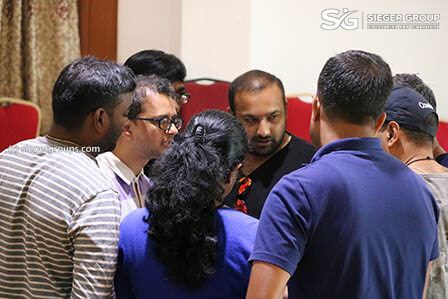
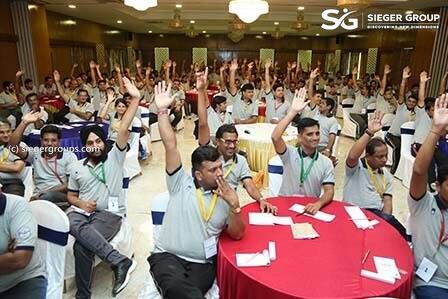
Review the scoring rules and the choices available to each group. How did the team define success before making its choices?
Compare individual-group interests with the possible shared result. Which assumptions were made about the other groups?
Observe the effect of decisions and agreements as the rounds develop. How did earlier decisions influence later cooperation?
Discuss how trust, communication and incentives shaped the total outcome. What did the overall result reveal about competing and collaborating?
Use these points to draw out what colleagues can learn from Win as Much as You Can.
Reflect on when a choice that helped one group affected the others.
Consider how later actions influenced the value of earlier promises.
Discuss the scenario, team mix, room or table layout and the decisions that matter most to your group.
Observe the effect of decisions and agreements as the rounds develop.
Consider how later actions influenced the value of earlier promises.
Compare individual-group interests with the possible shared result.
How did the team define success before making its choices?
Compare the stated intention behind a choice with the message the other team received.
Examine how a decision changes when another stakeholder explains their priorities.
Practise making dependencies visible before agreeing a shared course of action.
Review trade-offs and capture the assumptions behind an important choice.
An illustrative running order for Win as Much as You Can. Confirm timings, breaks and participation arrangements in your event brief.
You’ve gathered your team or organization together, likely at a large meeting or conference. You’d like to kick off your event with something engaging that sets the tone for working as a team throughout your time together.
Sieger Group supports organisations with team-building experiences and facilitated programmes.
Repeated choices ask teams to balance their own score with the wider group result. Earlier decisions influence how much confidence colleagues place in the next agreement.
Compare the stated intention behind a choice with the message the other team received.
Read the decision game, Discuss the first strategy, Respond to successive choices, Review the meaning of winning. The final selection is agreed with the organiser.
Managers and emerging leaders and cross-functional teams can use this experience. Examine how a decision changes when another stakeholder explains their priorities.
This activity is designed for groups of 20–100. Share your expected headcount and venue so Sieger Group can confirm a suitable arrangement.
Allow 60 minutes for the activity session. Sieger Group can confirm the timing against your event schedule and agreed format.
Discuss the scenario, team mix, room or table layout and the decisions that matter most to your group.
Share access requirements and preferences when planning the session. The facilitator can discuss roles such as observing, recording decisions or presenting the group’s findings.
Review the scoring rules and the choices available to each group.
Consider how later actions influenced the value of earlier promises.
Yes. Share the purpose of the offsite and which part of Win as Much as You Can you would like to emphasise. The facilitator can discuss how to fit the chosen elements into the wider event.
Use the enquiry form or contact Sieger Group with your preferred date, city, headcount, venue and learning objective. Include any participation or access requests in the brief.
Share your date, city, group size and the outcome you want colleagues to take away.
Request a tailored proposalTell us what you have in mind. We will help you explore a programme that fits your people and your occasion.
Still finalising the details? Share what you know.
Every team is different. Share your people, purpose and preferred setting, and we’ll translate your brief into an experience designed to connect, engage and create lasting impact.
Share your brief and preferred contact details.