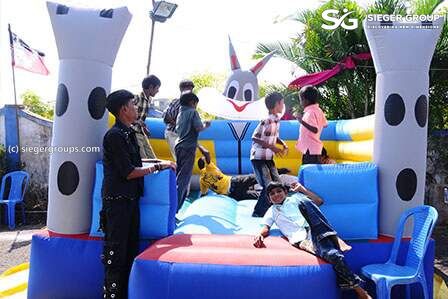
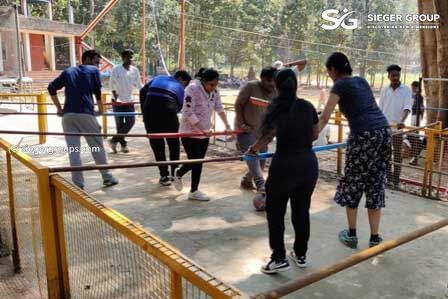
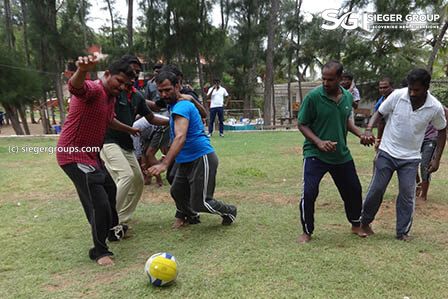
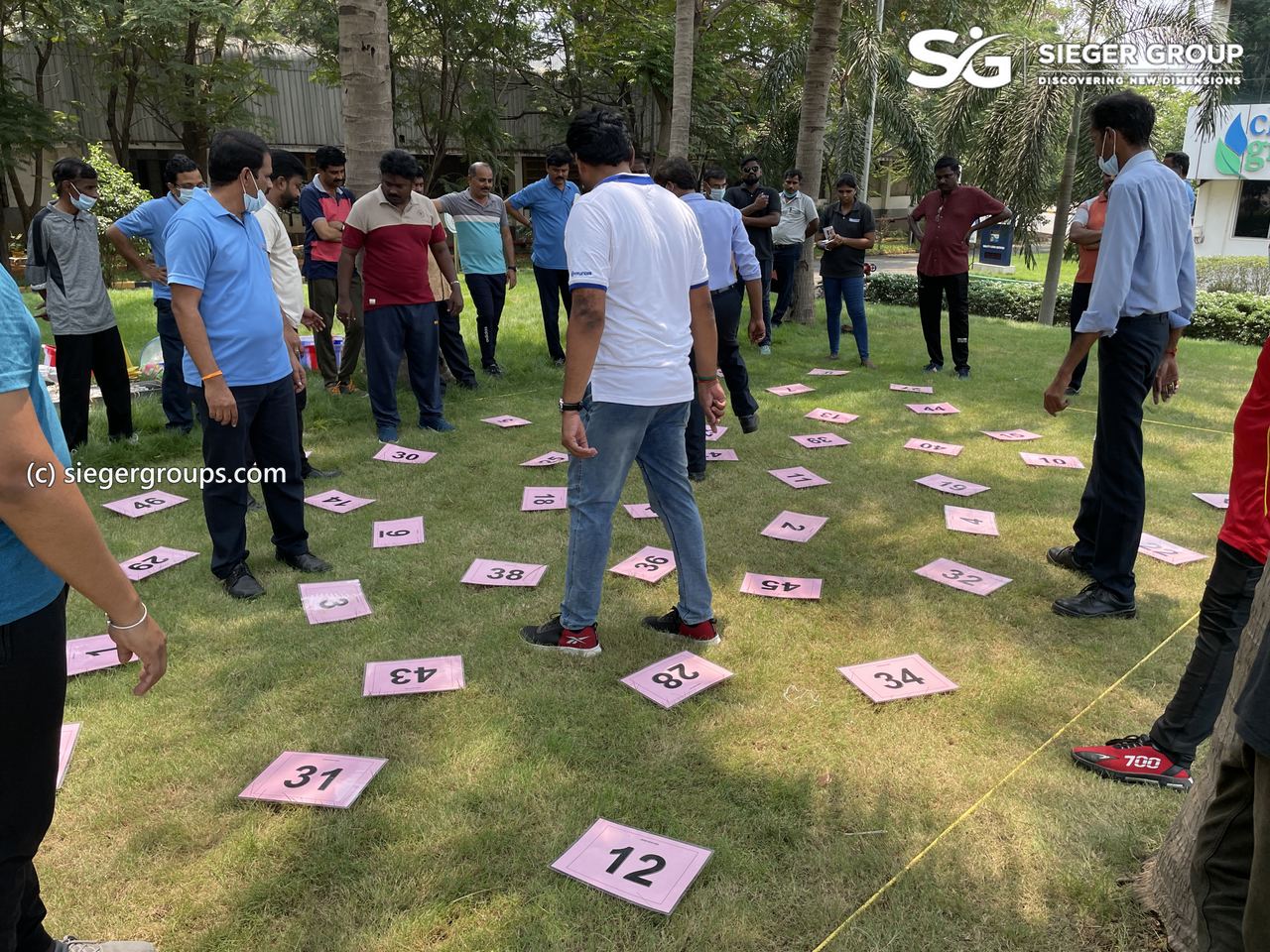
Read the shared playing setup
Review the Multi Ball equipment and the objective for the chosen format. How did the group allocate attention across several moving balls?
Learning focusReading the playing area
Several moving balls divide the group’s attention and create competing priorities. Teams agree who tracks the next transfer and how to call for help.
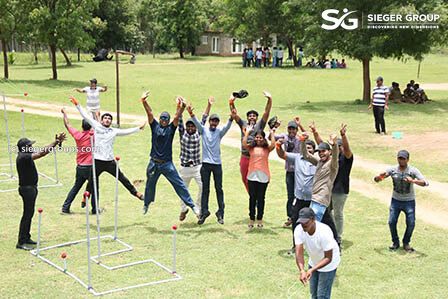
Adding more than one ball changes how a group pays attention. Players have to manage their current exchange while noticing who is ready for the next one. Between rounds the team can agree on a signal and test whether it reduces missed handovers.
Identify which signal helped the group notice an unattended part of the game.
See Multi Ball with a management group and watch what happens to shared attention as the team follows more than one ball.

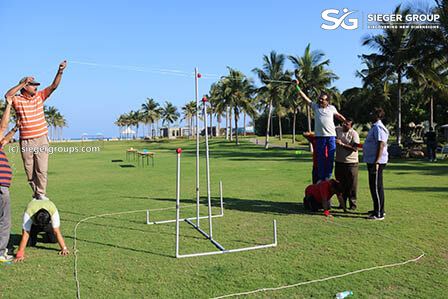
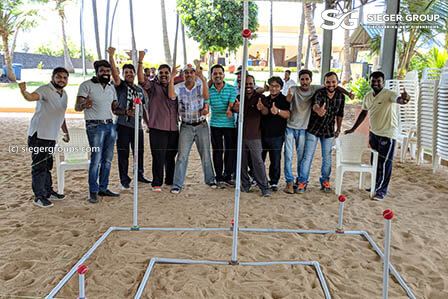
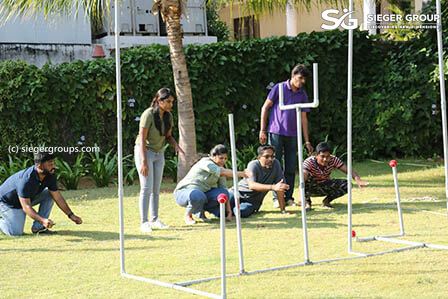
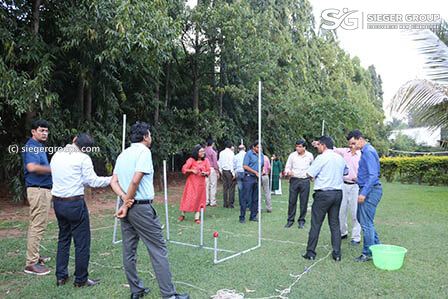
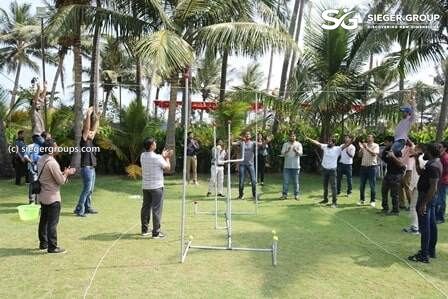
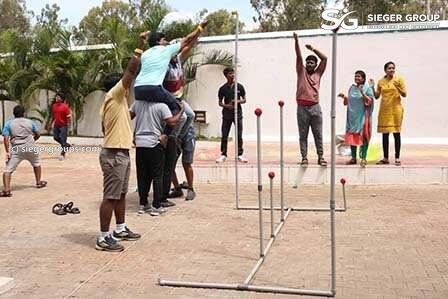
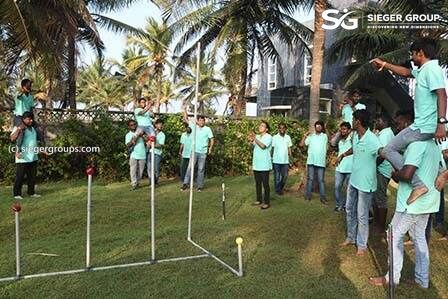
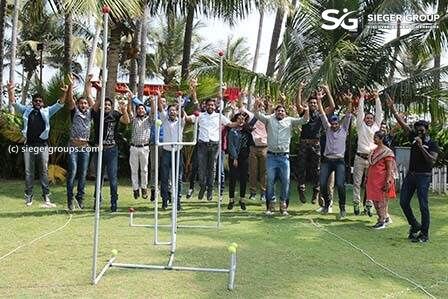
Review the Multi Ball equipment and the objective for the chosen format. How did the group allocate attention across several moving balls?
Agree how teammates will communicate when several demands arise together. Which signals helped teammates anticipate the next movement?
Observe the ball movement and coordinate the next team response. What changed when more than one task needed attention?
Discuss how the group kept track of competing demands during the challenge. How did participants recover coordination after a missed transfer?
Use these points to draw out what colleagues can learn from Multi Ball Team Challenge.
Reflect on what helped the team notice a need beyond the immediate task.
Consider how the group avoided both duplicated effort and missed responsibilities.
Share the floor or field space, group size, schedule and preferred activity level so stations and rotations can be agreed.
Observe the ball movement and coordinate the next team response.
Consider how the group avoided both duplicated effort and missed responsibilities.
Agree how teammates will communicate when several demands arise together.
How did the group allocate attention across several moving balls?
Identify which signal helped the group notice an unattended part of the game.
Make first contact through a short challenge with a clear shared purpose.
Use a change of pace to see different strengths and roles in action.
Choose a mix of active, creative and observer roles around the audience and venue.
An illustrative running order for Multi Ball Team Challenge. Confirm timings, breaks and participation arrangements in your event brief.
Sometimes the best way to encourage employees to work as a team is to instill team spirit in them through friendly competition. Since Multi Ball Team Activity is often comprised of members with different skill sets, learning how to utilize each team member based on their own skills can be crucial to reach the team’s maximum efficiency.
Sieger Group supports organisations with team-building experiences and facilitated programmes.
Several moving balls divide the group’s attention and create competing priorities. Teams agree who tracks the next transfer and how to call for help.
Identify which signal helped the group notice an unattended part of the game.
Read the shared playing setup, Allocate attention and roles, Respond to changing play, Review shared awareness. The final selection is agreed with the organiser.
New starters and mixed departments and established teams can use this experience. Make first contact through a short challenge with a clear shared purpose.
This activity is designed for groups of 20–200. Share your expected headcount and venue so Sieger Group can confirm a suitable arrangement.
Allow 60 minutes for the activity session. Sieger Group can confirm the timing against your event schedule and agreed format.
Share the floor or field space, group size, schedule and preferred activity level so stations and rotations can be agreed.
Share access requirements and preferences when planning the session. The facilitator can discuss roles such as observing, recording decisions or presenting the group’s findings.
Review the Multi Ball equipment and the objective for the chosen format.
Consider how the group avoided both duplicated effort and missed responsibilities.
Yes. Share the purpose of the offsite and which part of Multi Ball Team Challenge you would like to emphasise. The facilitator can discuss how to fit the chosen elements into the wider event.
Use the enquiry form or contact Sieger Group with your preferred date, city, headcount, venue and learning objective. Include any participation or access requests in the brief.
Share your date, city, group size and the outcome you want colleagues to take away.
Request a tailored proposalTell us what you have in mind. We will help you explore a programme that fits your people and your occasion.
Still finalising the details? Share what you know.
Every team is different. Share your people, purpose and preferred setting, and we’ll translate your brief into an experience designed to connect, engage and create lasting impact.
Share your brief and preferred contact details.