Read the track brief
Review the ball, materials and conditions the model roller coaster must meet. How did teams connect separately built track sections?
Learning focusReading track requirements
Teams construct sections of a model track and connect them into one route. A test run shows whether neighbouring sections work together as intended.
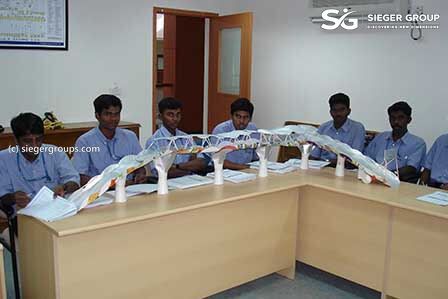
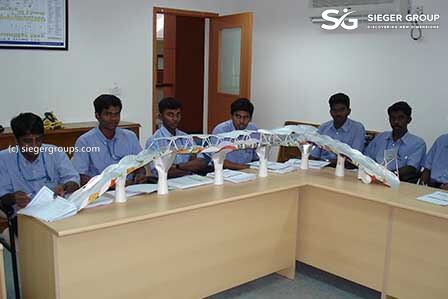
Small groups construct sections of a model roller coaster that must carry a ball along one continuous track. The joins between sections reveal differences in design that looked harmless on paper. A test run shows teams exactly where a change is needed.
Review the transition where the object lost momentum before redesigning a whole section.
The Pipeline film shows a group coordinating a shared transfer. It provides a reference for discussing continuity and timing across neighbouring sections.

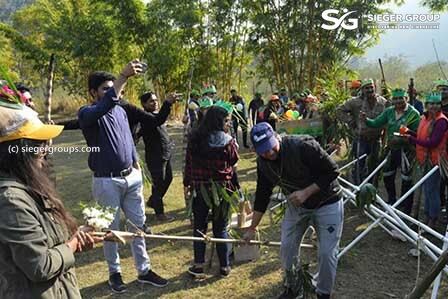
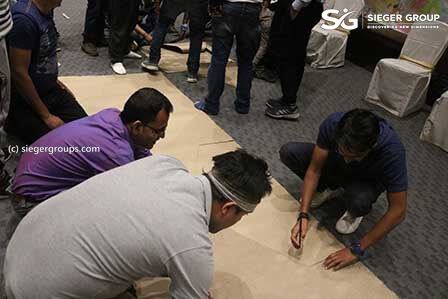
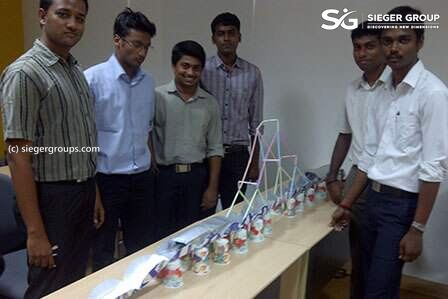
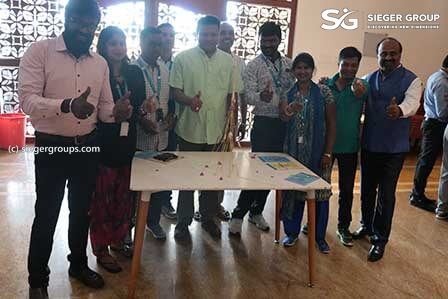
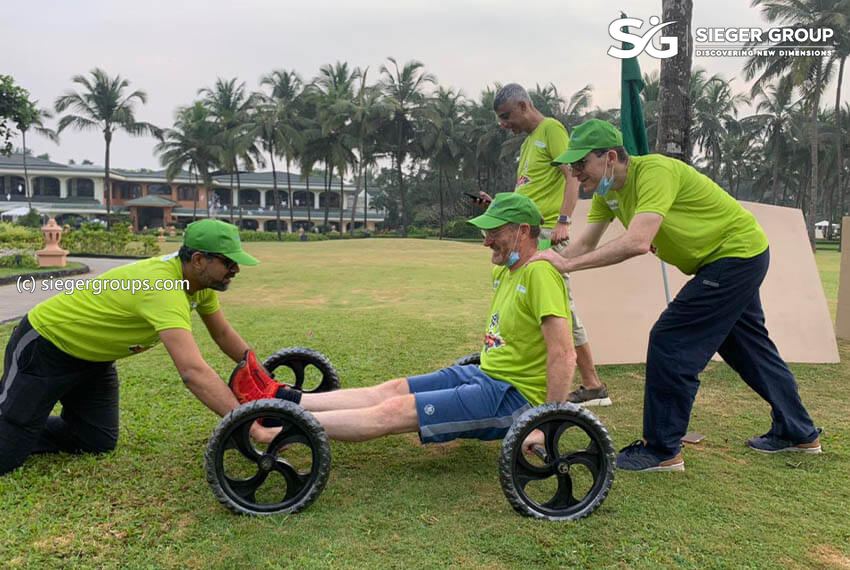
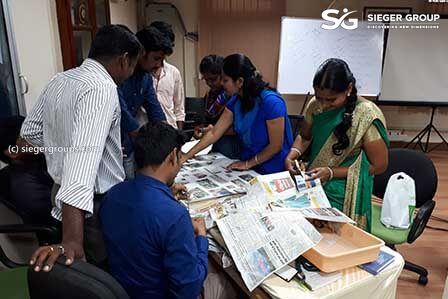
These photographs show related team sessions from the Sieger Group library.
Review the ball, materials and conditions the model roller coaster must meet. How did teams connect separately built track sections?
Plan how track sections will connect and share responsibility for their construction. Which design choices affected the ball’s movement?
Observe the ball's progress and use the result to examine the model. What did a trial run reveal about joins and gradients?
Discuss where the design supported motion and where an adjustment was needed. How did the group coordinate changes across the entire track?
Use these points to draw out what colleagues can learn from Roller Coaster Building Challenge.
Reflect on why a successful section did not automatically mean the whole track would work.
Consider what the ball's movement revealed about an untested design assumption.
Confirm the workspace, materials, team size and any checks that must take place before the finished work is presented.
Observe the ball's progress and use the result to examine the model.
Consider what the ball's movement revealed about an untested design assumption.
Plan how track sections will connect and share responsibility for their construction.
How did teams connect separately built track sections?
Review the transition where the object lost momentum before redesigning a whole section.
Explore how decisions made by one workstream affect the people who receive its output.
Compare how designers, makers and reviewers interpret a shared brief.
Observe who owns the connections between pieces of work.
An illustrative running order for Roller Coaster Building Challenge. Confirm timings, breaks and participation arrangements in your event brief.
Groups must communicate to ensure their designs seamlessly connect together to meet the given requirements. The teams have to continually test each free standing section to make sure it works as a standalone unit and also in unison with all other sections.
Sieger Group supports organisations with team-building experiences and facilitated programmes.
Teams construct sections of a model track and connect them into one route. A test run shows whether neighbouring sections work together as intended.
Review the transition where the object lost momentum before redesigning a whole section.
Read the track brief, Design the route, Build and run the track, Review the transfer points. The final selection is agreed with the organiser.
Project and delivery teams and cross-functional colleagues can use this experience. Explore how decisions made by one workstream affect the people who receive its output.
This activity is designed for groups of 20–200. Share your expected headcount and venue so Sieger Group can confirm a suitable arrangement.
Allow 2–3 hours for the activity session. Sieger Group can confirm the timing against your event schedule and agreed format.
Confirm the workspace, materials, team size and any checks that must take place before the finished work is presented.
Share access requirements and preferences when planning the session. The facilitator can discuss roles such as observing, recording decisions or presenting the group’s findings.
Review the ball, materials and conditions the model roller coaster must meet.
Consider what the ball's movement revealed about an untested design assumption.
Yes. Share the purpose of the offsite and which part of Roller Coaster Building Challenge you would like to emphasise. The facilitator can discuss how to fit the chosen elements into the wider event.
Use the enquiry form or contact Sieger Group with your preferred date, city, headcount, venue and learning objective. Include any participation or access requests in the brief.
Share your date, city, group size and the outcome you want colleagues to take away.
Request a tailored proposalTell us what you have in mind. We will help you explore a programme that fits your people and your occasion.
Still finalising the details? Share what you know.
Every team is different. Share your people, purpose and preferred setting, and we’ll translate your brief into an experience designed to connect, engage and create lasting impact.
Share your brief and preferred contact details.