Understand the ring target
Review the rings, shared controls and stacking objective. How did participants coordinate the ring-stacking controls?
Learning focusReading the target
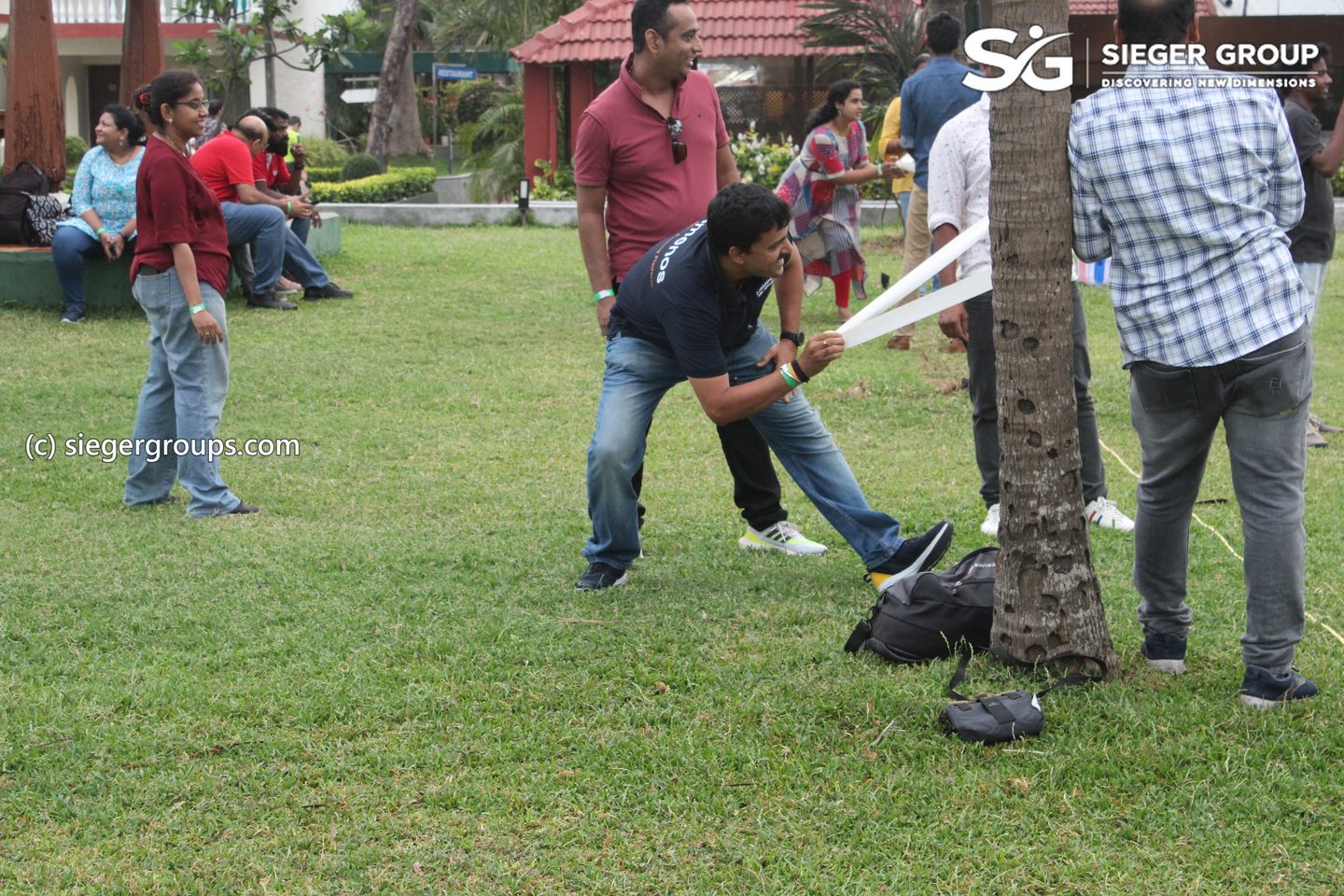
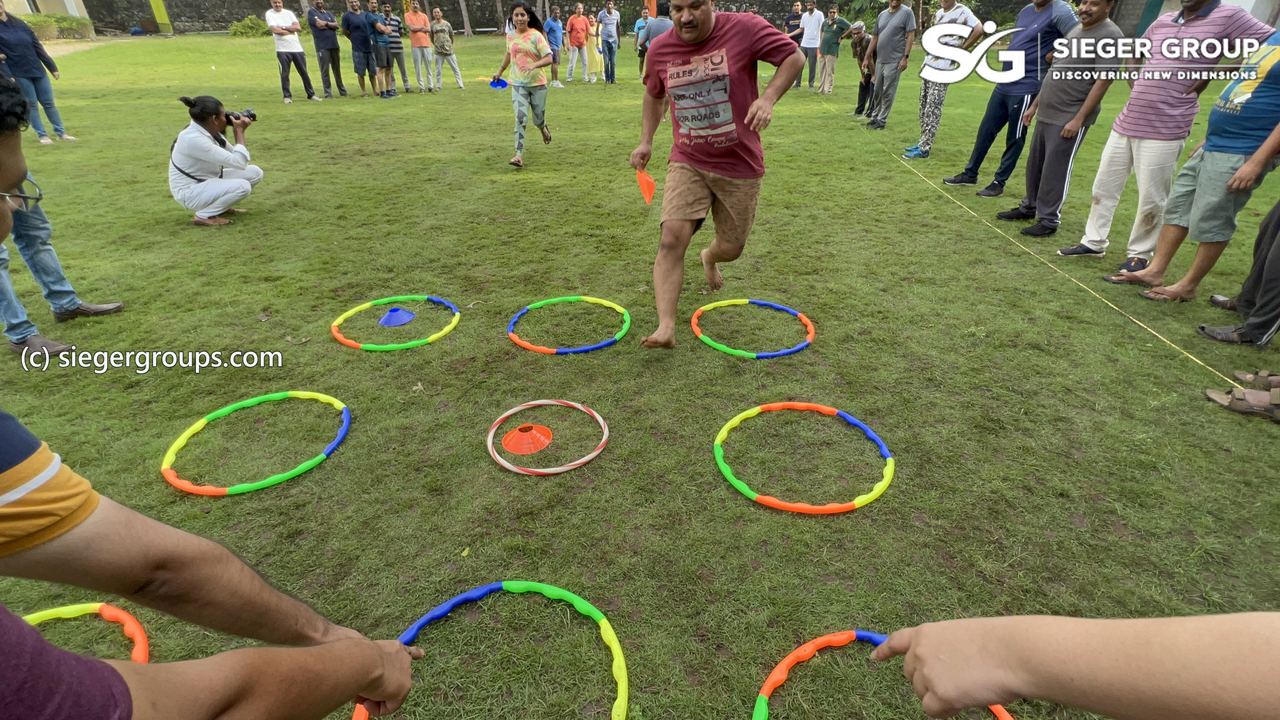
A group coordinates small adjustments to place a ring on its target. Moving in different directions makes the effect of competing signals immediately visible.
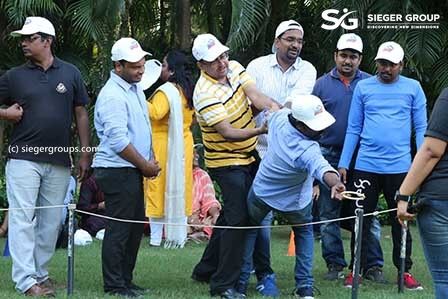
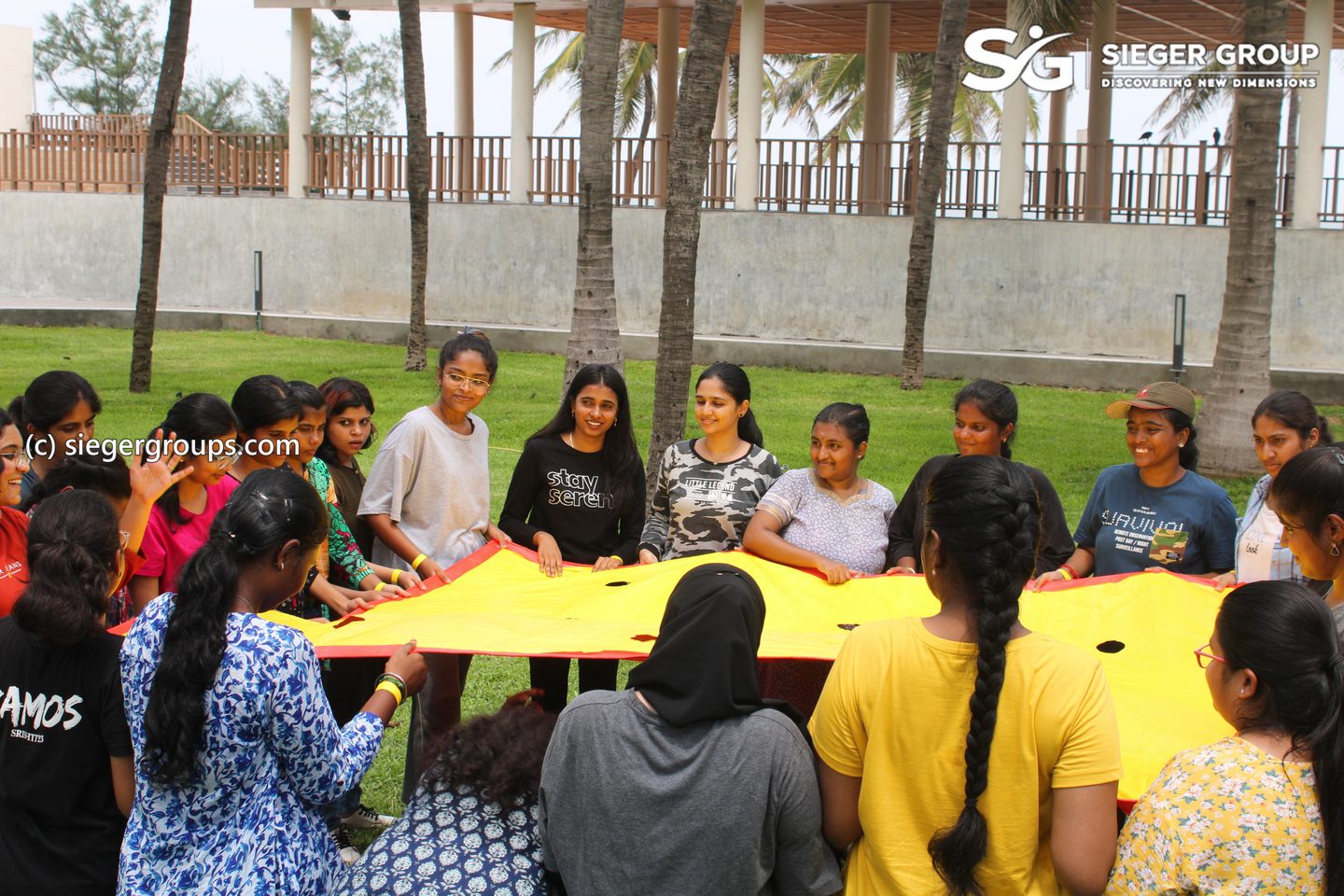
Players coordinate around a target to place or stack the rings under the agreed rules. Small movements by one teammate affect the rest of the group. The review asks which cue helped people act together when several instructions arrived at once.
Agree which person will describe the next adjustment and how the others will confirm it.
See how separate contributions affect a single stack. Look for the moment a short, shared instruction helps the group coordinate.

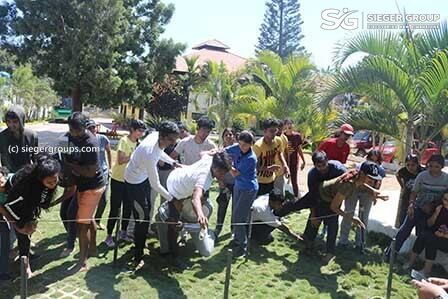
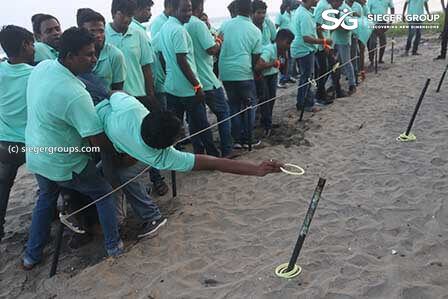
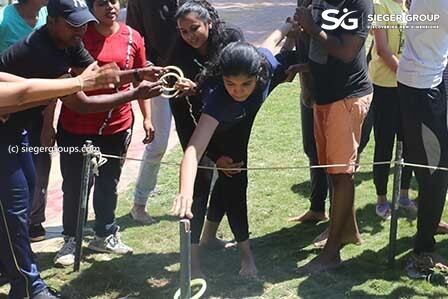
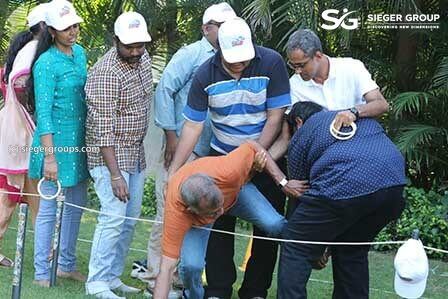
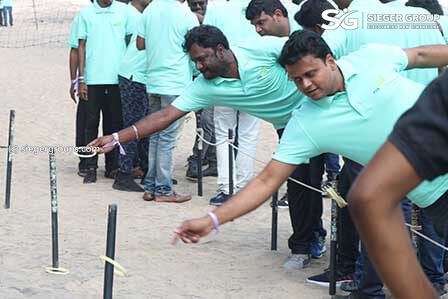
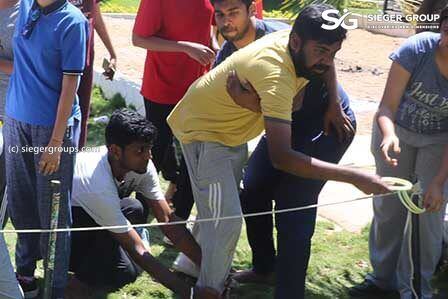
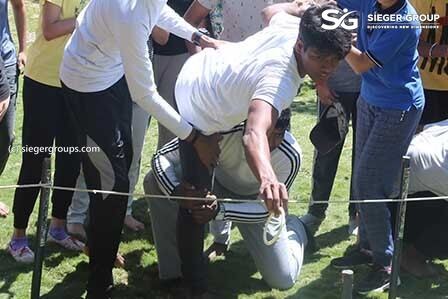
Review the rings, shared controls and stacking objective. How did participants coordinate the ring-stacking controls?
Clarify how participants will describe changes to the ring's position. Which small adjustments needed agreement across the group?
Observe the shared movement and adjust together as the ring approaches its target. What helped the team align the ring with its target?
Discuss which signals reduced competing actions and improved placement. How did colleagues respond when a placement needed another attempt?
Use these points to draw out what colleagues can learn from Ring Stack Challenge.
Reflect on how several small contributions combined into one movement.
Consider which words made a needed correction clearest to the group.
Confirm an accessible activity space, the agreed equipment, group rotations and an observer option.
Observe the shared movement and adjust together as the ring approaches its target.
Consider which words made a needed correction clearest to the group.
Clarify how participants will describe changes to the ring's position.
How did participants coordinate the ring-stacking controls?
Agree which person will describe the next adjustment and how the others will confirm it.
Practise giving short signals during work that depends on several people acting together.
Discover how colleagues prefer to give directions, receive feedback and ask for a pause.
Observe the difference between issuing an instruction and confirming that it was understood.
An illustrative running order for Ring Stack Challenge. Confirm timings, breaks and participation arrangements in your event brief.
Second round, throwers are blindfolded and the team has to use more communication and teamwork to guide each thrower. The person stacking the ring should listen carefully and trust everyone while throwing the rings.
Sieger Group supports organisations with team-building experiences and facilitated programmes.
A group coordinates small adjustments to place a ring on its target. Moving in different directions makes the effect of competing signals immediately visible.
Agree which person will describe the next adjustment and how the others will confirm it.
Understand the ring target, Agree adjustment signals, Coordinate the placement, Review precision as a group. The final selection is agreed with the organiser.
Operational teams and newly formed teams can use this experience. Practise giving short signals during work that depends on several people acting together.
This activity is designed for groups of 20–200. Share your expected headcount and venue so Sieger Group can confirm a suitable arrangement.
Allow 45 minutes for the activity session. Sieger Group can confirm the timing against your event schedule and agreed format.
Confirm an accessible activity space, the agreed equipment, group rotations and an observer option.
Share access requirements and preferences when planning the session. The facilitator can discuss roles such as observing, recording decisions or presenting the group’s findings.
Review the rings, shared controls and stacking objective.
Consider which words made a needed correction clearest to the group.
Yes. Share the purpose of the offsite and which part of Ring Stack Challenge you would like to emphasise. The facilitator can discuss how to fit the chosen elements into the wider event.
Use the enquiry form or contact Sieger Group with your preferred date, city, headcount, venue and learning objective. Include any participation or access requests in the brief.
Share your date, city, group size and the outcome you want colleagues to take away.
Request a tailored proposalTell us what you have in mind. We will help you explore a programme that fits your people and your occasion.
Still finalising the details? Share what you know.
Every team is different. Share your people, purpose and preferred setting, and we’ll translate your brief into an experience designed to connect, engage and create lasting impact.
Share your brief and preferred contact details.