Read the rope-web problem
Review the available openings and the agreed rules of the challenge. How did the team plan around the web’s available openings?
Learning focusReading the constraints
A rope web turns movement into a sequencing problem. Teams consider the openings, agree roles and keep track of the options still available to the rest of the group.
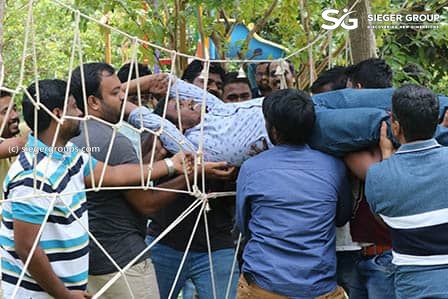
The group faces a course element shaped like a web and a set of rules for reaching the other side. Planning for the last participant can change the opening decision. The facilitator introduces the setup and helps the team review how its plan evolved.
Review the first choice that narrowed the options for someone later in the sequence.
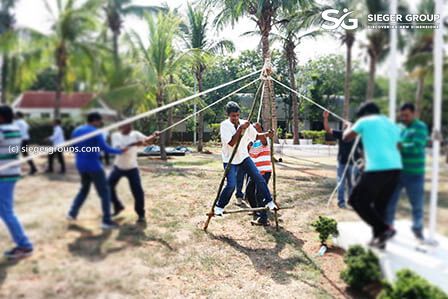
See the physical layout of the Spider Web challenge. Consider how a group makes a route choice and keeps track of who still needs a turn.

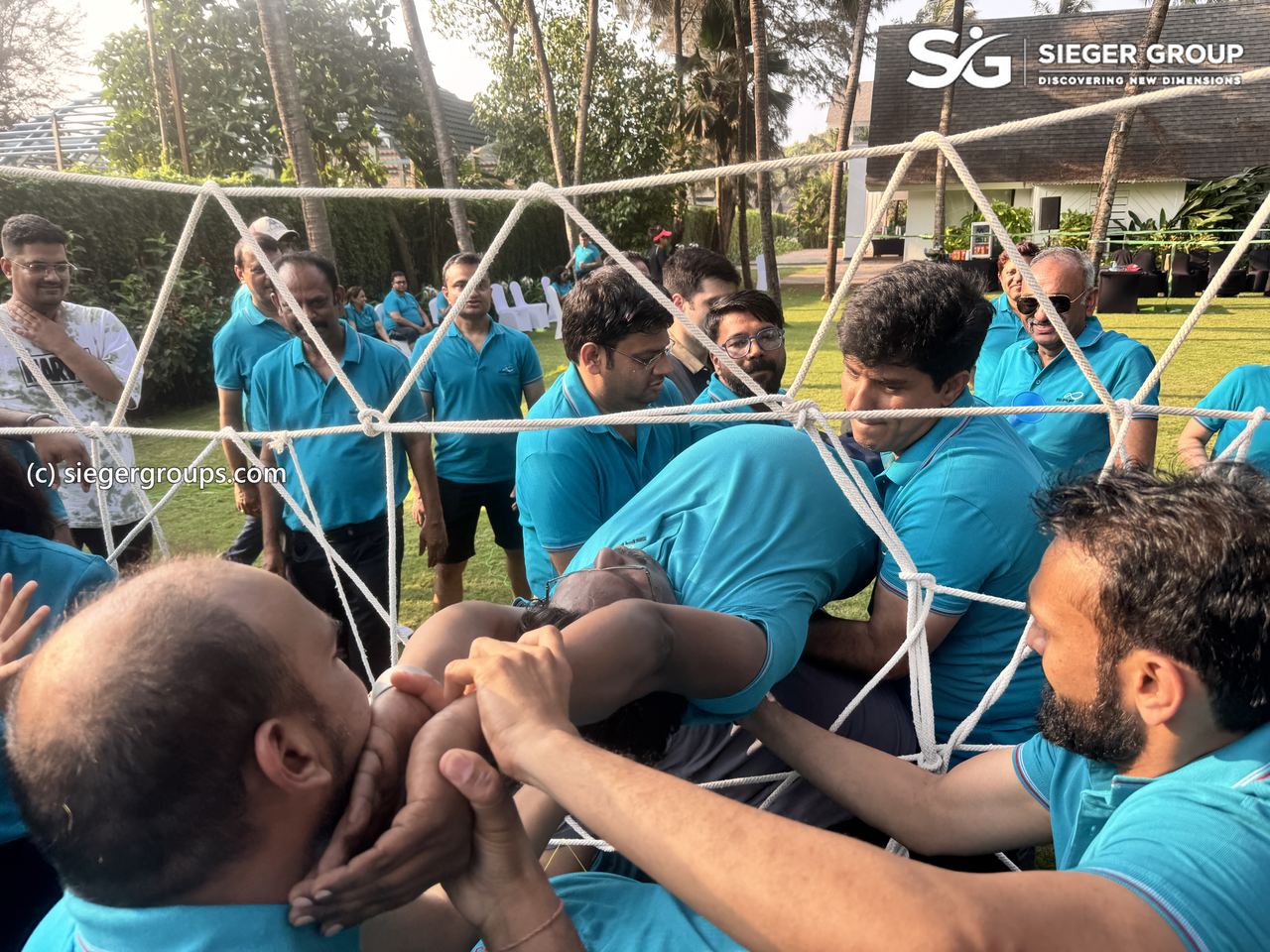
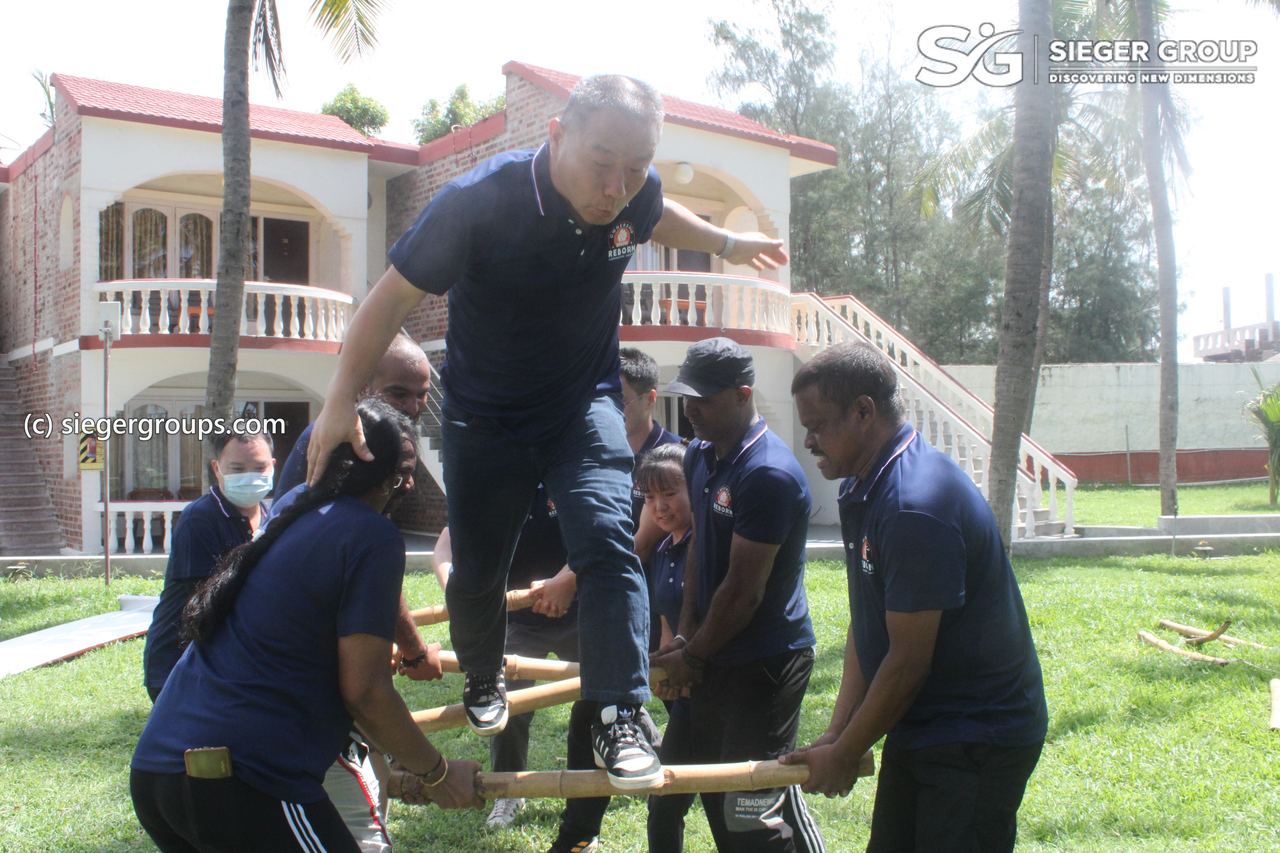


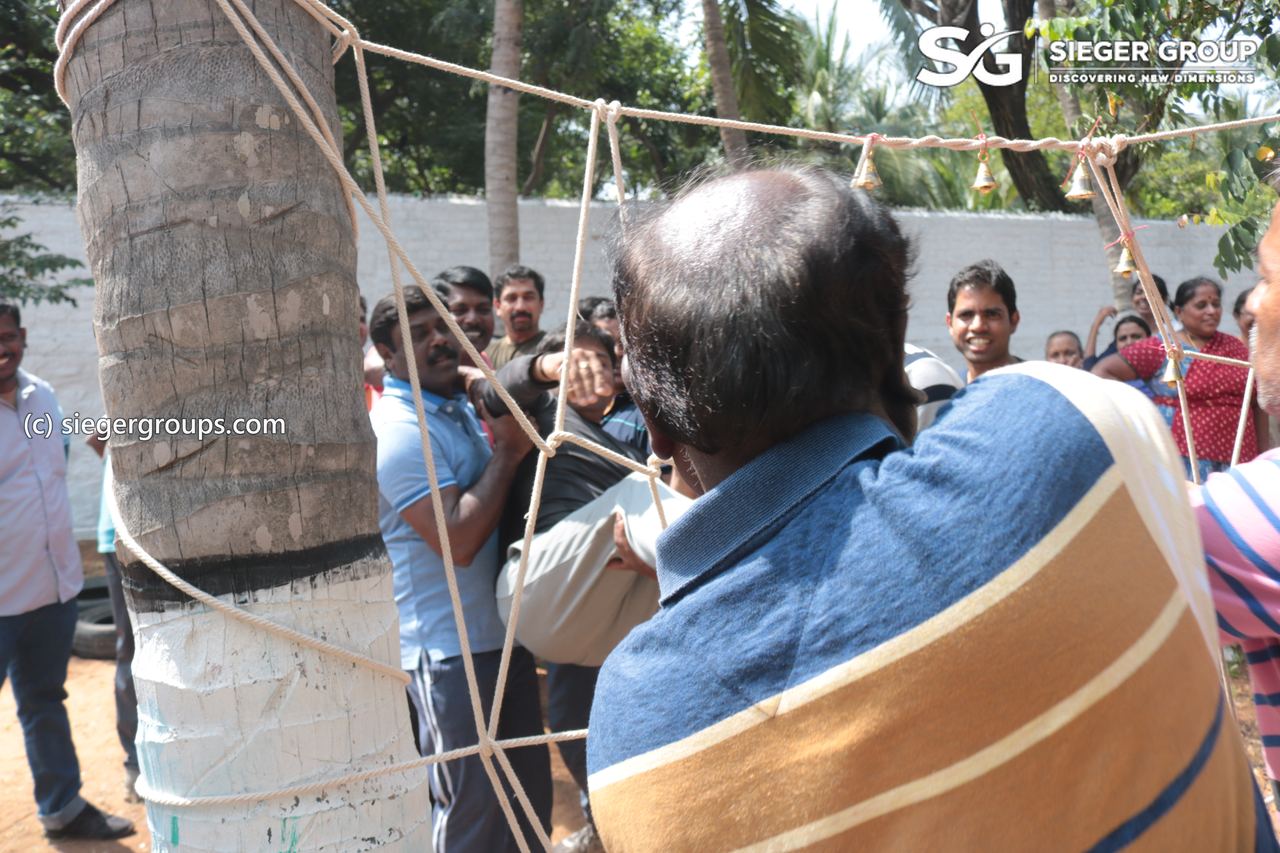

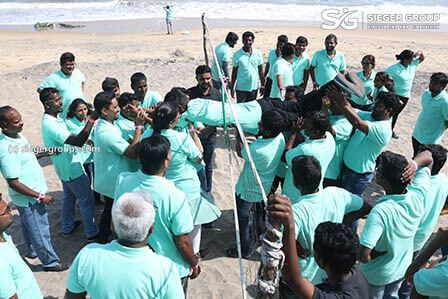
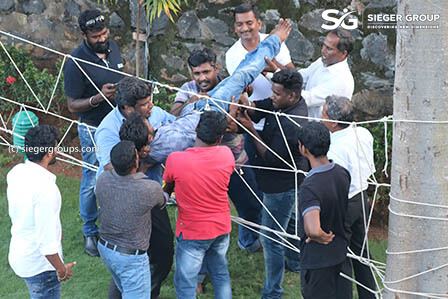
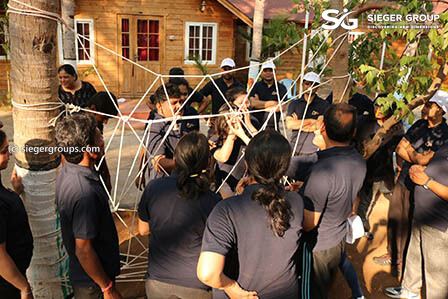
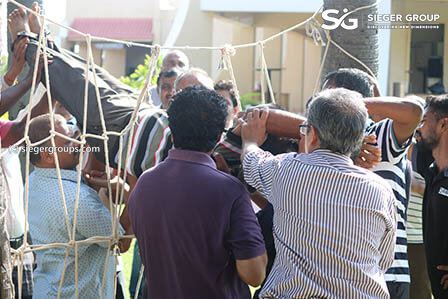
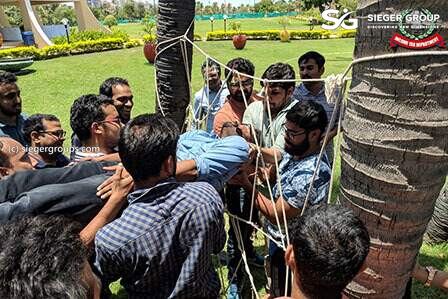
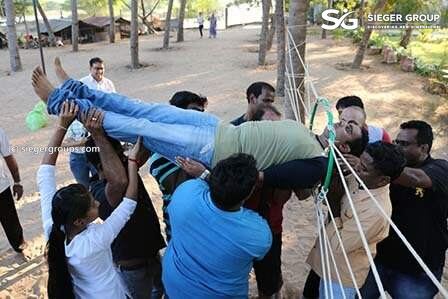
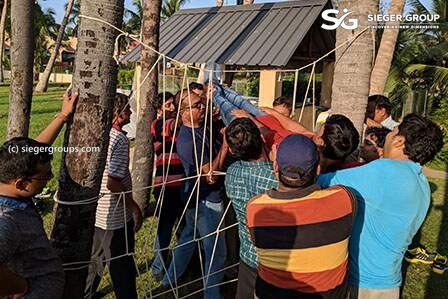
Review the available openings and the agreed rules of the challenge. How did the team plan around the web’s available openings?
Discuss the order of participation and the responsibilities needed for the chosen format. Which choices affected participants still waiting to cross?
Work through the facilitator-led task while checking the shared plan. What helped colleagues communicate before changing the plan?
Discuss how early choices affected the opportunities available later. How did the group adapt when an opening was no longer available?
Use these points to draw out what colleagues can learn from Spider Web Team Challenge.
Reflect on whether the sequence accounted for the whole team.
Consider how using one opening changed the next decision.
Confirm an accessible activity space, the agreed equipment, group rotations and an observer option.
Work through the facilitator-led task while checking the shared plan.
Consider how using one opening changed the next decision.
Discuss the order of participation and the responsibilities needed for the chosen format.
How did the team plan around the web’s available openings?
Review the first choice that narrowed the options for someone later in the sequence.
Practise giving short signals during work that depends on several people acting together.
Discover how colleagues prefer to give directions, receive feedback and ask for a pause.
Observe the difference between issuing an instruction and confirming that it was understood.
An illustrative running order for Spider Web Team Challenge. Confirm timings, breaks and participation arrangements in your event brief.
Spider Web activity requires participants to pass each other through the web. To do that successfully, they must trust their teammates not drop them. This also allows participants to think creatively, because when passing their teammates through the web, they are not allowed to use the same opening twice.
Sieger Group supports organisations with team-building experiences and facilitated programmes.
A rope web turns movement into a sequencing problem. Teams consider the openings, agree roles and keep track of the options still available to the rest of the group.
Review the first choice that narrowed the options for someone later in the sequence.
Read the rope-web problem, Plan the team sequence, Coordinate through the web, Review the remaining options. The final selection is agreed with the organiser.
Operational teams and newly formed teams can use this experience. Practise giving short signals during work that depends on several people acting together.
This activity is designed for groups of 20–200. Share your expected headcount and venue so Sieger Group can confirm a suitable arrangement.
Allow 45 minutes for the activity session. Sieger Group can confirm the timing against your event schedule and agreed format.
Confirm an accessible activity space, the agreed equipment, group rotations and an observer option.
Share access requirements and preferences when planning the session. The facilitator can discuss roles such as observing, recording decisions or presenting the group’s findings.
Review the available openings and the agreed rules of the challenge.
Consider how using one opening changed the next decision.
Yes. Share the purpose of the offsite and which part of Spider Web Team Challenge you would like to emphasise. The facilitator can discuss how to fit the chosen elements into the wider event.
Use the enquiry form or contact Sieger Group with your preferred date, city, headcount, venue and learning objective. Include any participation or access requests in the brief.
Share your date, city, group size and the outcome you want colleagues to take away.
Request a tailored proposalTell us what you have in mind. We will help you explore a programme that fits your people and your occasion.
Still finalising the details? Share what you know.
Every team is different. Share your people, purpose and preferred setting, and we’ll translate your brief into an experience designed to connect, engage and create lasting impact.
Share your brief and preferred contact details.