Porthole
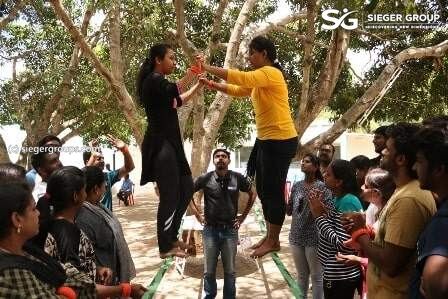
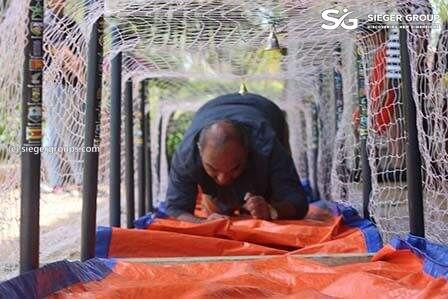
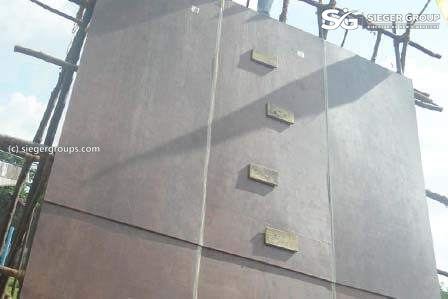
The group works through the selected porthole element under the activity briefing, planning how each person contributes and how the team communicates before attempting the task.
Learning focusPlanning the order · Checking available support
A facilitated experience, designed around your team.
Build collaboration from the ground up. Low-rope team challenges invite colleagues to plan together, coordinate their efforts and support one another through practical tasks shaped around your team and setting.
Compare a passage through the Spider Web with the shared balance of Whale Watch or the resource puzzle of Acid River. These core choices help a team decide whether it wants to work on planning, movement or communication.
The group works through the selected porthole element under the activity briefing, planning how each person contributes and how the team communicates before attempting the task.
The Alligator Crossing is a series of platforms set out approximately 8 feet apart that the group must cross using a 6 foot board. Each platform becomes progressively smaller.
The commitment bridge has two foot cables that form a "Y" between trees or poles. The objective is work with a partner to try to go as far along the cables as possible without falling.
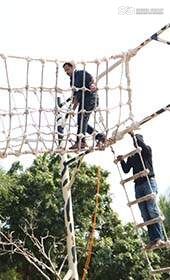
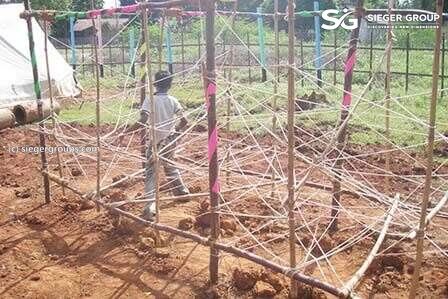
Teams plan a route through the selected web element, considering available spaces, participation roles and the coordination needed to support the agreed crossing method.
The Whale Watch is a popular ropes course activity that is constructed by create a large platform with a see saw action, which imitates the rocking back and forth of a ship. The objective is to have the group perform various functions on the platform without allowing the edges of the platform to touch the ground.
Teams cross an imaginary river using the agreed planks and supports, planning transfers and sharing information so the entire group can work towards the same destination.
Select a narrow or moving surface to explore pace and balance. Colleagues can identify a cue that helped the group settle before continuing.
The Swinging Log is a popular ropes course element that is constructed between trees or poles. A tree or log is suspended with cables between trees or poles, making it very difficult to stand on. The objective is to perform various group balancing tasks on top of the log.
The Tee Pee Shuffle is simply a log or pole on the ground that groups can balance on. You can make one with more of a finished look by elevating the log. The objective is to have the group perform various tasks while balanced on the log.
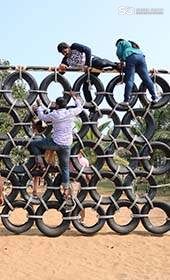
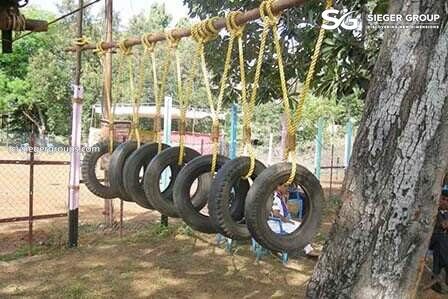
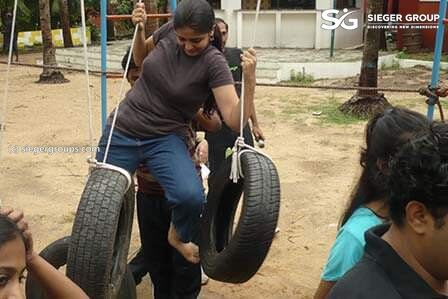
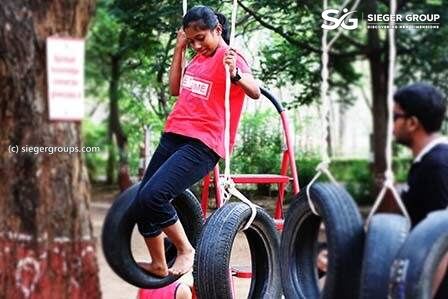
The Tire Traverse is one of the most popular low ropes elements. Tires are suspended in the air by cables and the group's goal is to cross through the element without touching the ground. This is the first event in our team challenge circuit that tests physical endurance as well as group work.
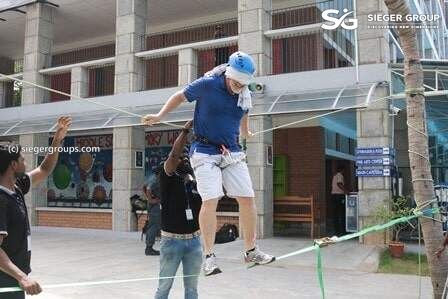
Participants traverse a low suspended log while adapting to its movement. The format can be adjusted for an individual crossing or a small team challenge, encouraging balance, concentration and coordination.
The Horizontal Ladder is over 50 feet of angled walkway that rises and falls between 6 trees. Your team walks through this maze of angles while the ladder shakes and moves from side to side. A great team challenge for all age groups.
Sounds like a gymnastics element. Pass every member of your team from one side of the trees to the other via a 15 foot suspended log. Each team mate must be passed over the top of the log to the other side.
Demonstrating form while on a 16 foot platform with lots of other people is challenging. The Balance Platform places two at a time on a stand up, sit down teeter totter and continually adds and subtracts team members while balancing the entire platform.
A change of direction or support brings a different communication task. Compare two course elements and ask which instructions were easiest to act on.
The Mohawk Walk is series of footcables strung between trees or poles, typically in a zig zag pattern. The object is to get the entire group from the first tree to the last without touching the ground, and without the aid of foreign objects (sticks, rope, etc).
Multi Line Traverse is ideal for groups working together or alone. Ropes are spaced farther and farther apart as you travel along the cable. This is a good warm up for our high ropes multi line that is 24' above ground.
The third element in our non stop low ropes course. The Zig Zag uses deductive reasoning to calculate which of the three boards is used in what order to snap into a make shift bridge. and did we mention sharing.
Once you stretch the rope out towards the middle everything changes. To make this low ropes course event even harder the rope only makes it 20 feet. The last seven feet requires team assistance or a long leap of faith.
Heebie Jeebie is the name for this low ropes course team builder. Ours is over 27 feet long and somewhere in the middle is where the name came from. Two intersecting ropes cross to create both and obstacle and a blessing.
It fly's over a valley and has over 200 feet of cable holding it to two trees. It's called The Zip Seat and it's our warm up to it's bigger brother the twin Zip line. Friends and team mates push the seat at different speeds to achieve the desired results.
Participants traversing across different diverging cables must work together to pass each other without stepping off the cables. Other group members serve as spotters to keep the team moving on the element without touching the ground.
Poles and cable configured to offer several different low ropes challenges. Wild woozy, tension traverse and the mohawk walk provide unique challenges for repeat group and progressive programs.
A limited supply of stepping places or shared equipment forces the group to decide who or what moves next.
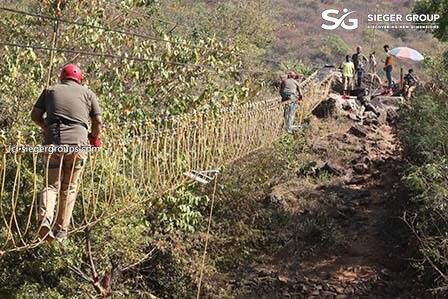
Participants cross a sequence of suspended platforms that move beneath their feet. The challenge calls for balance, concentration and carefully coordinated movement, while teammates offer encouragement and discuss how to approach the crossing.
The group must move from one end of the Meuse to the other, using only the limited resources provided. Individuals and resources are not allowed to touch the ground within the Meuse.
This high energy activity has team members working together using plastic channels to move a tiny ball from one location to another without dropping the ball. The ball can only roll forward and may never touch the ground.
Sometimes called Toxic Waste, this activity is an excellent way to challenge a groups ability to solve complex problems. To be successful teams must ransport a variety of substances from one are to another without dropping or touching their cargo .
Island consists of two larger raised wooden platforms with a smaller platform in the middle. The platforms are about 7 feet apart. The task is to get the whole group from one large platform to the other large platform via the small platform using two board that by themselves aren't quite long enough.
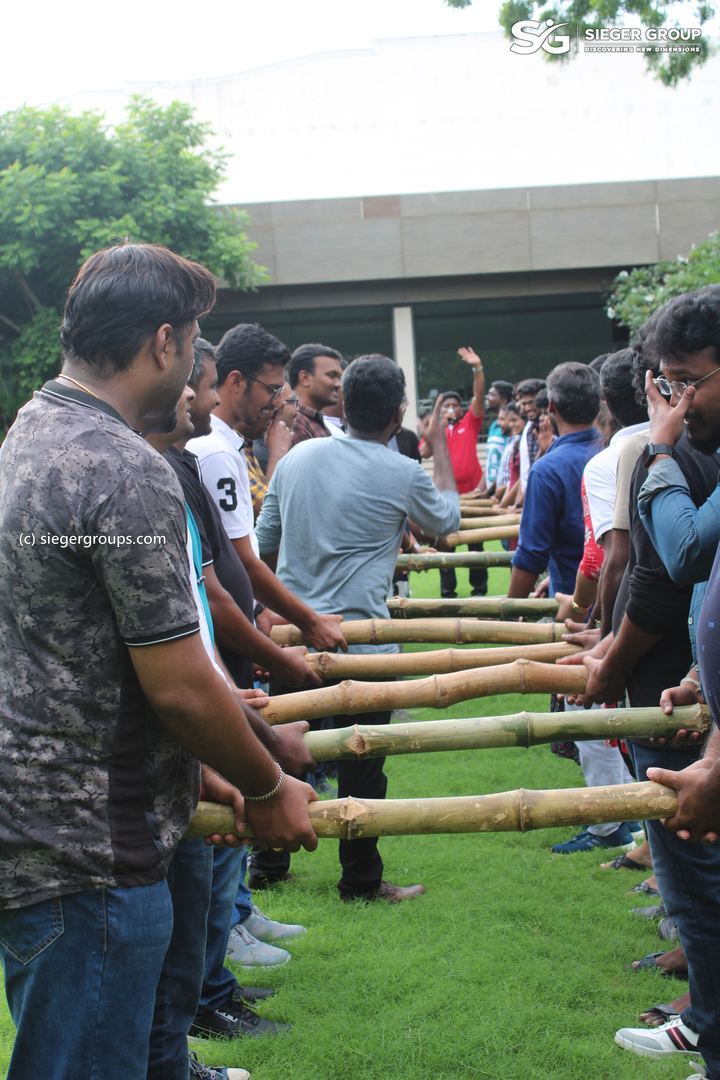
Participants use the course’s shared beams and rope handles to move together, practising a common rhythm and reviewing how instructions affect the group’s coordination.
Nitro Crossing is a rope swing. " They must also take a container of liquid without spilling. different attachments can be used on the rope to make this an inclusive element for all ages and abilities.
Choose a route-finding exercise, a shared object or a ground puzzle when the team wants to practise giving directions and testing a plan together.
The Challenge Walk sits off the ground 12 to 48 inches while extending the length of three football fields. It features 20 interconnected activities that weaves under a canopy of trees keeping you cool in the summer.
A true trusting experience happens every time as you fall backwards into the crossed arms of your co-workers or friends. The Trust Fall relies on the strengths of many to support the smallest or largest person.
The bullz eye (or giants finger) event challenges participants to carefully remove a large ring off of a sleeping giants finger without touching the finger itself and waking the giant up.
The team must strategically move to solve this human chess problem that has the left side switch places with the right side. Participants may only move one stump at a time, move into an empty space and only travel forward.
Get your group around this giant replica of a childhood favorite. Your group must navigate successfully through this intricate maze without dropping the ball.
This magical lightweight pole must be put on the ground in an even and balanced position. No group members fingers are allowed to release contact with the Helium Stick.
This extra large version of a classic mental problem, is a great activity for small and large groups.
The group, working in unison, places or removes the giant ring from the 8' - 10' high finger. Proper planning, safety and spotting must be implemented in order to assure success.
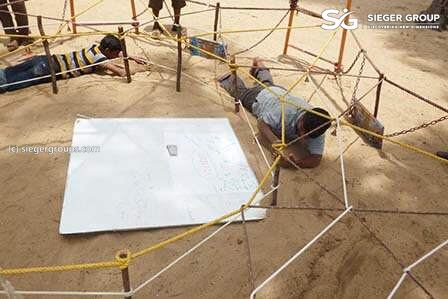
A horizontal spider web great for blindfolded activities, young people, corporate clients, The maze provides numerous challenges for all ages and abilities.
Low rope elements present tests of physical strength, stamina, agility, balance, and flexibility, and invite participants to confront such emotional issues as the fear of falling, the fear of failure, and the fear of losing control.
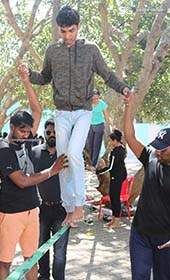
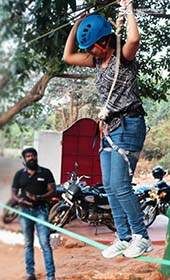
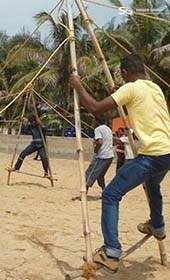
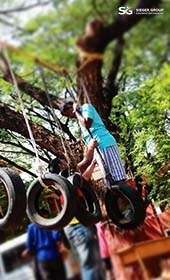
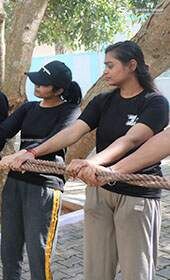
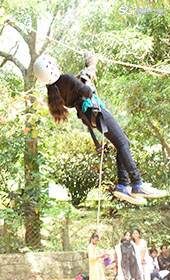
Consider a coordinated task where one person moves ahead before the rest understand the plan. The selected experiences connect planning and shared support with timing and listening, creating a basis for discussing communication in motion and the choices that shape ground-level rope and coordination challenges.
Shape your team brief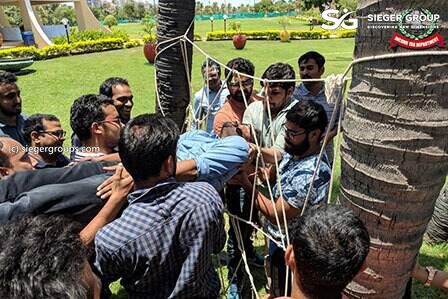
Explore shared movement, planning and support through agreed course elements. Explore how support made visible, a place for observation and reflection on dependence shape ground-level rope and coordination challenges.
Consider roles and sequence before committing the group to an element.
Notice how encouragement and practical coordination affect a shared crossing.
Recognise contributions from colleagues who spot patterns and offer feedback.
Keep instructions clear while teammates respond to movement and changing balance.
Discuss what helps people ask for support and respond to another’s needs.
Explore the behaviours and practical insights your team can review through Low Rope Courses. The debrief connects observations from the experience with situations that matter to participants.
Agree roles and sequence before beginning a selected element, giving teammates a shared picture of the intended approach.
Notice how timely encouragement and practical support affect the group’s coordination during an agreed crossing or balance challenge.
Recognise observation and feedback as useful roles alongside performing the task, respecting the agreed participation arrangements.
Keep instructions clear while colleagues respond to movement, timing and one another’s readiness during the activity.
Discuss what makes it easier to request help and how the group responds when someone needs a different contribution.
See how one transfer or movement changes the conditions for the next colleague, making interdependence concrete.
Use a readiness check in a shared work task before beginning an action that depends on several people moving together.
Use these reflection prompts to turn Low Rope Courses into a focused conversation about what happened, what it means and what to try next.
Identify a choice in Porthole that affected planning and shared support. Describe what the person did and how the group responded.
Hear more than one account of Spider Web. Discuss which details helped colleagues understand the task and which important information arrived too late.
Choose a turning point from Trolleys. Explain the options considered, the reason for the decision and what new information changed the approach.
Use a coordinated task where one person moves ahead before the rest understand the plan as the application example. Identify one moment where timing and listening could change what happens next.
Agree a simple readiness check before beginning an interdependent action. Name the person taking it forward and the first situation in which the group will try the change.
Bring an example from ground-level rope and coordination challenges to the next review. Discuss what changed, what colleagues noticed and which part of the approach needs refining.
A suggested flow for Low Rope Courses, from setting the brief to reviewing the experience. Activity choices, pace and facilitation are confirmed around your group and setting.
Discuss a coordinated task where one person moves ahead before the rest understand the plan. Agree what the group wants to explore about planning before movement, then confirm the selected formats, roles and practical arrangements.
The group works through the selected porthole element under the activity briefing, planning how each person contributes and how the team communicates before attempting the task. Additional options can explore sequencing and cooperation through Spider Web, with the final activity mix agreed in the programme brief.
Examine timing and listening alongside problem-solving and interdependence. Compare the decisions and turning points colleagues observed, including moments when a different question or contribution changed the group’s approach.
Use the review to agree a simple readiness check before beginning an interdependent action. Choose a specific situation in ground-level rope and coordination challenges, confirm who will take the action forward and decide when to compare observations.
Connect Low Rope Courses with purposeful practice, evidence-based reflection and a next step that fits your working context.
Connect planning before movement with a clear question about ground-level rope and coordination challenges. Discuss a coordinated task where one person moves ahead before the rest understand the plan and agree the participation arrangements.
Teams plan a route through the selected web element, considering available spaces, participation roles and the coordination needed to support the agreed crossing method. Notice how colleagues handle sequencing and cooperation while the agreed task develops.
Review a moment involving a place for observation. Hear the perspectives of those performing, observing and supporting the task, then compare the information available to each.
Discuss where timing and listening matter in ground-level rope and coordination challenges. Use a recent example to identify a practical decision the group could approach differently.
Select a first opportunity to agree a simple readiness check before beginning an interdependent action. Agree the support needed and the evidence the group will bring to its next review.
Discuss participant experience, access needs, language preferences and the purpose of the programme before confirming suitability.
Intact and cross-functional teams interested in planning · shared support. Porthole offers one possible starting point for an agreed group experience.
Managers and emerging leaders exploring sequencing · cooperation. Select a format that fits their responsibilities, working relationships and the purpose of Low Rope Courses.
Project teams and newly formed groups bringing different perspectives to timing · listening. Confirm the learning priorities and participation arrangements before choosing the activity mix.
This sample shows how a programme could flow. Timings, breaks, activity choices and duration are agreed in the final proposal.
Introduce Low Rope Courses, agree the group’s purpose and discuss participation preferences. Explain the selected formats before the experience begins.
Use a selected version of Porthole to explore planning · shared support. Pause to compare observations and clarify the choices that shaped progress.
Use a selected version of Spider Web to explore sequencing · cooperation. Pause to compare observations and clarify the choices that shaped progress.
Review examples of planning before movement and a place for observation. Connect the observations with day-to-day team responsibilities and choose a relevant next conversation.
Share the audience profile, language preferences and access needs for Low Rope Courses. Agree options that let different colleagues contribute comfortably.
Confirm the chosen venue, course availability, relevant provider arrangements and participation options for the selected elements. Confirm the final mix of Porthole and any other chosen experiences in the brief.
Agree the focus on sequencing · cooperation, the programme duration and which materials, facilitation and delivery arrangements are included.
Choose how to review planning and shared support and problem-solving and interdependence. Confirm any follow-up conversation or team commitment that belongs within the programme scope.
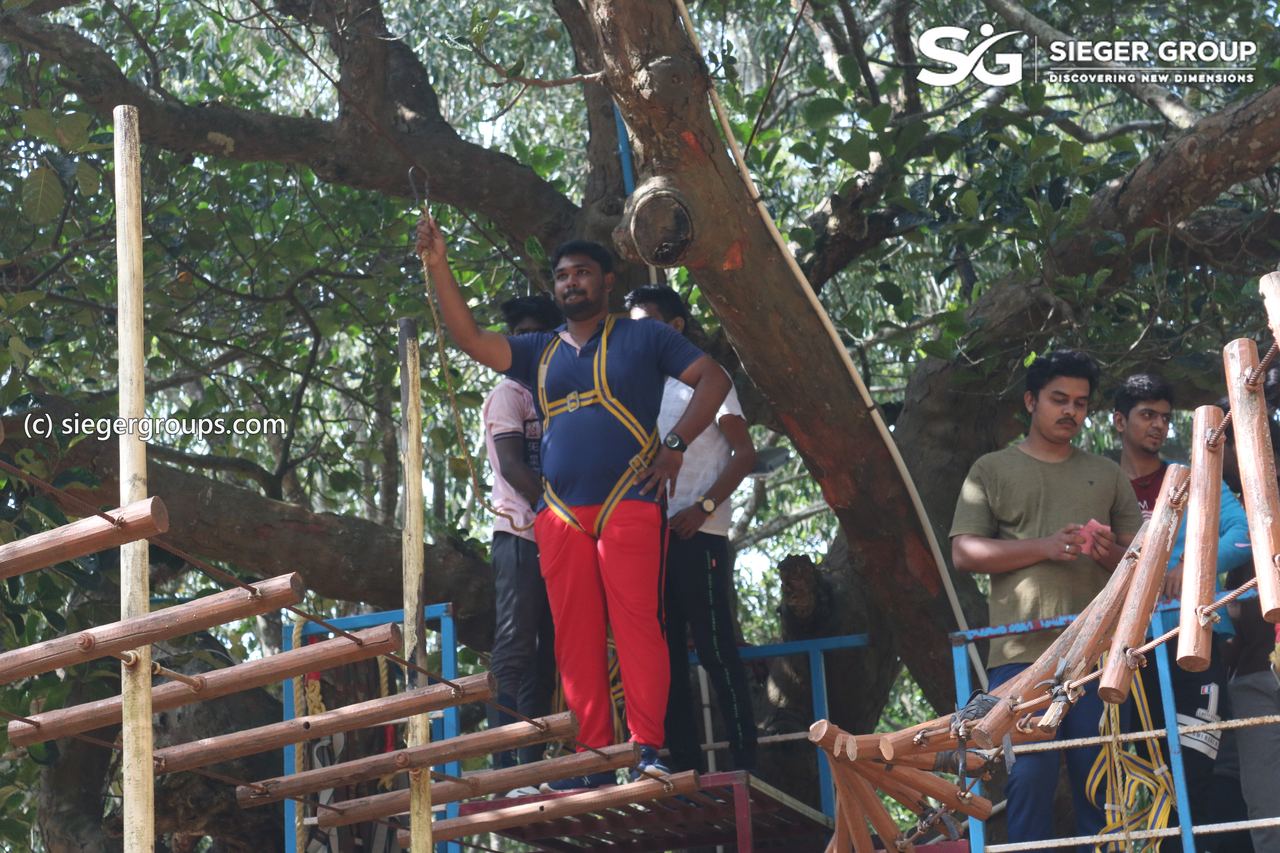
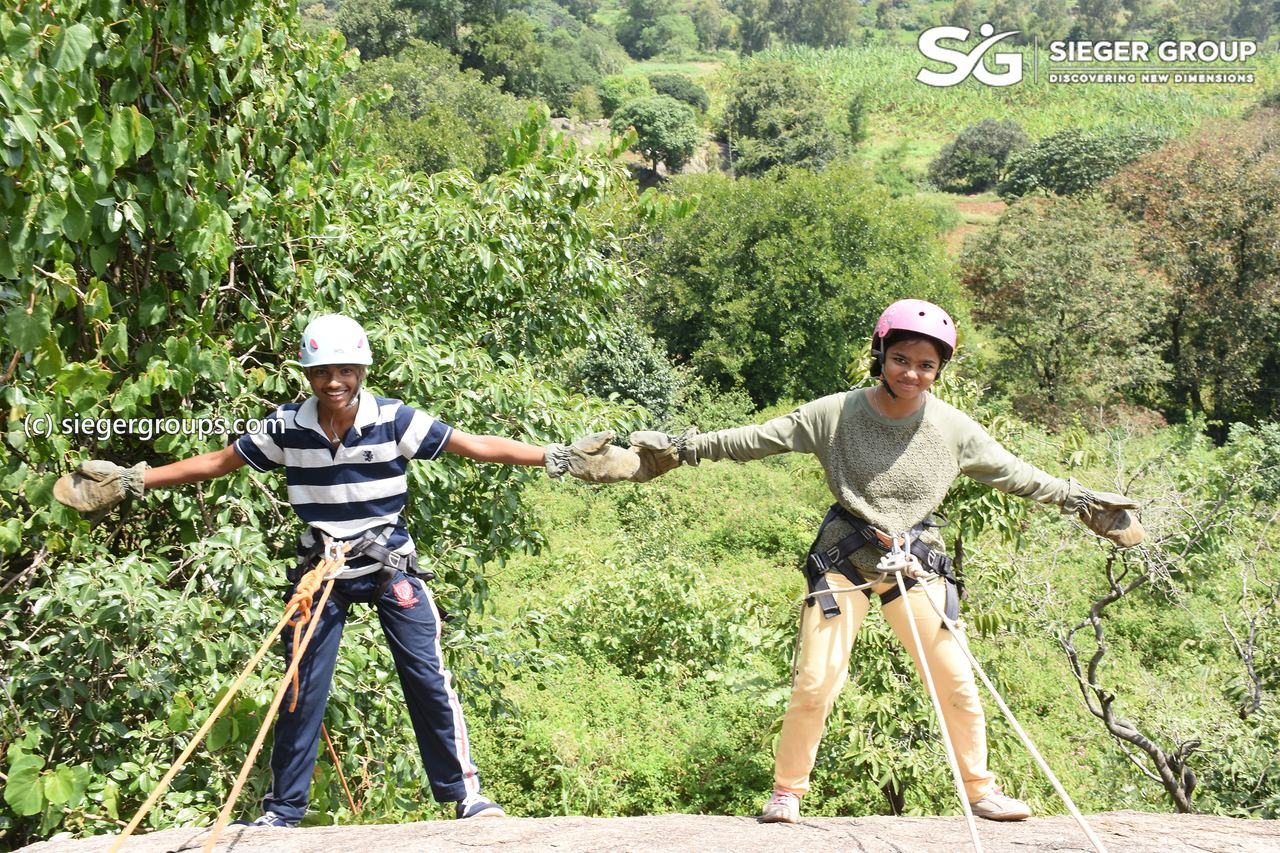
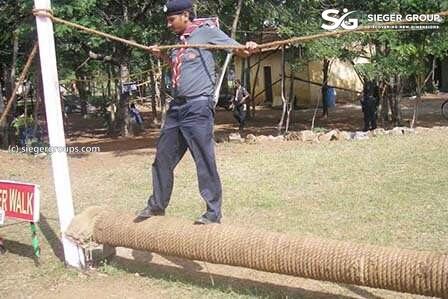
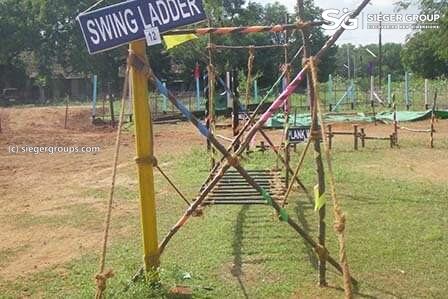
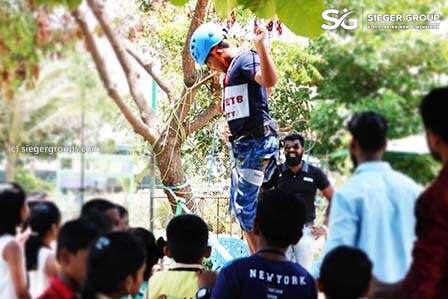
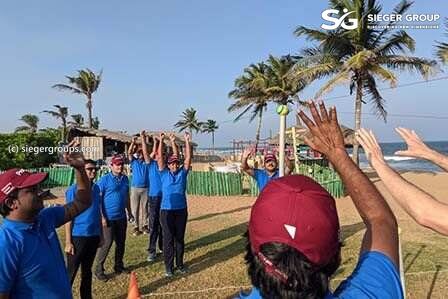
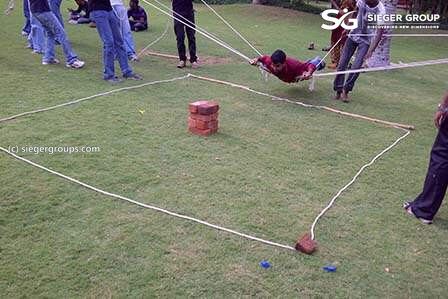
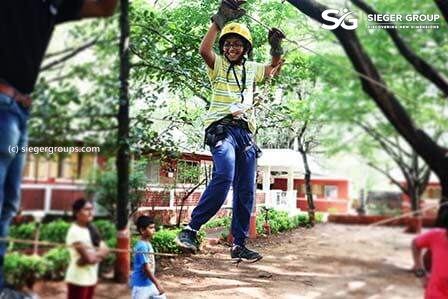
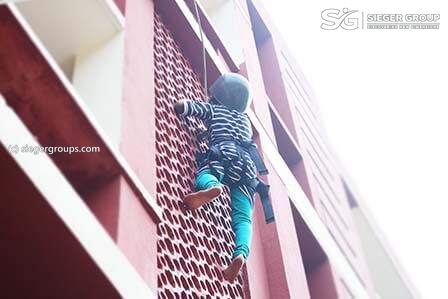
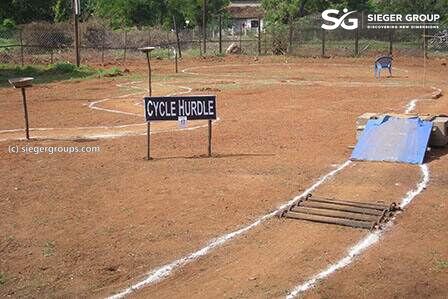
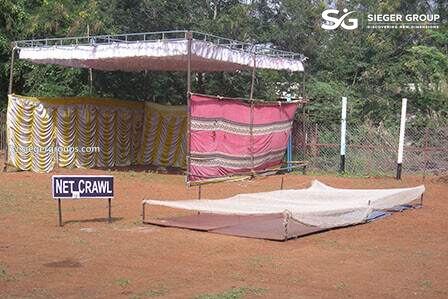
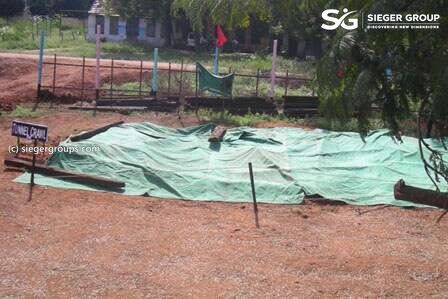
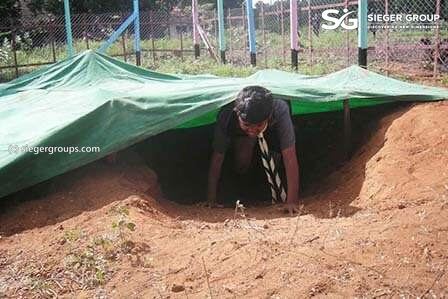
The opening photographs show the exercises. The remaining images show related Sieger Group team sessions.
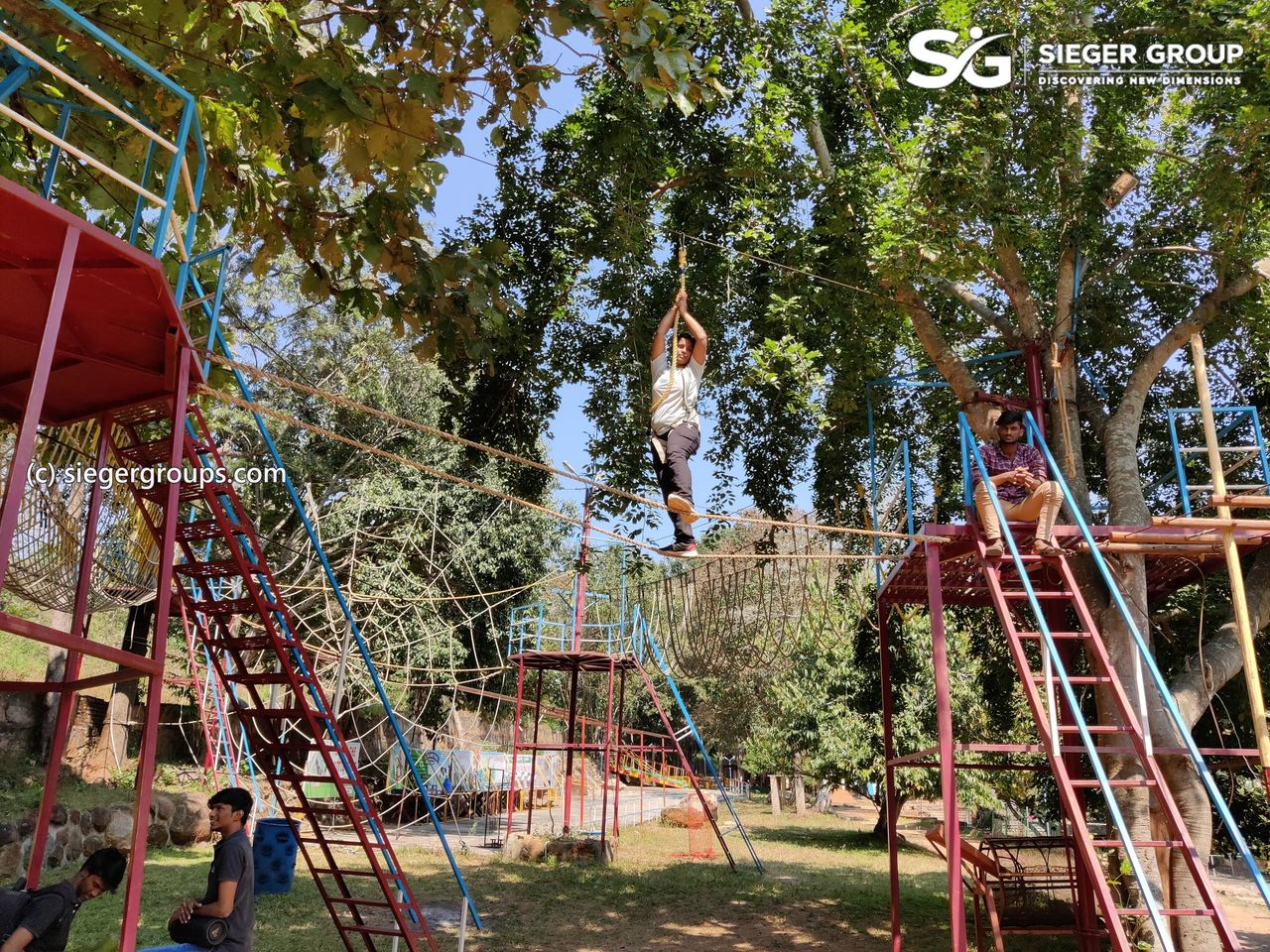
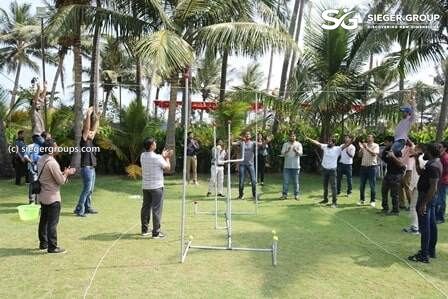
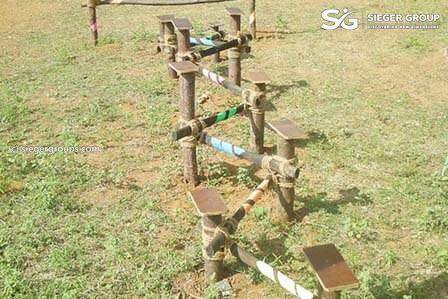
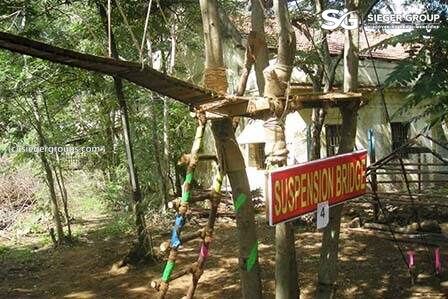
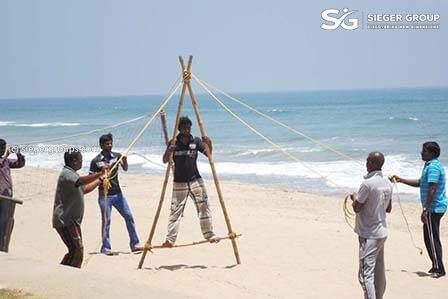
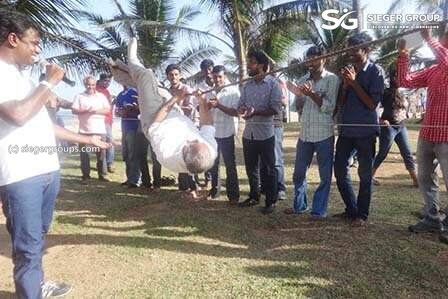
Discuss Porthole with your facilitator when choosing the activities for your group.
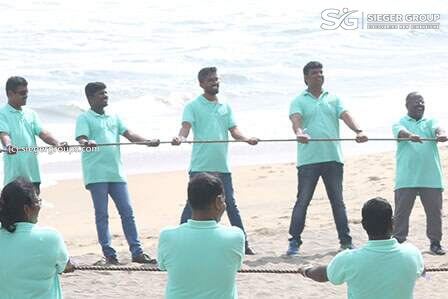
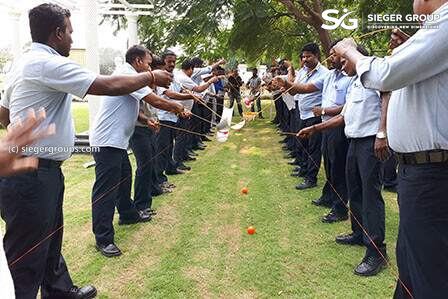
Sieger Group supports organisations with team-building experiences and facilitated programmes.
12 practical answers to help you plan your programme.
Low rope elements present tests of physical strength, stamina, agility, balance, and flexibility, and invite participants to confront such emotional issues as the fear of falling, the fear of failure, and the fear of losing control.
Low Rope Courses can be considered for teams planning a shared experience or employee engagement event. Share roles, group size, experience levels and participation needs so suitability can be confirmed.
The existing programme outline includes: Low rope elements present tests of physical strength, stamina, agility, balance, and flexibility, and invite participants to confront such emotional issues as the fear of falling, the fear of failure, and the fear of losing control.. The final emphasis and activity selection should be agreed around your brief.
Yes. Share your team context, goals and preferred tone. The proposed Low Rope Courses experience can then be adapted through the activity mix, level of challenge, discussion themes and delivery format, subject to feasibility.
Duration depends on the agreed scope, group size and setting. For Low Rope Courses, allow for the briefing, activities, breaks and group review. Request a proposed agenda that fits your available time.
Share your preferred city, office, venue or offsite destination in India. Low Rope Courses requires a setting suited to the activities and participants. Venue access, usable space, equipment and local delivery arrangements should be confirmed before booking.
The appropriate group size depends on the activity structure, facilitation and available space. Tell us the expected number of participants for Low Rope Courses so team sizes, rotations and staffing can be proposed.
For Low Rope Courses, the pre-event briefing should explain the schedule, clothing or equipment requirements and how to take part. Share accessibility needs and relevant participation constraints during planning so suitable arrangements can be discussed.
Discuss access, mobility, language, sensory needs and comfort levels before confirming Low Rope Courses. Agree suitable roles and alternatives where feasible. For specialist activities, confirm delivery responsibilities and participation requirements in advance.
Agree the purpose of Low Rope Courses before delivery. A group review can explore communication, contribution and teamwork, alongside the shared enjoyment of the event. Confirm any follow-up or evaluation support in the proposal.
Pricing for Low Rope Courses depends on participant numbers, duration, facilitation, equipment, location and agreed logistics. Request a tailored proposal that clearly states programme inclusions, venue or travel arrangements and applicable charges.
Use the enquiry form on this page or call +91 98400 97567. Include Low Rope Courses, your objectives, group size, preferred dates and location. Sieger Group can then discuss suitability and prepare a proposal for your review.
Share your goals, group size, preferred dates and venue. We’ll help you explore a considered programme.
Tell us what you have in mind. We will help you explore a programme that fits your people and your occasion.
Still finalising the details? Share what you know.
Every team is different. Share your people, purpose and preferred setting, and we’ll translate your brief into an experience designed to connect, engage and create lasting impact.
Share your brief and preferred contact details.