Game Show Extravaganza
Teams compete in rounds of photo challenges and trivia covering a range of topics. Colleagues pool their knowledge, discuss answers and enjoy a lively game-show atmosphere.
Learning focusPooling knowledge
Mix conversation games, creative tasks and playful contests for a company event. Start with the kind of interaction your group needs, then choose a few complementary games.
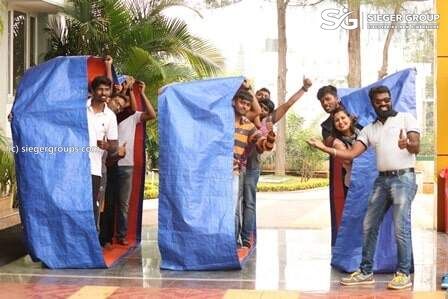
A programme can move from a hands-on bridge build to face painting or a connected hoop game. These formats give different people a chance to lead. The organiser chooses the sequence around the event’s purpose, the room and the time available.
Compare which format gave someone a first opportunity to contribute.
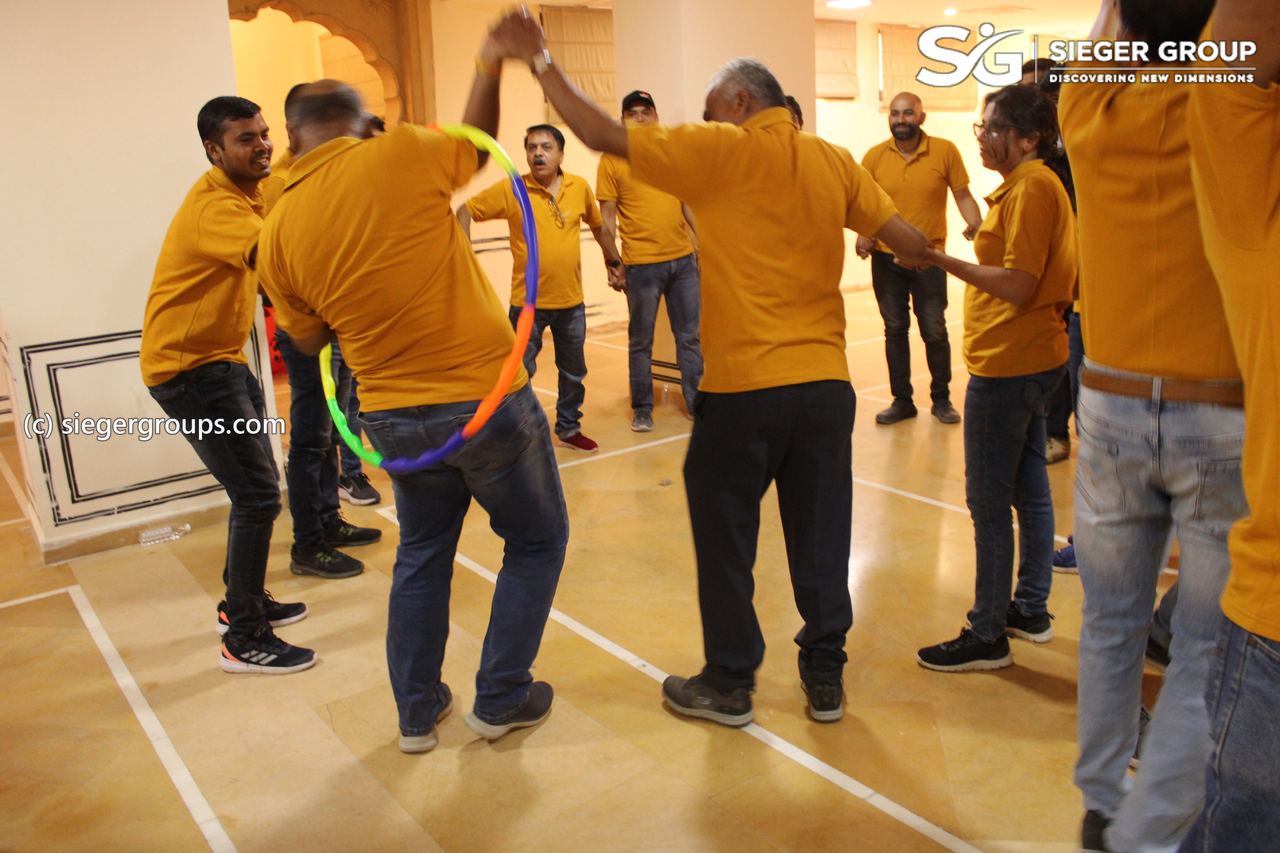
Hoops Away shows a hoop moving along a connected line, the format listed here as Hoops Dance. The face-painting recording shows a creative performance option from the same activity selection.


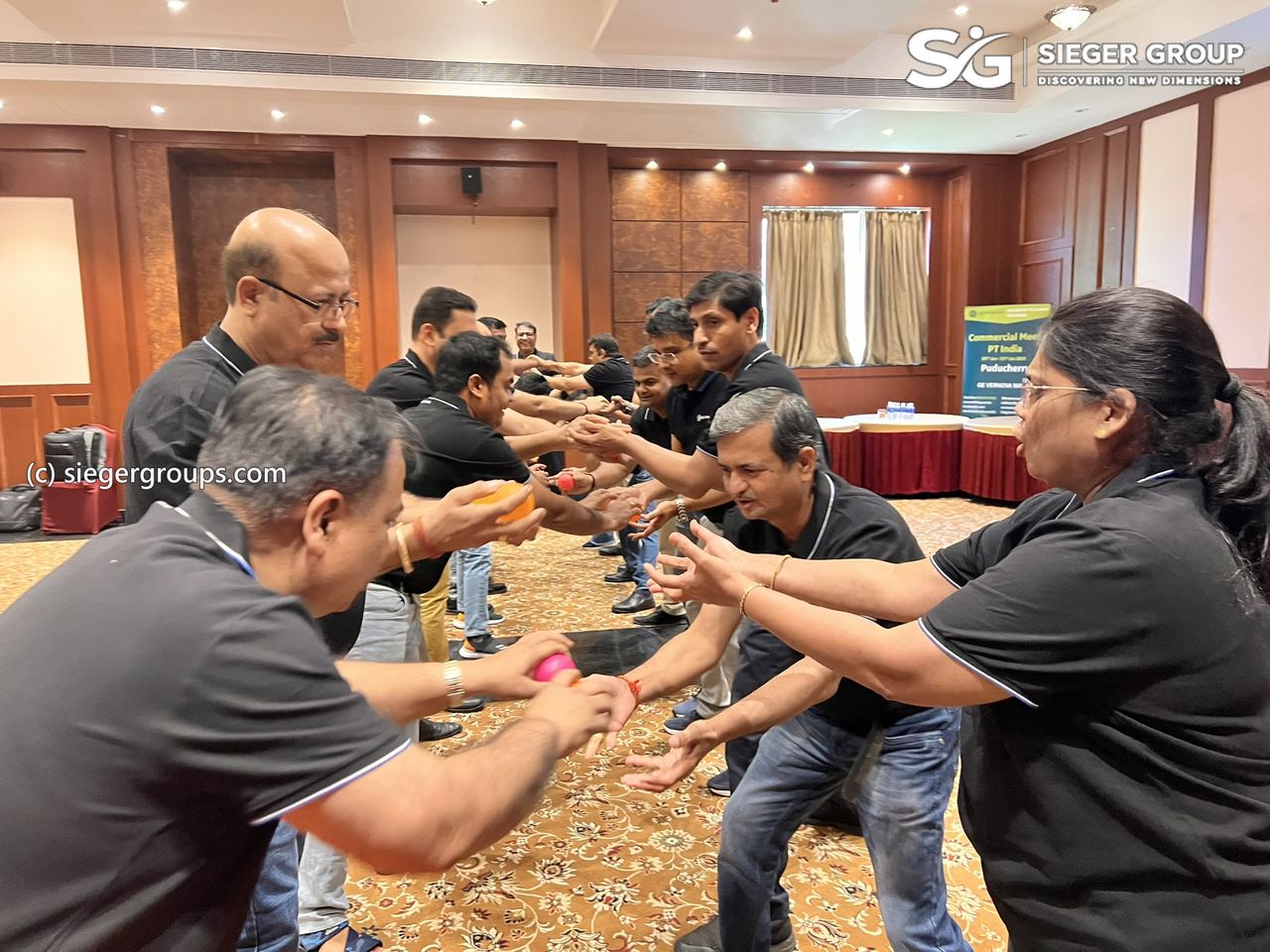
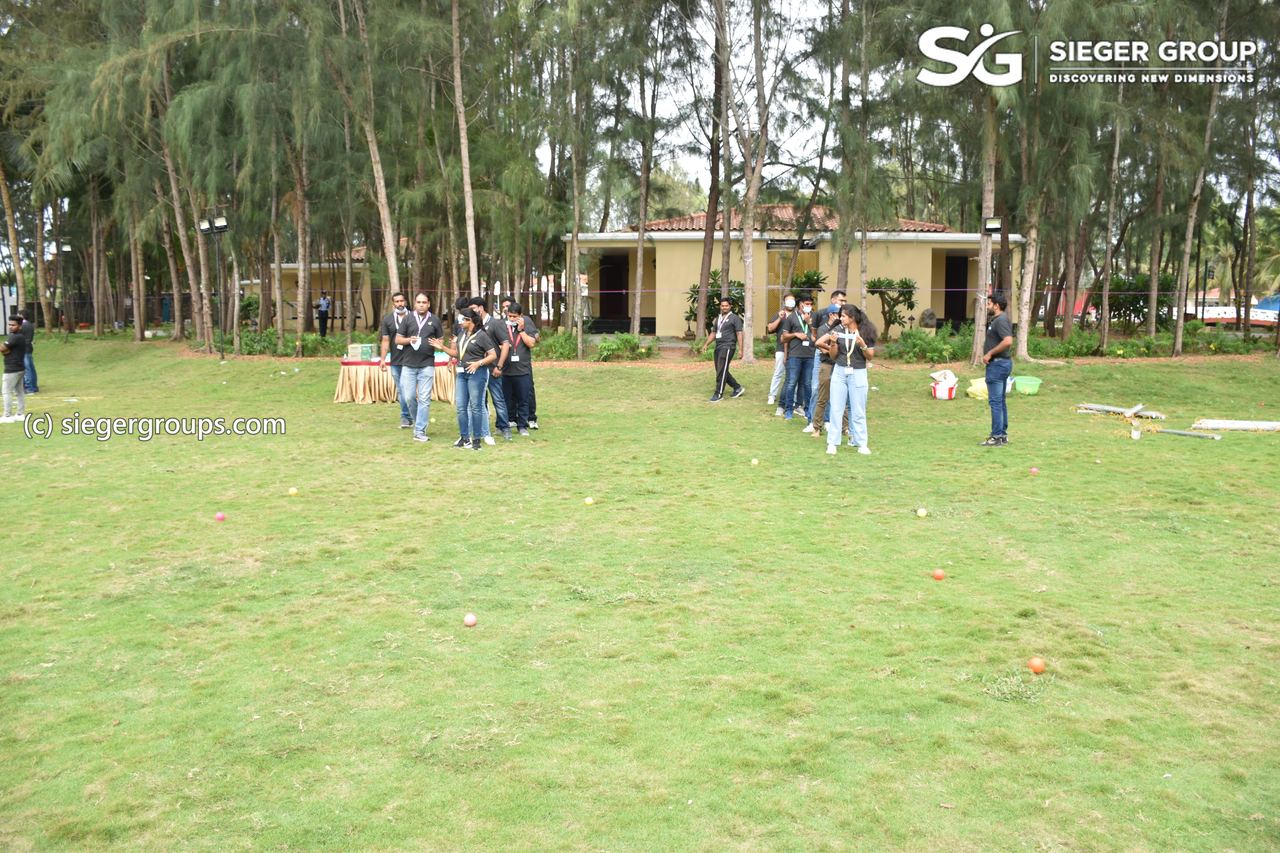
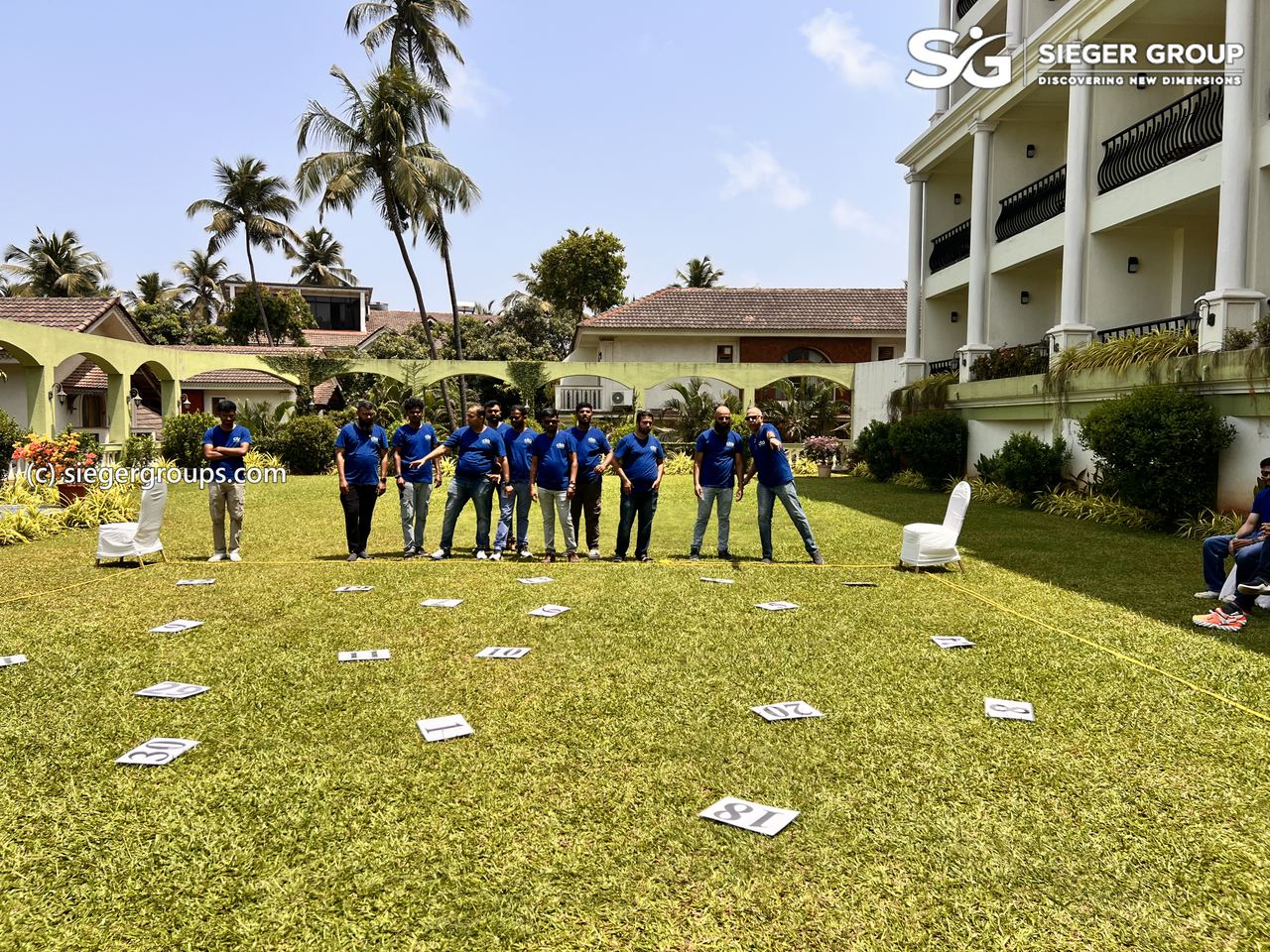
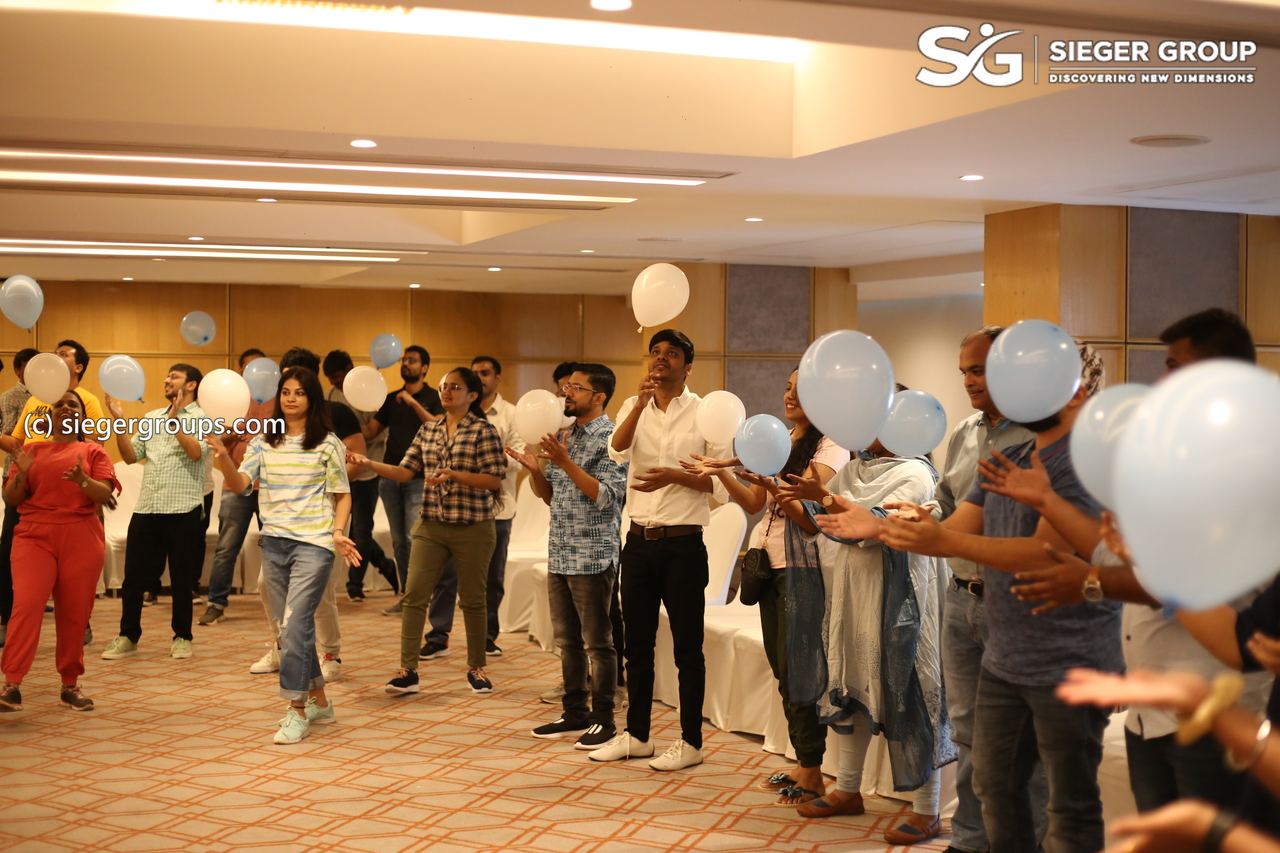
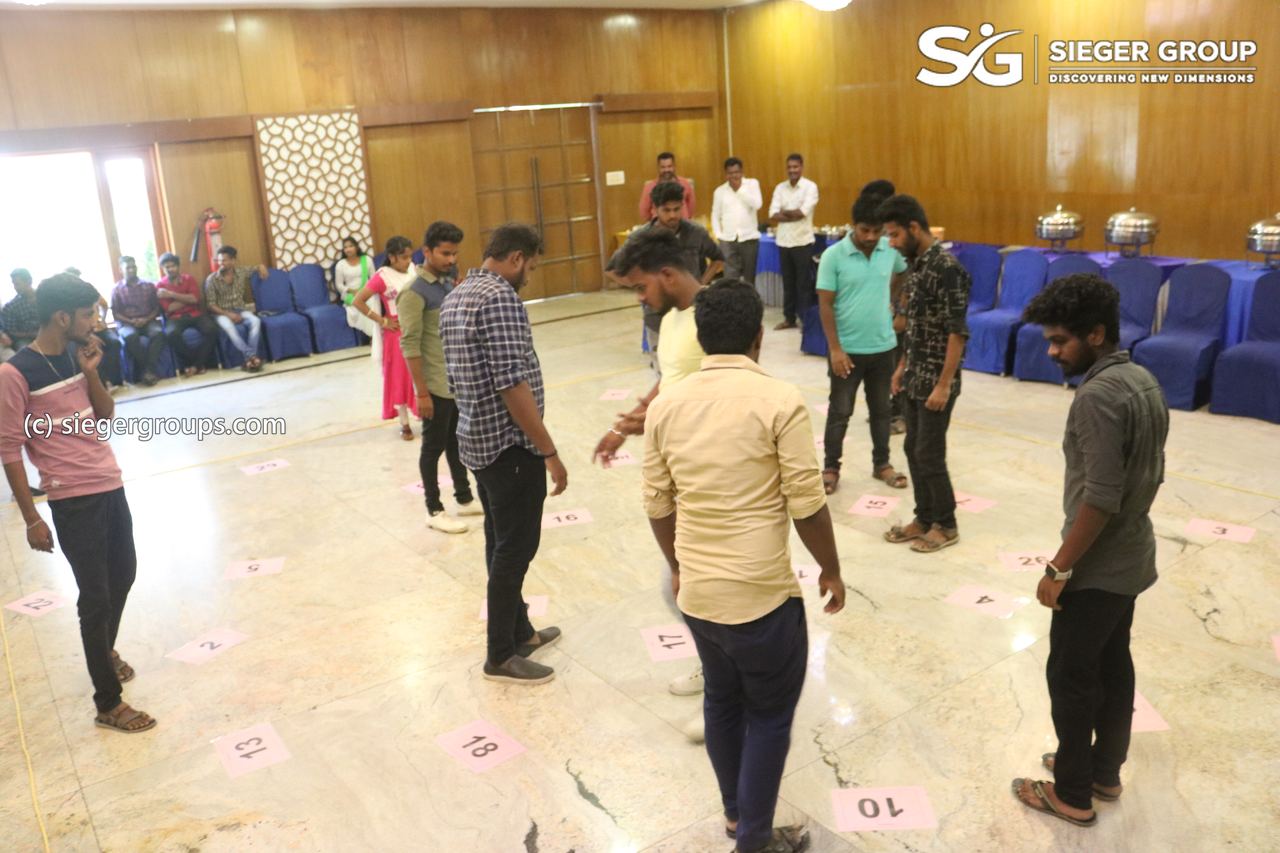
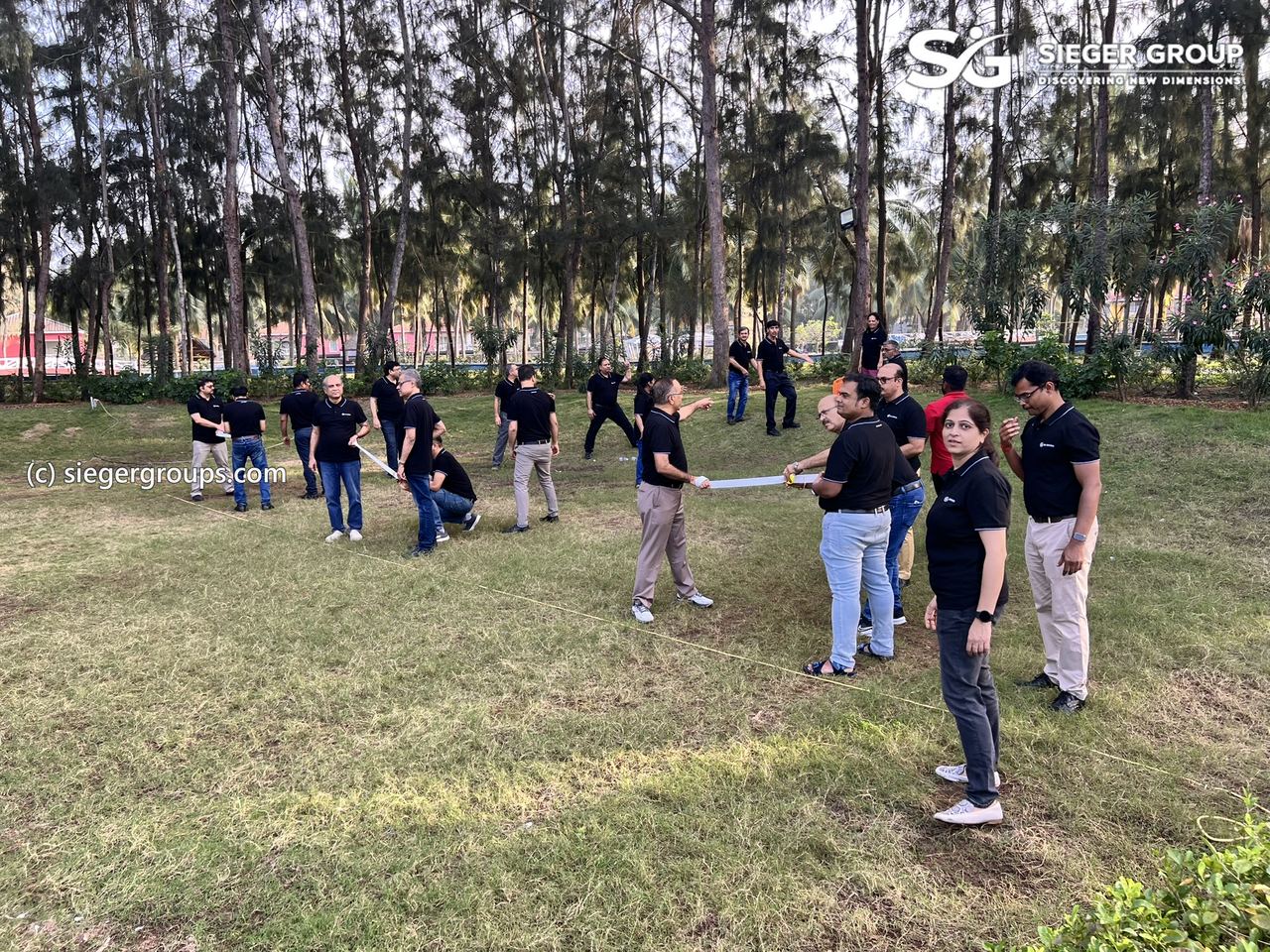
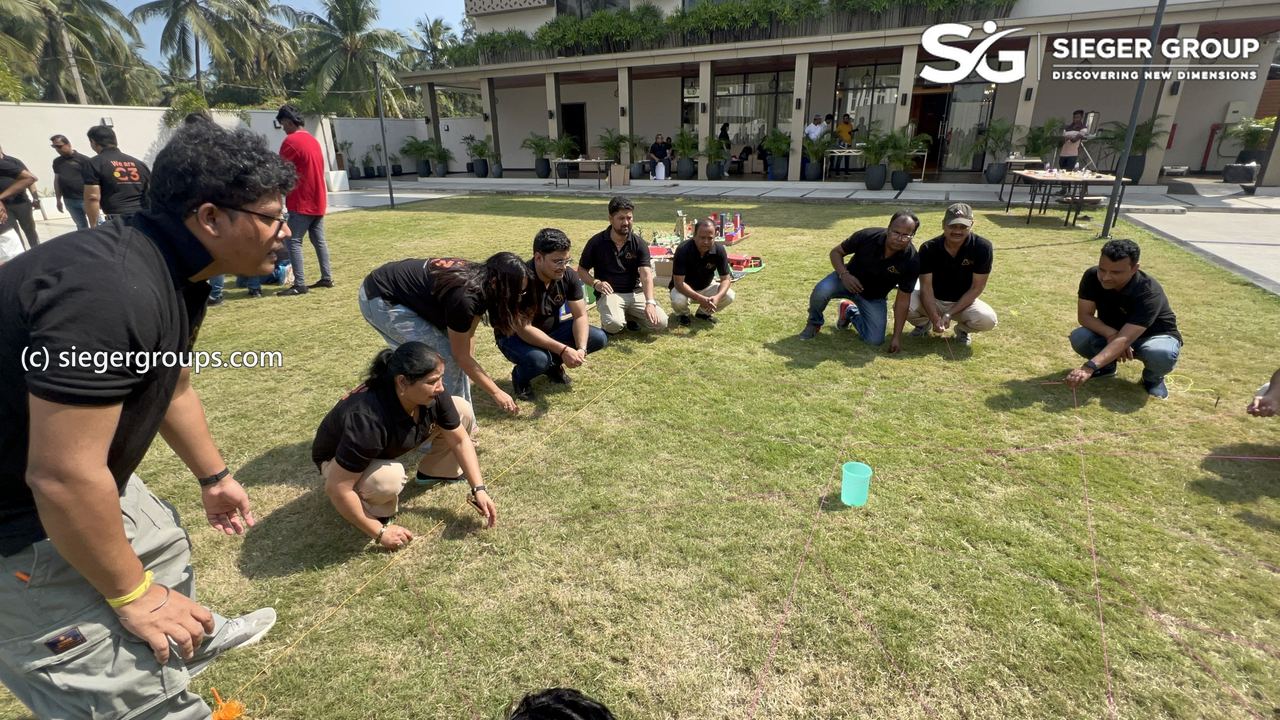
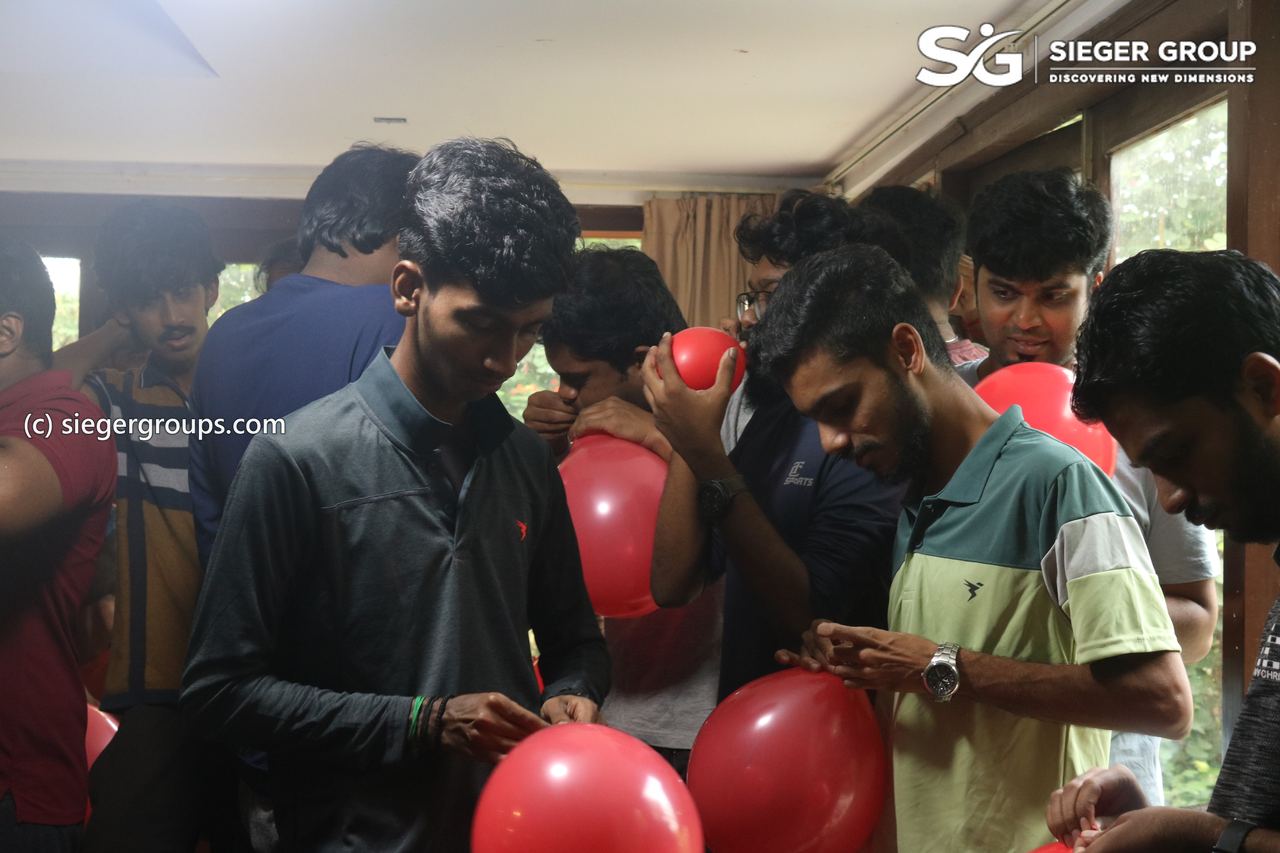
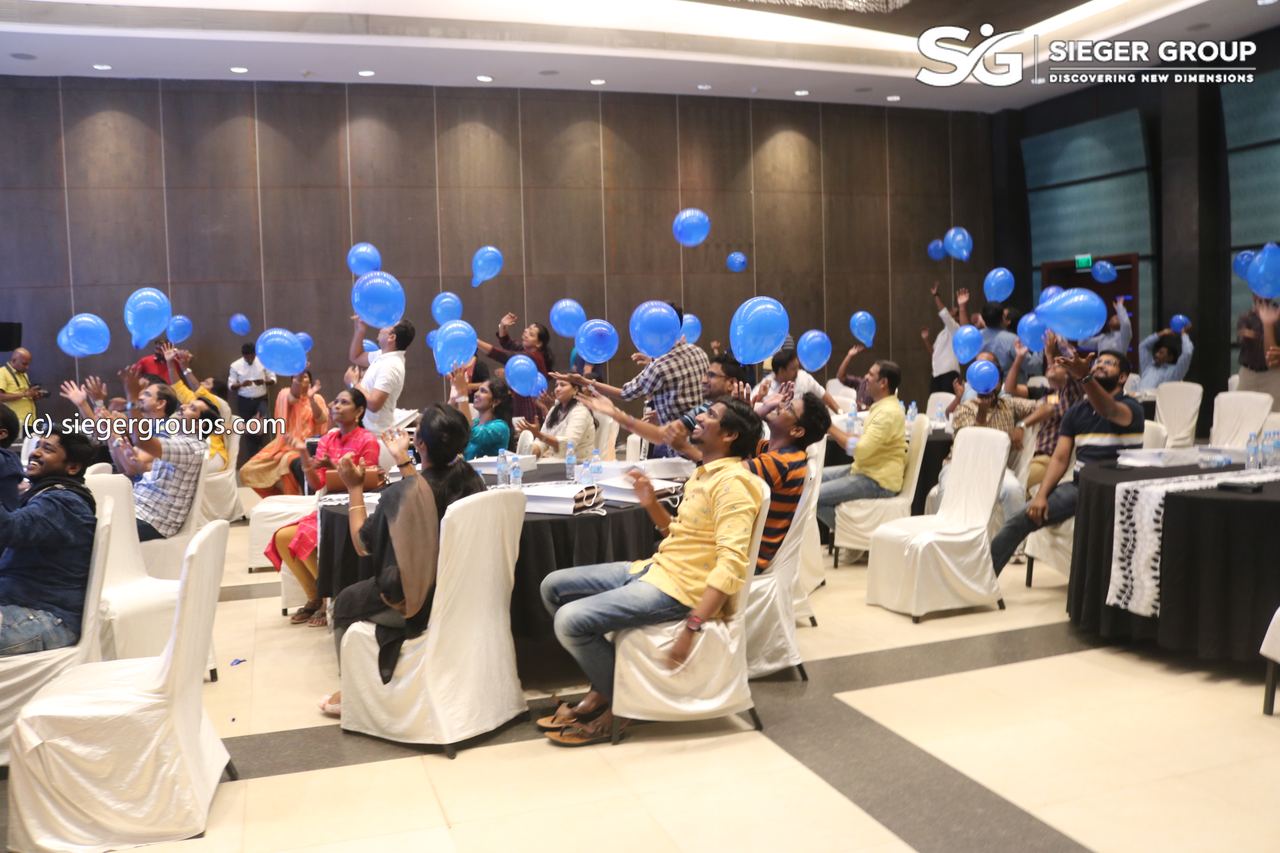
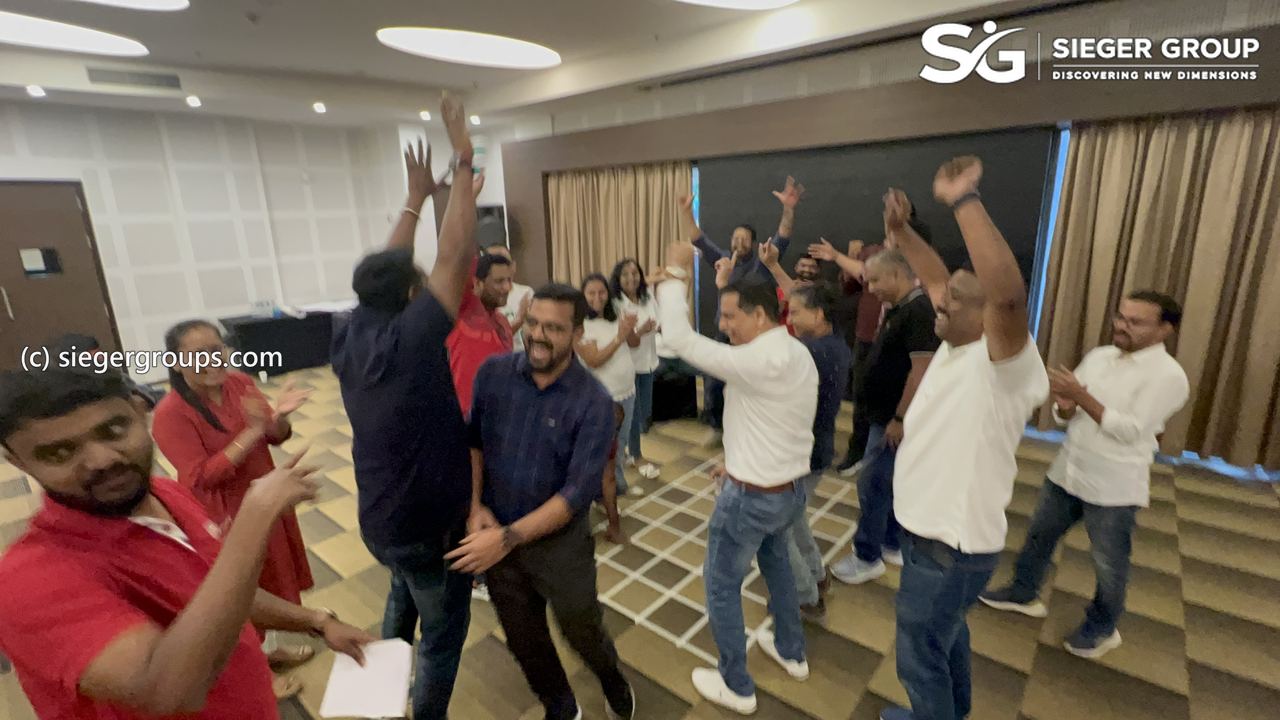
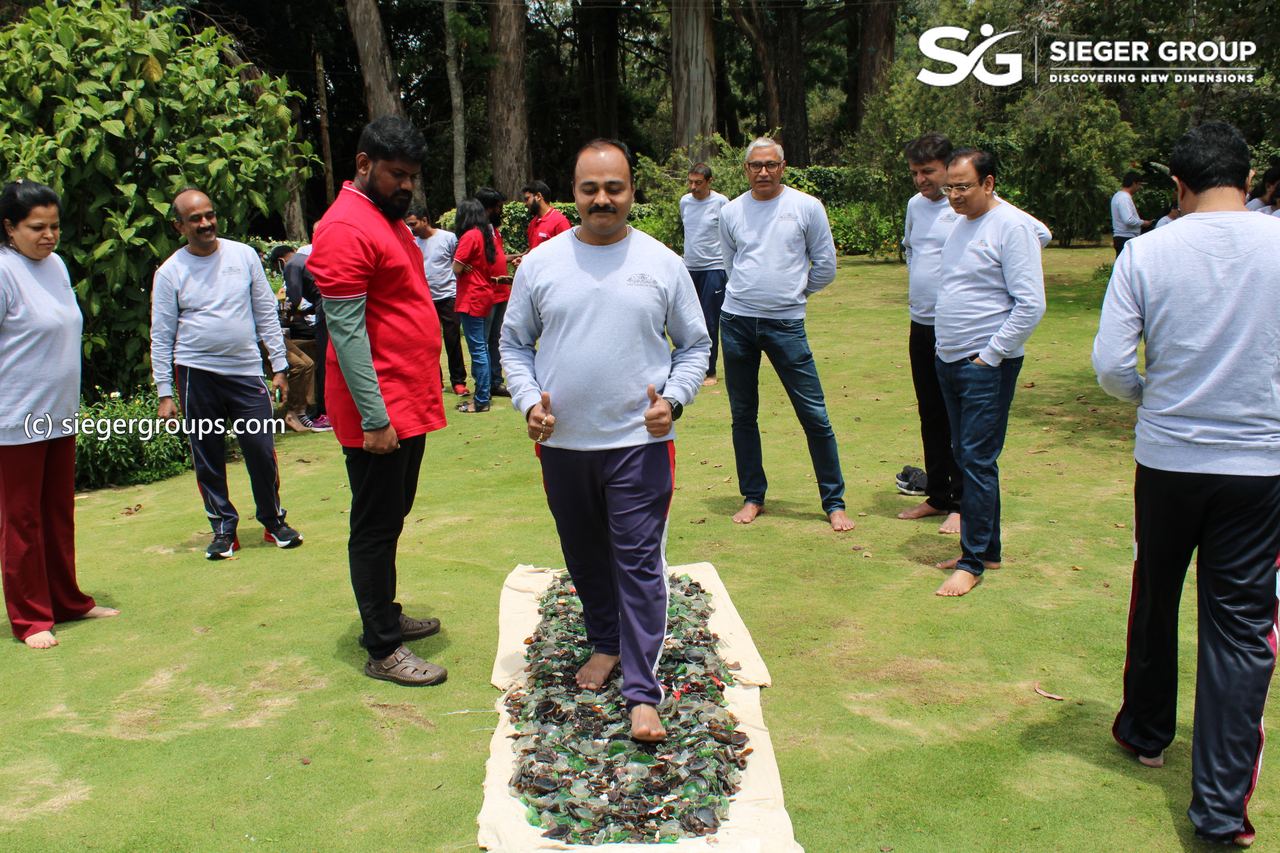
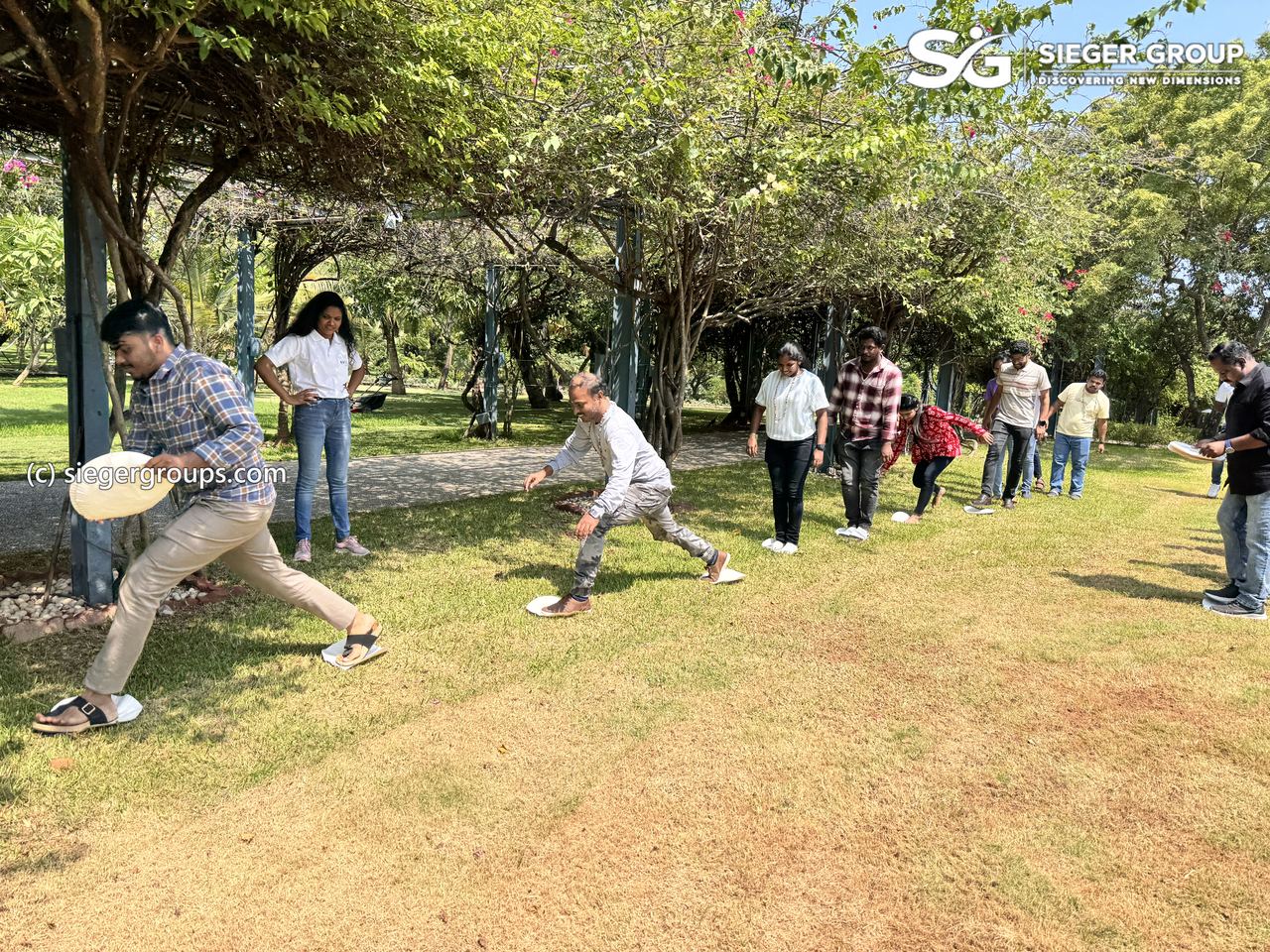
Teams compete in rounds of photo challenges and trivia covering a range of topics. Colleagues pool their knowledge, discuss answers and enjoy a lively game-show atmosphere.
Players draw a word while their teammates try to guess it. Rotating the drawing role gives everyone a chance to contribute to this creative team guessing game.
Create one shared crest that represents the company. Teams discuss meaningful symbols, combine ideas and divide the artwork into contributions that form a coherent design.
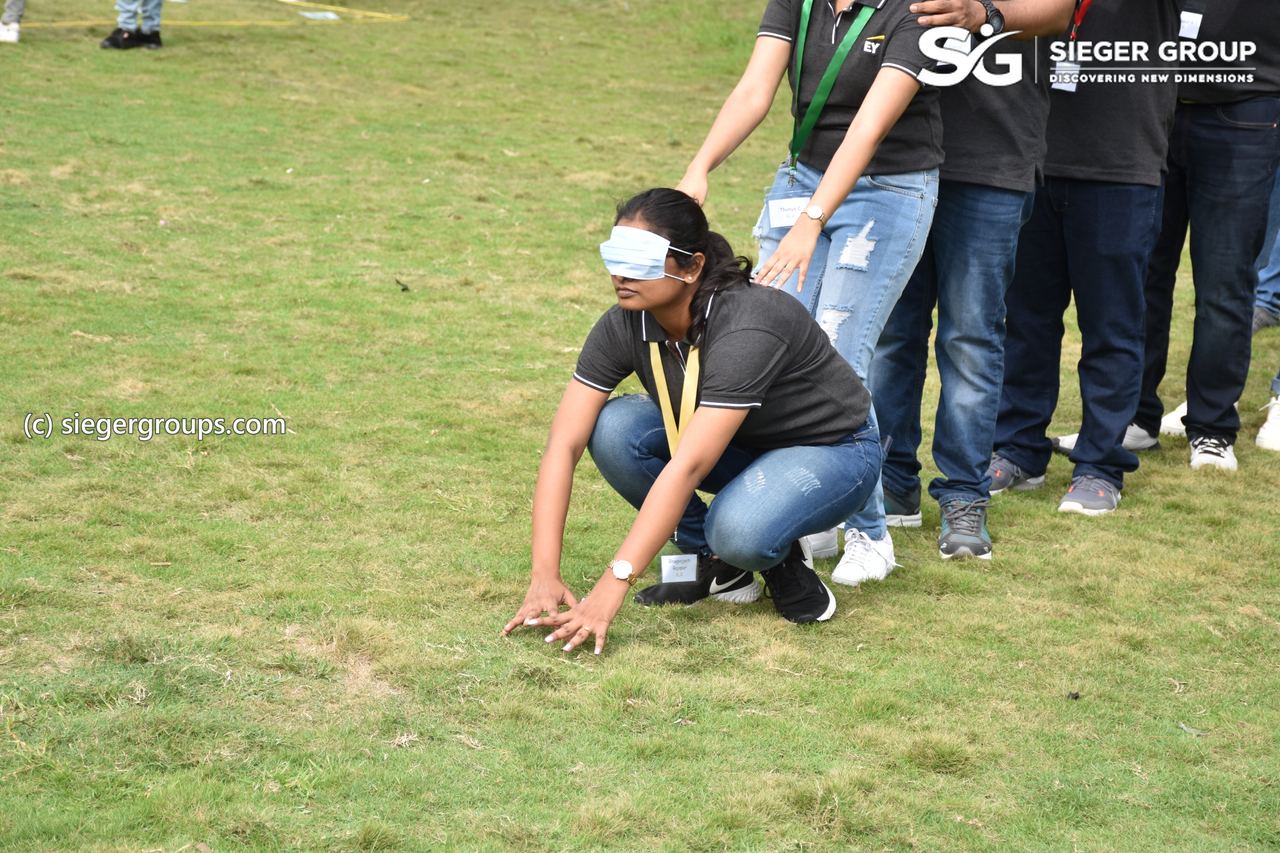
Separate teams build halves of a bridge that must connect. Clear descriptions, agreed dimensions and shared design decisions matter when builders cannot see the other team's work.
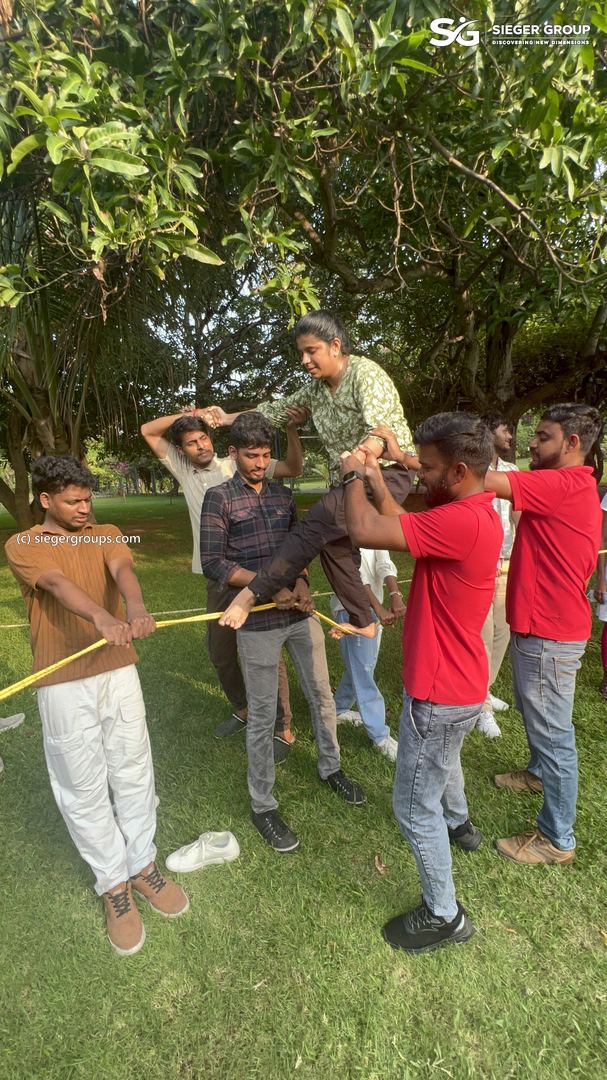
Two teams take part in a rope-pulling contest under the event briefing. Shared timing, coordinated effort and encouragement make it a lively outdoor team challenge.
Participants mingle to find colleagues who match descriptions on a bingo sheet. Each conversation helps complete the grid and introduces people beyond their usual working circle.
Write and perform a short audio drama using voices and sound effects. Story development, character roles and timing bring creative teamwork into a format that does not require a stage performance.
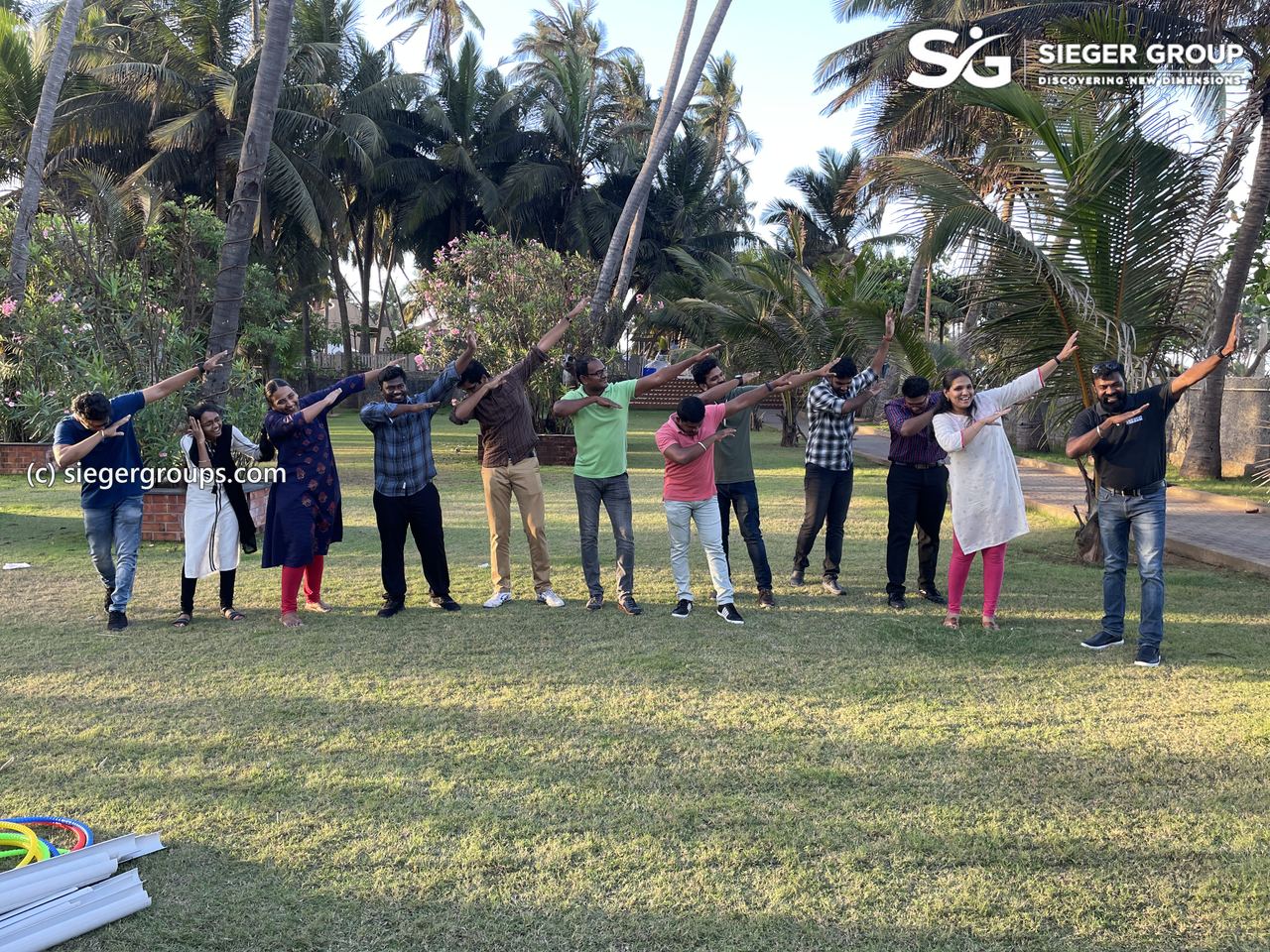
Teams use their body positions to represent letters or words. Agreeing the arrangement brings planning, creative interpretation and coordination into a playful group challenge.
Design an emblem around something the team collectively values. Participants agree the message, divide creative tasks and explain how the finished design represents their group.
Players take turns delivering playful laughter sounds while trying to keep a straight face. This light-hearted group game creates a shared moment of humour between colleagues.
Create a short skit using a selection of random objects. Teams combine ideas, assign roles and turn an unexpected collection of props into a story they can perform together.
One player freezes during the activity, and others become statues as they notice. The changing scene turns observation and attention into a simple group game.
Teams arrange a scene and hold their poses while it is filmed. Planning the composition and coordinating the freeze creates a playful shared video moment.
Act out a movie scene without speaking while teammates guess the title. Participants use gestures, expressions and shared film knowledge to communicate the clues.
Plan light-hearted, agreed surprises that everyone involved can enjoy. Keep the humour friendly and avoid embarrassment so the activity adds to the group's shared enjoyment.
A short music break invites colleagues to clap, sing or dance as they choose. Use the change of pace to bring a lively moment into a team gathering.
Join a guided session of playful laughter exercises. The format offers a light-hearted break in the programme, with space for participants to join at a comfortable level.
Use face-painting designs to express a team theme or creative brief. Participants agree the concept and choose how to contribute, using materials intended for face painting.
Move a hoop along a connected line of participants without breaking the chain. Teammates coordinate their positions and help the hoop travel from one end to the other.
The group follows a hidden leader's movements while a returning player tries to identify who is leading. Subtle changes and close observation keep the guessing game lively.
Pair up with colleagues you may not usually work with and use yes-or-no questions to discover connections. The activity opens conversations across familiar workplace groups.
Each participant shares three true statements and one invented statement about themselves. Teammates discuss the clues and guess the lie, discovering unexpected stories along the way.
The team aims to cross a finish line at exactly the same moment. Participants agree a pace and coordinate their movement to create a shared photo-finish moment.
Pairs search for items on a prepared list and record their discoveries in photographs. Teams divide the search, compare clues and work towards completing the collection.
Participants contribute aspirations to a shared collection. The group discusses selected ideas and offers practical suggestions for moving towards those goals.
One person thinks of an object while the group asks up to twenty yes-or-no questions. Teams narrow the possibilities by listening to earlier answers and choosing useful questions.
Build a tower from the available paper within the activity time. Teams compare designs, share construction roles and adjust their structure as the build develops.
Teams arrange large picture pieces into a complete image. Sharing visual clues and coordinating placement helps separate contributions become one finished puzzle.
Create the longest link possible using the permitted resources. Teams take stock of what is available and agree how individual contributions can extend the shared chain.
Design protective packaging for an egg and present a short jingle explaining the idea. The final drop gives teams a chance to compare their designs with the actual result.
Teams choose character actions in a playful contest with an agreed win-and-lose sequence. Coordinating the team's choice and reacting to the reveal adds suspense and laughter.
Each participant draws a self-portrait for a shared display. Viewing the collection gives colleagues a creative way to introduce themselves and celebrate individual perspectives.
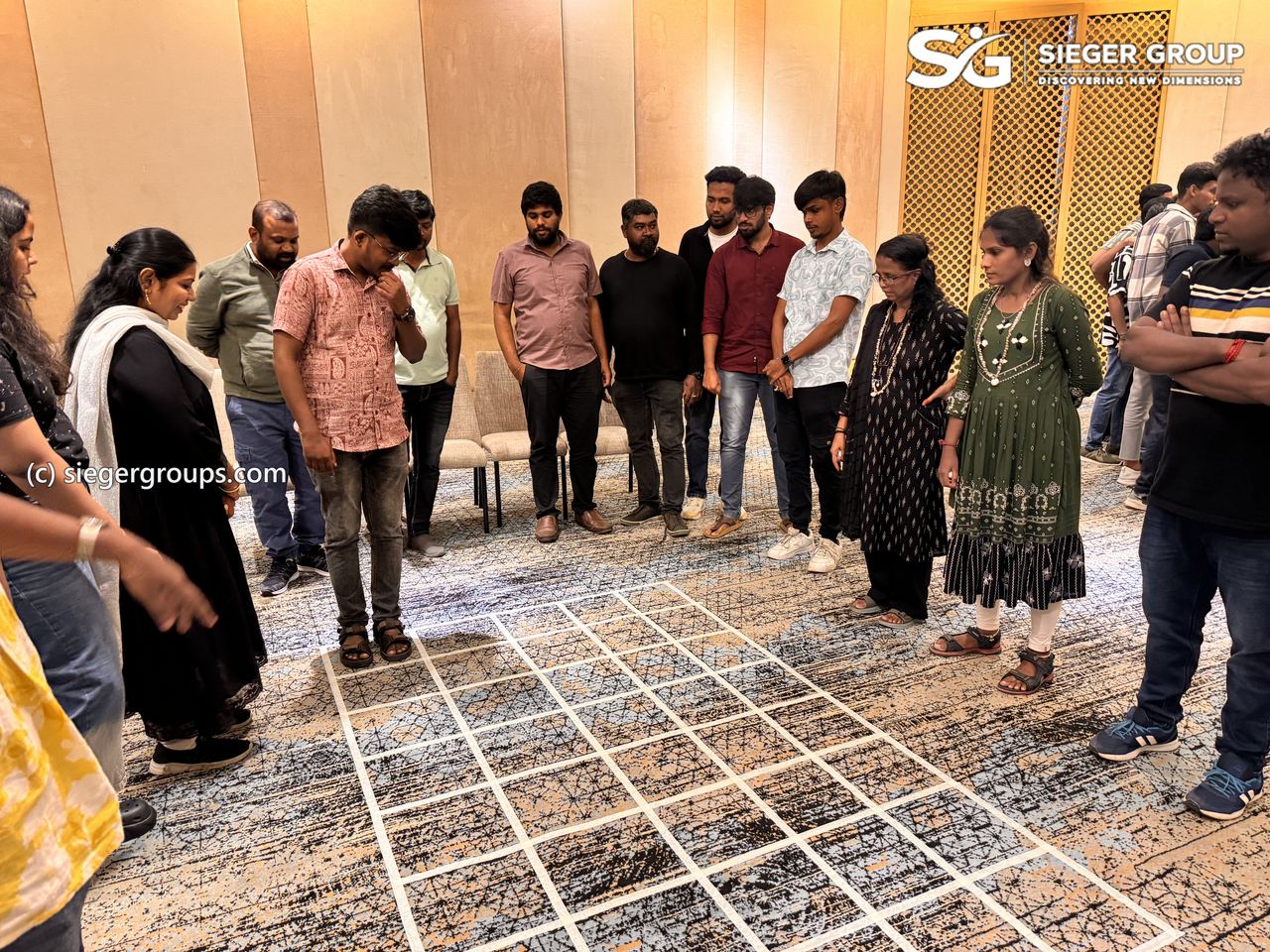
Teams work together to fit within a designated shared space. The challenge invites discussion about positioning, cooperation and how to account for every participant.
Each player guides a ball through a shared playing area while watching the movement around them. The game combines individual control with awareness of the wider group.
A guided communication challenge puts verbal instructions and attentive listening at the centre of the experience. The facilitator explains the selected format and participation choices before the team begins.
A facilitated group-movement challenge asks teammates to coordinate a shared transition between points. Confirm the particular game format and participation requirements with the organising team.
Play a paired version of football in which partners coordinate their movement and decisions. Working together changes how players approach positioning, passing and reaching the goal.
Move a ball between designated points without direct physical contact, following the selected game's rules. Teams compare approaches and coordinate how they guide the ball.
Pass water along the team to fill a collection container within the activity time. Coordination between neighbours and careful handovers shape the group's result.
Move the designated object between points without touching it, following the facilitator's game instructions. Teams explore how controlled effort and timing affect its progress.
Listen closely and respond only when the instruction matches the game's agreed rule. Changes in pace make this familiar group game a playful test of attention.
Aim rings at the designated poles from within the playing boundary. Teams share turns, encourage each other and compare approaches to the target challenge.
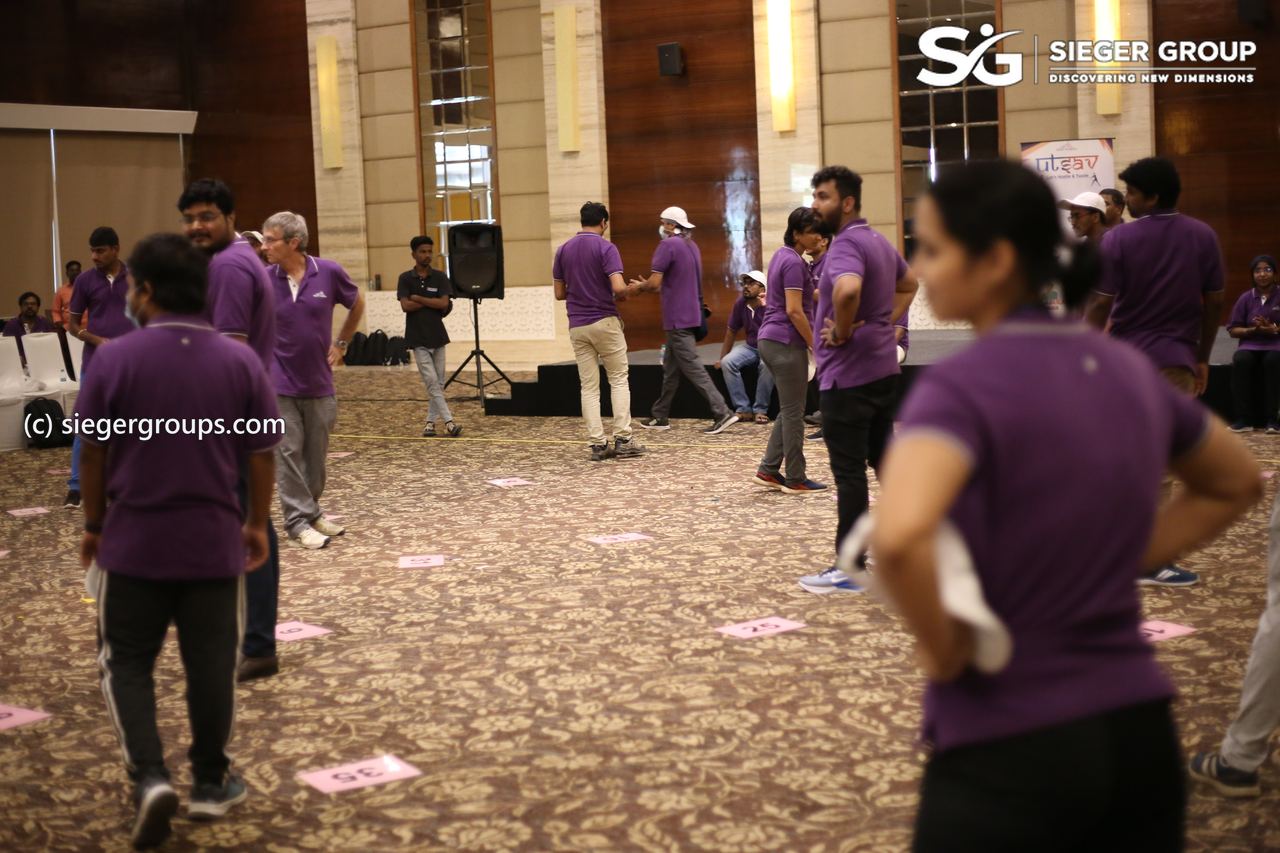
Participants form groups of the size called by the facilitator. Changing group sizes keep the game moving and encourage quick interaction with different colleagues.
A growing chain of players takes part in a tag game with agreed contact rules. The format brings movement and coordination into a playful group activity, with participation preferences discussed beforehand.
Small groups form trains while two players take the fox and hunter roles. Changing roles and train connections create a lively game of attention and quick responses.
Groups of three take part in a playful thumb-wrestling challenge. Short rounds and rotating opponents create an informal moment of friendly competition.
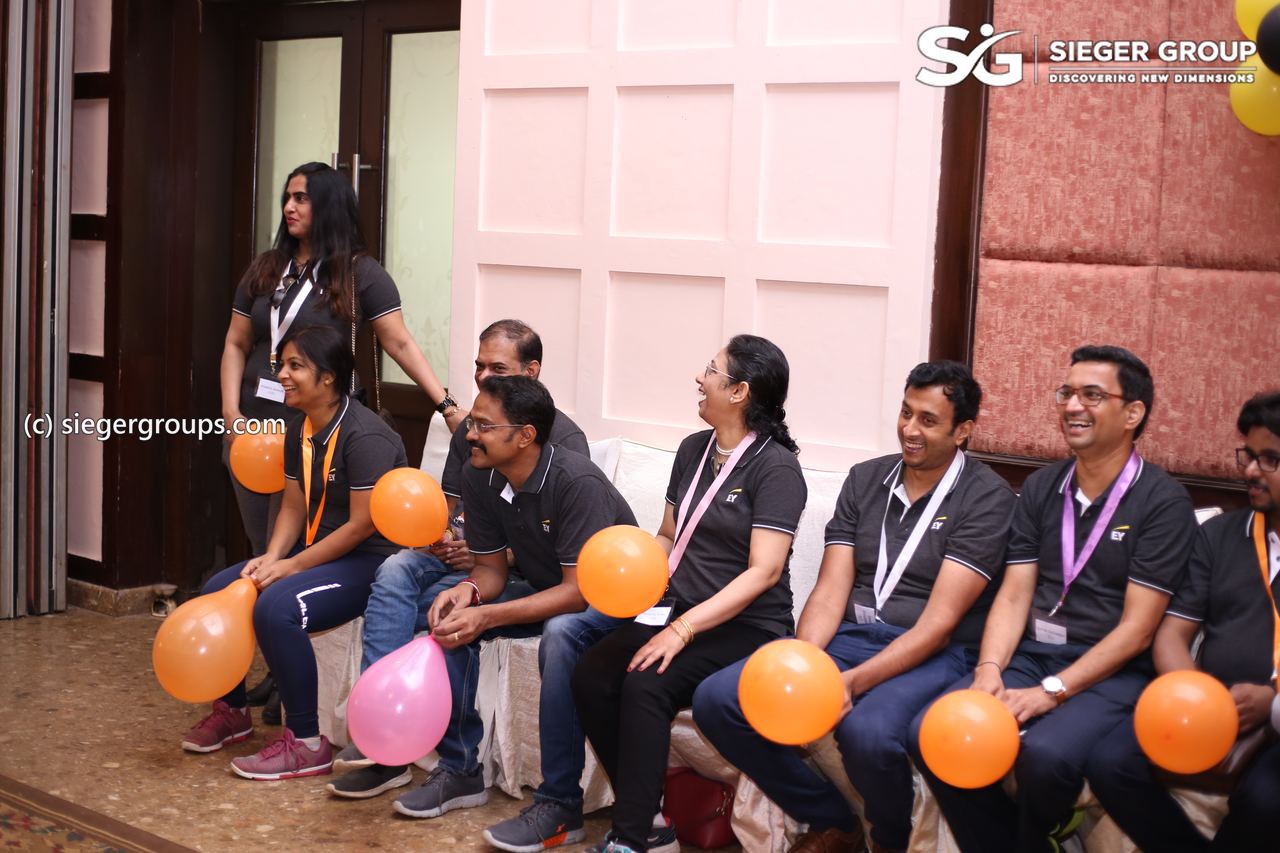
Players move between chairs while one participant tries to occupy the available seat. The shifting gap asks the group to watch closely and respond to changing positions.
Teams use a stretched blanket to receive and return a ball. Players coordinate their movement around the blanket to guide the ball towards the opposing team.
A light-hearted snack-toss challenge brings aiming and friendly competition into the programme. Agree the game setup and food-related participation requirements before playing.
Teams compete to transfer small items between collection points in the selected relay format. The facilitator confirms the equipment and handling rules before participants begin.
Several teams take part in a rope-pulling contest with competing directions. The event briefing sets out the format before teams coordinate their effort and respond to the changing contest.
A group race invites teammates to coordinate as a connected unit. Discuss the selected formation, course and participation requirements with the facilitator when planning this activity.
Participants work as a connected group towards the challenge's shared objective. Clear messages and coordinated movement help the chain respond together.
Guide a table-tennis ball across a table using air movement rather than a paddle. Players follow the agreed game rules while trying to move the ball past their opponent.
Use these points to draw out what colleagues can learn from Fun Team Building Activities.
Explore which games gave people a chance to contribute in different ways.
Reflect on conversations or interactions that became easier during the informal activities.
Share the floor or field space, group size, schedule and preferred activity level so stations and rotations can be agreed.
Move between games while adjusting participation and pace to the group.
Reflect on conversations or interactions that became easier during the informal activities.
Introduce rules and roles in a way that helps colleagues join comfortably.
Which games encouraged colleagues who rarely interact to connect?
Compare which format gave someone a first opportunity to contribute.
Make first contact through a short challenge with a clear shared purpose.
Use a change of pace to see different strengths and roles in action.
Choose a mix of active, creative and observer roles around the audience and venue.
An illustrative running order for Fun Team Building Activities. Confirm timings, breaks and participation arrangements in your event brief.
Sieger Group supports organisations with team-building experiences and facilitated programmes.
Mix conversation games, creative tasks and playful contests for a company event. Start with the kind of interaction your group needs, then choose a few complementary games.
Compare which format gave someone a first opportunity to contribute.
Game Show Extravaganza, Pictionary, Company Crest, Building Bridges, Tug-of-War, Human Bingo. The final selection is agreed with the organiser.
New starters and mixed departments and established teams can use this experience. Make first contact through a short challenge with a clear shared purpose.
Share the expected headcount, available space and any rotation requirements so the facilitator can propose suitable team sizes.
Allow Discuss your event schedule as a planning guide. The proposal confirms the duration, breaks and final activity mix.
Share the floor or field space, group size, schedule and preferred activity level so stations and rotations can be agreed.
Share access requirements and preferences when planning the session. The facilitator can discuss roles such as observing, recording decisions or presenting the group’s findings.
Discuss the setting and participants so the selected games fit the event.
Reflect on conversations or interactions that became easier during the informal activities.
Yes. Share the purpose of the offsite and which part of Fun Team Building Activities you would like to emphasise. The facilitator can discuss how to fit the chosen elements into the wider event.
Use the enquiry form or contact Sieger Group with your preferred date, city, headcount, venue and learning objective. Include any participation or access requests in the brief.
Share your date, city, group size and the outcome you want colleagues to take away.
Request a tailored proposalTell us what you have in mind. We will help you explore a programme that fits your people and your occasion.
Still finalising the details? Share what you know.
Every team is different. Share your people, purpose and preferred setting, and we’ll translate your brief into an experience designed to connect, engage and create lasting impact.
Share your brief and preferred contact details.