Read the boundary challenge
Review the marked fence or rope arrangement and the rules for the selected format. How did the group interpret the rope-boundary constraint?
Learning focusIdentifying boundaries
An imaginary boundary turns a straightforward route into a group-planning problem. Teams compare possible sequences and keep track of colleagues still to cross.
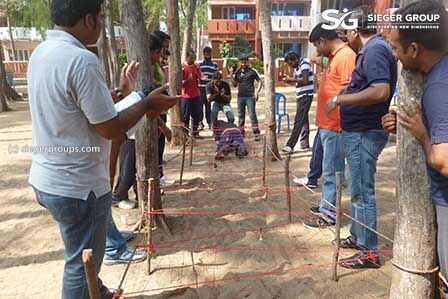
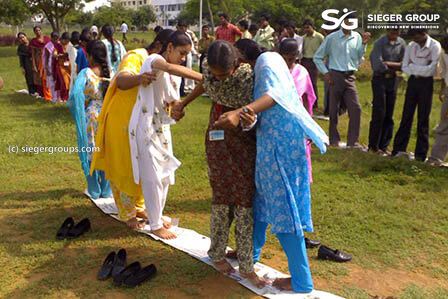
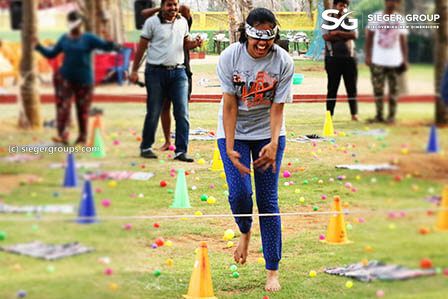
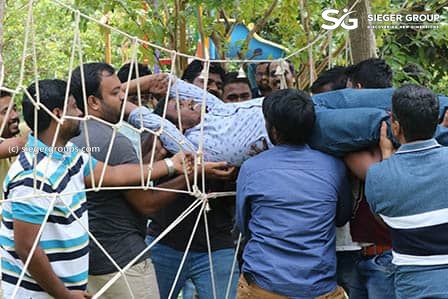
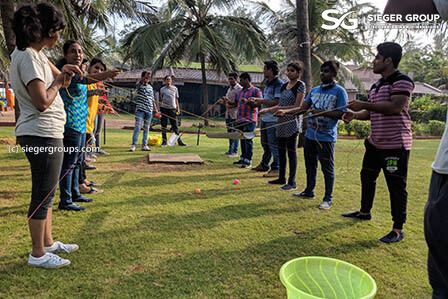
A marked boundary stands between the group and its goal. The challenge is to get everyone across under the rules introduced by the facilitator. Teams discuss how to include the last person in the plan and when to pause for a better suggestion.
Check whether a proposed solution still works for the last person in the sequence.
Watch the Chennai Business School group tackle the Electric Fence. The chapter opens as the team gathers at the boundary and works out how to help a teammate across.

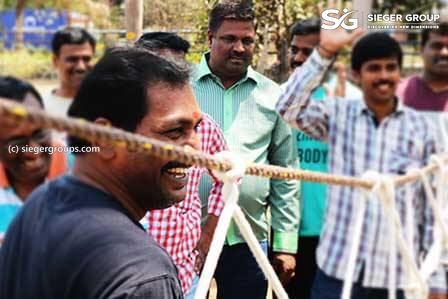
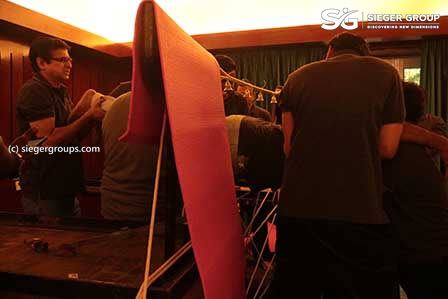
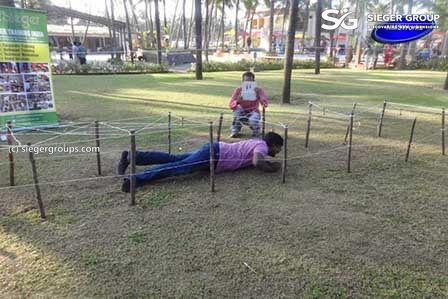
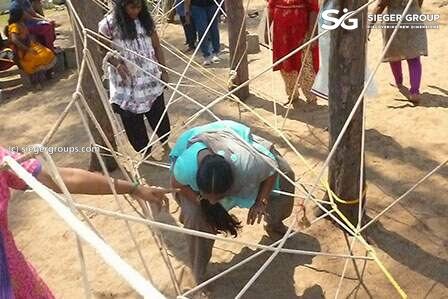
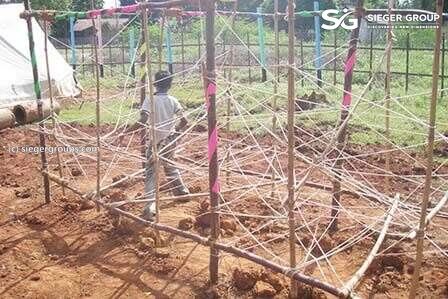
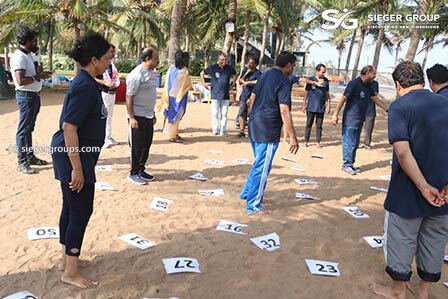
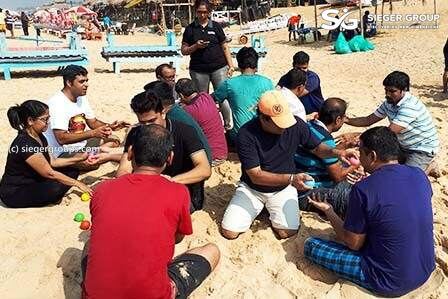
Review the marked fence or rope arrangement and the rules for the selected format. How did the group interpret the rope-boundary constraint?
Compare routes and roles before the group commits to an attempt. Which ideas accounted for everyone’s participation?
Work through the agreed challenge while checking that everyone understands the current plan. What helped teammates coordinate around the obstacle?
Discuss how the boundary shaped decisions and what the team changed after feedback. How did the group reassess a plan that did not fit the boundary?
Use these points to draw out what colleagues can learn from Electric Fence Team Challenge.
Explore how a visible restriction encouraged the team to consider alternative approaches.
Reflect on the cost of starting before everyone shared the same interpretation of the rules.
Confirm an accessible activity space, the agreed equipment, group rotations and an observer option.
Work through the agreed challenge while checking that everyone understands the current plan.
Reflect on the cost of starting before everyone shared the same interpretation of the rules.
Compare routes and roles before the group commits to an attempt.
How did the group interpret the rope-boundary constraint?
Check whether a proposed solution still works for the last person in the sequence.
Practise giving short signals during work that depends on several people acting together.
Discover how colleagues prefer to give directions, receive feedback and ask for a pause.
Observe the difference between issuing an instruction and confirming that it was understood.
An illustrative running order for Electric Fence Team Challenge. Confirm timings, breaks and participation arrangements in your event brief.
What makes this game interesting is that even though one player goes over the rope at a time, the other team members can help any way they want. Once a person is over the fence, however, he or she must stay over the fence and not come back around to help anyone.
Sieger Group supports organisations with team-building experiences and facilitated programmes.
An imaginary boundary turns a straightforward route into a group-planning problem. Teams compare possible sequences and keep track of colleagues still to cross.
Check whether a proposed solution still works for the last person in the sequence.
Read the boundary challenge, Plan a shared approach, Coordinate around the boundary, Review the constraint. The final selection is agreed with the organiser.
Operational teams and newly formed teams can use this experience. Practise giving short signals during work that depends on several people acting together.
This activity is designed for groups of 20–250. Share your expected headcount and venue so Sieger Group can confirm a suitable arrangement.
Allow 45–60 minutes for the activity session. Sieger Group can confirm the timing against your event schedule and agreed format.
Confirm an accessible activity space, the agreed equipment, group rotations and an observer option.
Share access requirements and preferences when planning the session. The facilitator can discuss roles such as observing, recording decisions or presenting the group’s findings.
Review the marked fence or rope arrangement and the rules for the selected format.
Reflect on the cost of starting before everyone shared the same interpretation of the rules.
Yes. Share the purpose of the offsite and which part of Electric Fence Team Challenge you would like to emphasise. The facilitator can discuss how to fit the chosen elements into the wider event.
Use the enquiry form or contact Sieger Group with your preferred date, city, headcount, venue and learning objective. Include any participation or access requests in the brief.
Share your date, city, group size and the outcome you want colleagues to take away.
Request a tailored proposalTell us what you have in mind. We will help you explore a programme that fits your people and your occasion.
Still finalising the details? Share what you know.
Every team is different. Share your people, purpose and preferred setting, and we’ll translate your brief into an experience designed to connect, engage and create lasting impact.
Share your brief and preferred contact details.