Enter the escape scenario
Review the fictional Zombieland story, time constraint and team objective. How did the team interpret the fictional escape scenario?
Learning focusReading the escape scenario
A fictional escape mission gives teams a reason to share clues quickly and decide which lead to pursue. The debrief reconstructs the decisions behind the route they chose.
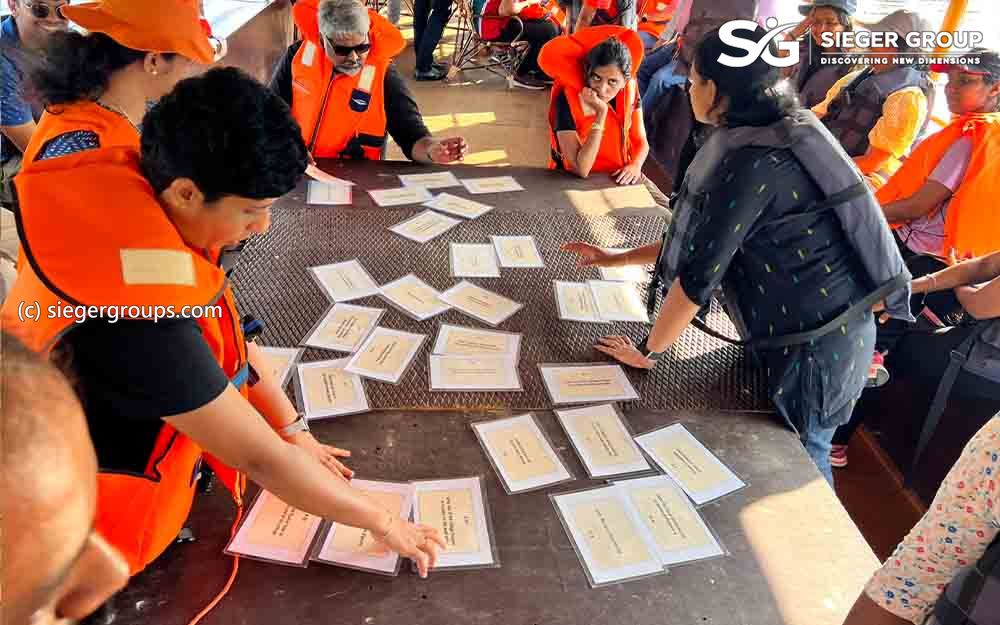
A fictional escape scenario asks teams to combine clues and choose a route through a series of themed challenges. Different players can follow evidence, keep the record or explain a decision. The debrief explores how the group handled uncertainty under time pressure.
Separate what the group knew at each stage from what only became clear at the end.
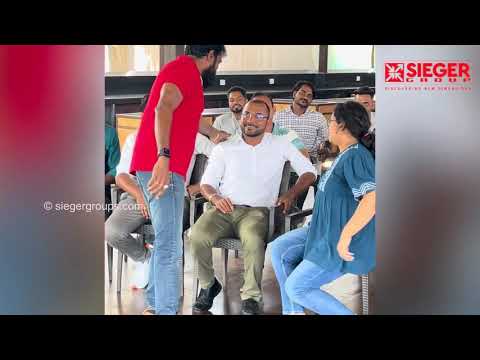
The code-breaking film illustrates the group puzzle element that can sit within a themed mission.
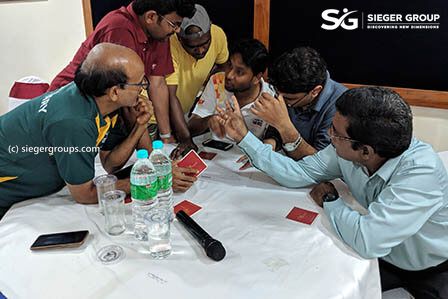
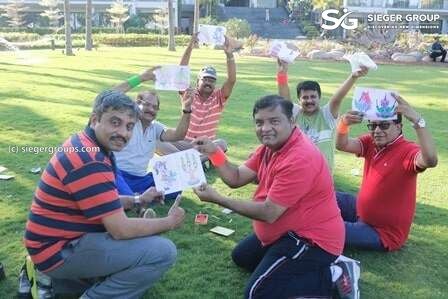
These photographs show related team sessions from the Sieger Group library.
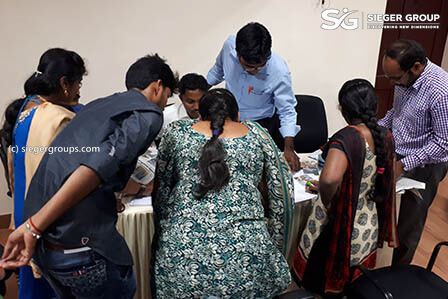
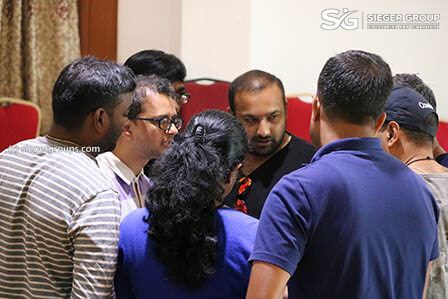
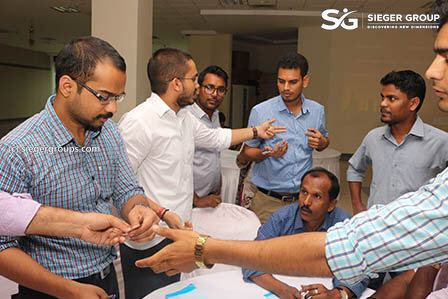
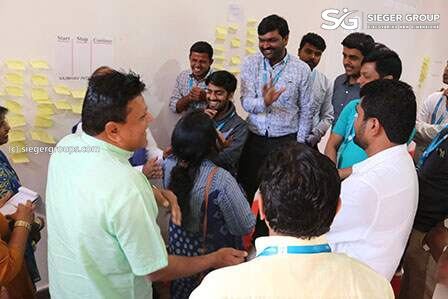
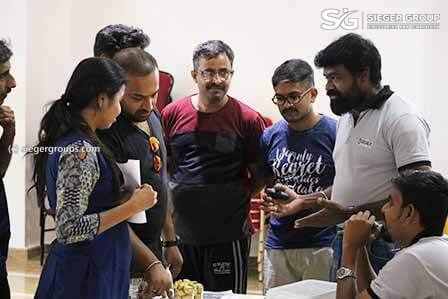
Review the fictional Zombieland story, time constraint and team objective. How did the team interpret the fictional escape scenario?
Collect puzzle details and make discoveries available to the whole group. Which clues needed to reach the whole group?
Test interpretations and coordinate the next action as the scenario develops. What helped participants reason clearly under the time constraint?
Discuss how the team used evidence and communicated when time felt limited. How did the group revise a route that did not lead to the objective?
Use these points to draw out what colleagues can learn from Zombieland Escape Challenge.
Reflect on what helped the group think usefully under a time constraint.
Consider how quickly a discovery became available to the people who needed it.
Confirm the room layout, team sizes, clue visibility and any language or accessibility adjustments to the brief.
Test interpretations and coordinate the next action as the scenario develops.
Consider how quickly a discovery became available to the people who needed it.
Collect puzzle details and make discoveries available to the whole group.
How did the team interpret the fictional escape scenario?
Separate what the group knew at each stage from what only became clear at the end.
Compare how colleagues handle partial information and build a shared explanation.
Work on the handover between the people who discover evidence and the people who act on it.
Notice how a group questions a popular theory before committing to a decision.
An illustrative running order for Zombieland Escape Challenge. Confirm timings, breaks and participation arrangements in your event brief.
Groups people are trapped in a room with a chained-up zombie. Participants will have an hour to solve a series of riddles and puzzles and get the key to escape the room before the zombie eats everyone in group.
Sieger Group supports organisations with team-building experiences and facilitated programmes.
A fictional escape mission gives teams a reason to share clues quickly and decide which lead to pursue. The debrief reconstructs the decisions behind the route they chose.
Separate what the group knew at each stage from what only became clear at the end.
Enter the escape scenario, Share the clues, Connect the route to the exit, Review decisions under pressure. The final selection is agreed with the organiser.
Project teams and cross-functional groups can use this experience. Compare how colleagues handle partial information and build a shared explanation.
This activity is designed for groups of 20–200. Share your expected headcount and venue so Sieger Group can confirm a suitable arrangement.
Allow 60 minutes for the activity session. Sieger Group can confirm the timing against your event schedule and agreed format.
Confirm the room layout, team sizes, clue visibility and any language or accessibility adjustments to the brief.
Share access requirements and preferences when planning the session. The facilitator can discuss roles such as observing, recording decisions or presenting the group’s findings.
Review the fictional Zombieland story, time constraint and team objective.
Consider how quickly a discovery became available to the people who needed it.
Yes. Share the purpose of the offsite and which part of Zombieland Escape Challenge you would like to emphasise. The facilitator can discuss how to fit the chosen elements into the wider event.
Use the enquiry form or contact Sieger Group with your preferred date, city, headcount, venue and learning objective. Include any participation or access requests in the brief.
Share your date, city, group size and the outcome you want colleagues to take away.
Request a tailored proposalTell us what you have in mind. We will help you explore a programme that fits your people and your occasion.
Still finalising the details? Share what you know.
Every team is different. Share your people, purpose and preferred setting, and we’ll translate your brief into an experience designed to connect, engage and create lasting impact.
Share your brief and preferred contact details.