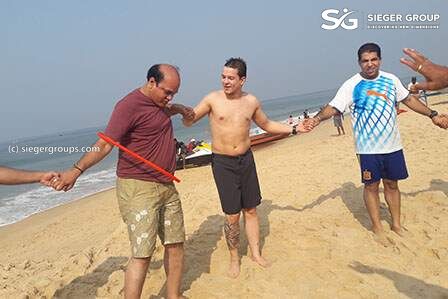
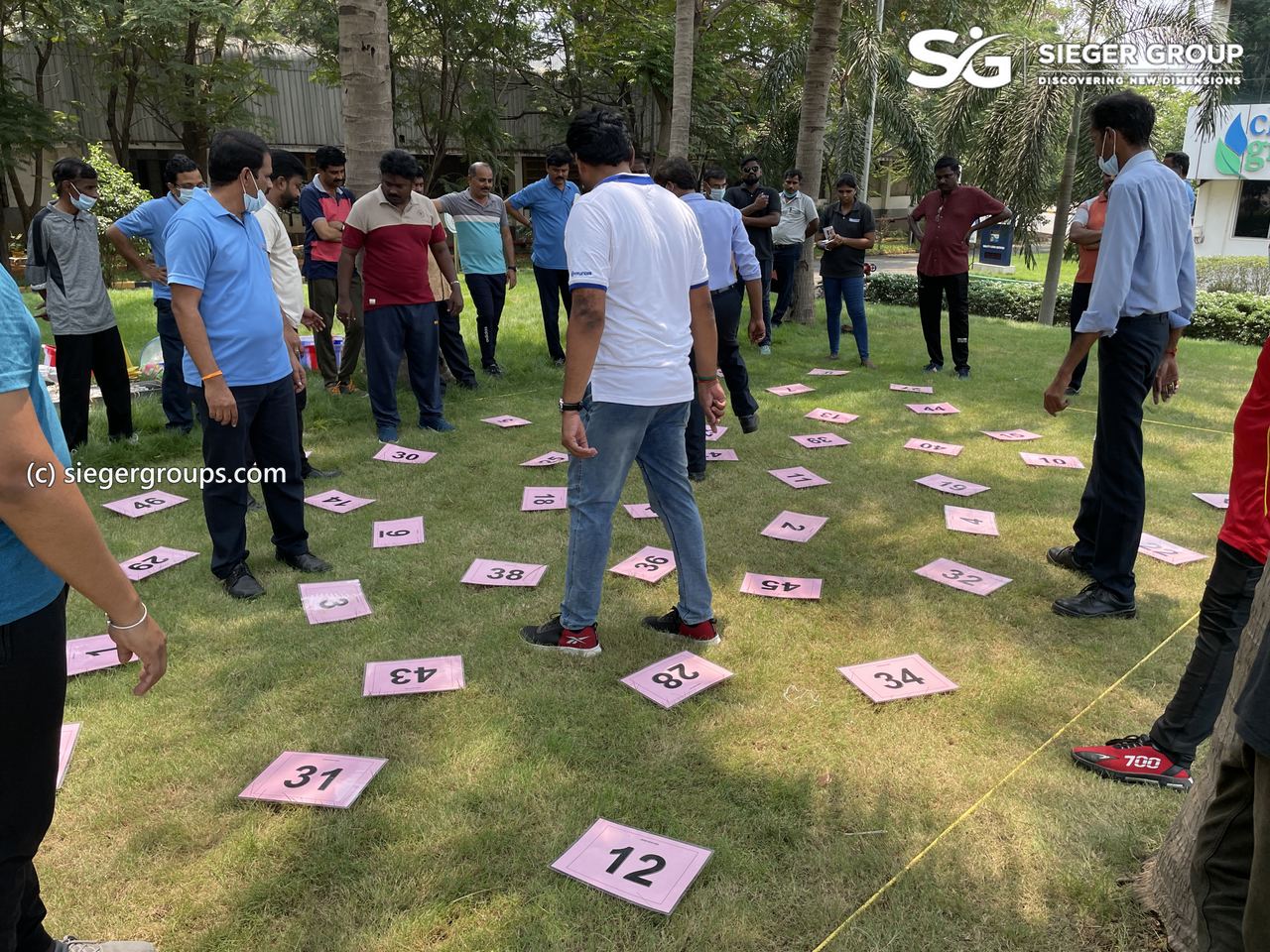
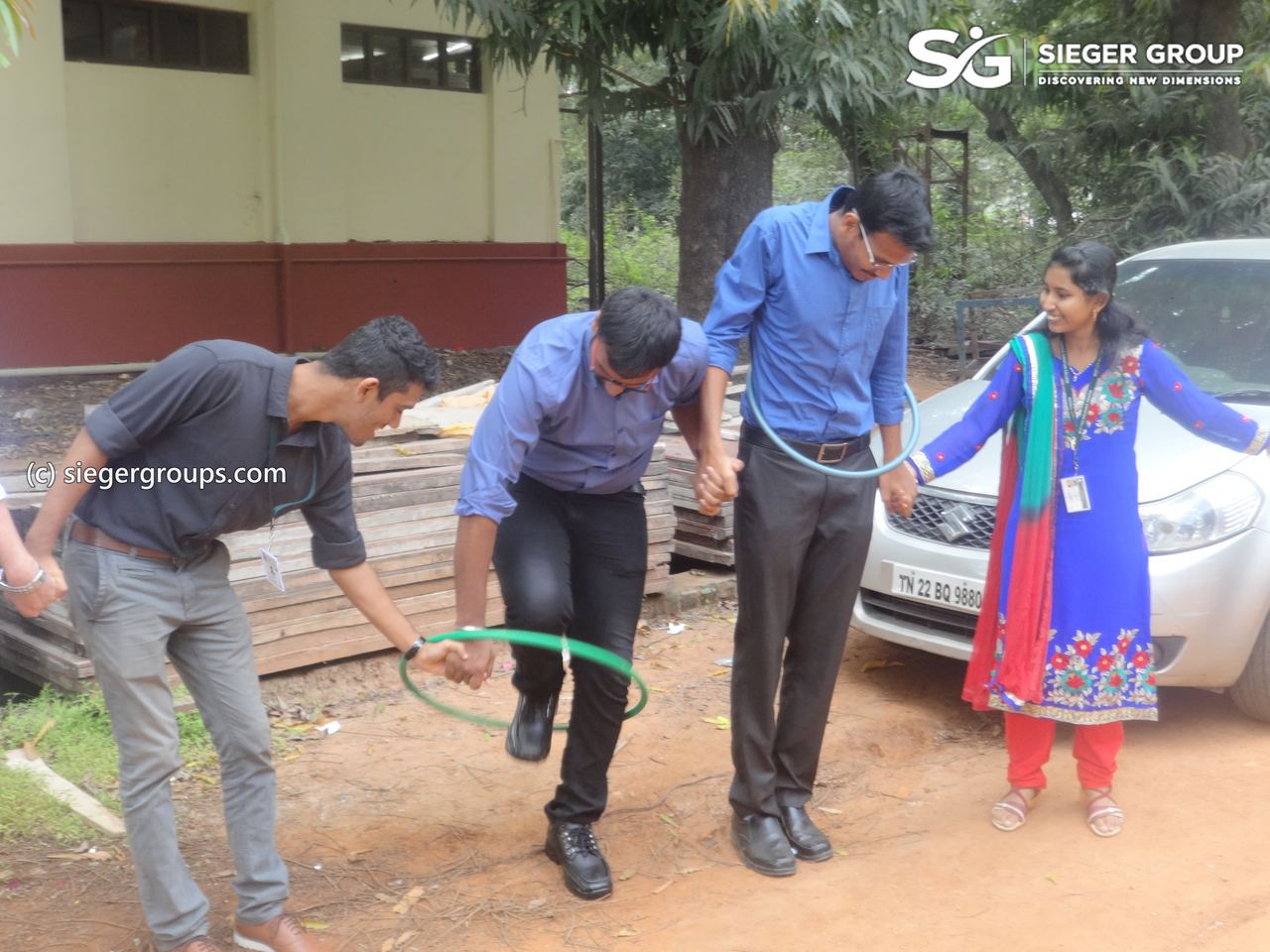
Meet the paired game
Understand how the linked-pair format changes the soccer challenge and playing rules. How did players keep track of the changing game situation?
Learning focusUnderstanding paired roles
Partners enter a football game as a pair. Each player must coordinate with a partner while still reading what the wider team is doing.
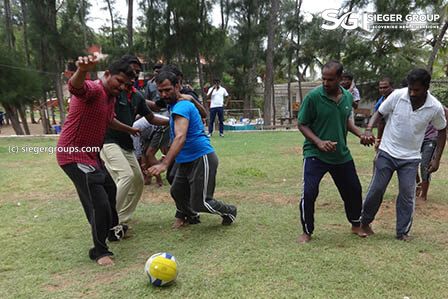
Players participate in connected pairs, so a move that suits one partner has to work for the other. Pairs agree how to change direction and communicate with the wider team. The game makes it easy to compare coordination within a pair and across a side.
Contrast a useful cue inside one pair with the signal the wider team needed.
In this Chennai Business School round, players line up beside their partners for a game of Double Soccer. Watch how each pair turns and approaches the ball together.

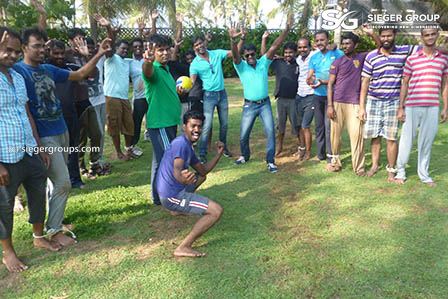
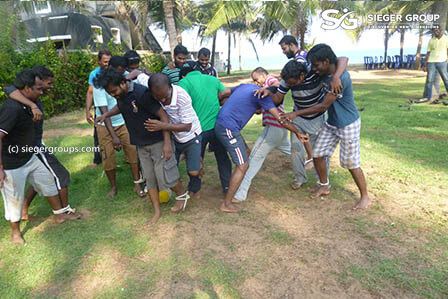
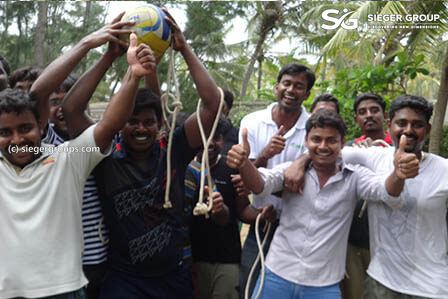
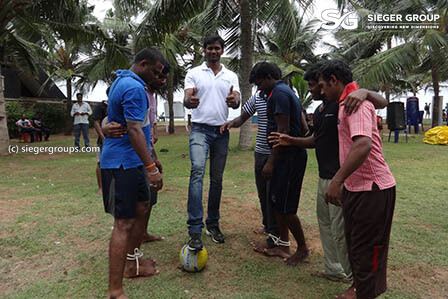
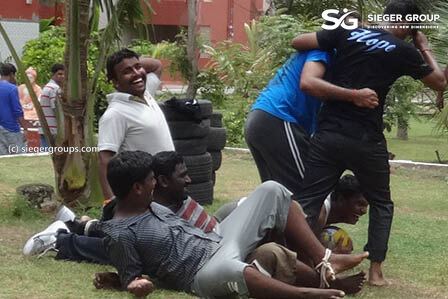
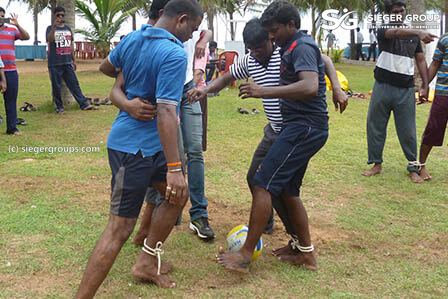
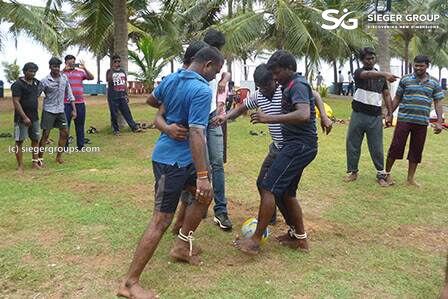
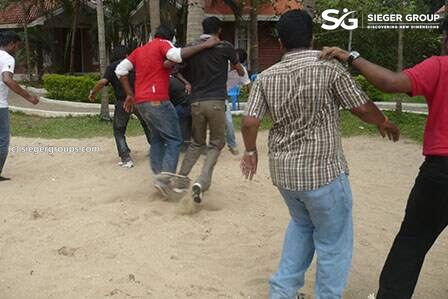
Understand how the linked-pair format changes the soccer challenge and playing rules. How did players keep track of the changing game situation?
Discuss movement and communication before joining the match. Which communication helped teammates coordinate their positions?
Adjust positioning and decisions around both your partner and the wider team. How did the group adapt when attention was divided?
Compare coordination within each pair with collaboration across the whole side. What helped participants balance individual chances with team play?
Use these points to draw out what colleagues can learn from Double Soccer.
Reflect on how an individual intention became a joint movement decision.
Explore how a pair balanced its immediate action with the needs of the wider game.
Share the floor or field space, group size, schedule and preferred activity level so stations and rotations can be agreed.
Adjust positioning and decisions around both your partner and the wider team.
Explore how a pair balanced its immediate action with the needs of the wider game.
Discuss movement and communication before joining the match.
How did players keep track of the changing game situation?
Contrast a useful cue inside one pair with the signal the wider team needed.
Make first contact through a short challenge with a clear shared purpose.
Use a change of pace to see different strengths and roles in action.
Choose a mix of active, creative and observer roles around the audience and venue.
An illustrative running order for Double Soccer. Confirm timings, breaks and participation arrangements in your event brief.
Double Soccer helps understand participants responsibilities to the team. This starts with them being held accountable for bringing their proper skills to practices. Assigning individual responsibilities won’t work without the trust in each other. Every members in the team know that their teammates will fulfill their corresponding roles.
Sieger Group supports organisations with team-building experiences and facilitated programmes.
Partners enter a football game as a pair. Each player must coordinate with a partner while still reading what the wider team is doing.
Contrast a useful cue inside one pair with the signal the wider team needed.
Meet the paired game, Agree with your partner, Play as connected pairs, Review two levels of teamwork. The final selection is agreed with the organiser.
New starters and mixed departments and established teams can use this experience. Make first contact through a short challenge with a clear shared purpose.
This activity is designed for groups of 20–40. Share your expected headcount and venue so Sieger Group can confirm a suitable arrangement.
Allow 60 minutes for the activity session. Sieger Group can confirm the timing against your event schedule and agreed format.
Share the floor or field space, group size, schedule and preferred activity level so stations and rotations can be agreed.
Share access requirements and preferences when planning the session. The facilitator can discuss roles such as observing, recording decisions or presenting the group’s findings.
Understand how the linked-pair format changes the soccer challenge and playing rules.
Explore how a pair balanced its immediate action with the needs of the wider game.
Yes. Share the purpose of the offsite and which part of Double Soccer you would like to emphasise. The facilitator can discuss how to fit the chosen elements into the wider event.
Use the enquiry form or contact Sieger Group with your preferred date, city, headcount, venue and learning objective. Include any participation or access requests in the brief.
Share your date, city, group size and the outcome you want colleagues to take away.
Request a tailored proposalTell us what you have in mind. We will help you explore a programme that fits your people and your occasion.
Still finalising the details? Share what you know.
Every team is different. Share your people, purpose and preferred setting, and we’ll translate your brief into an experience designed to connect, engage and create lasting impact.
Share your brief and preferred contact details.