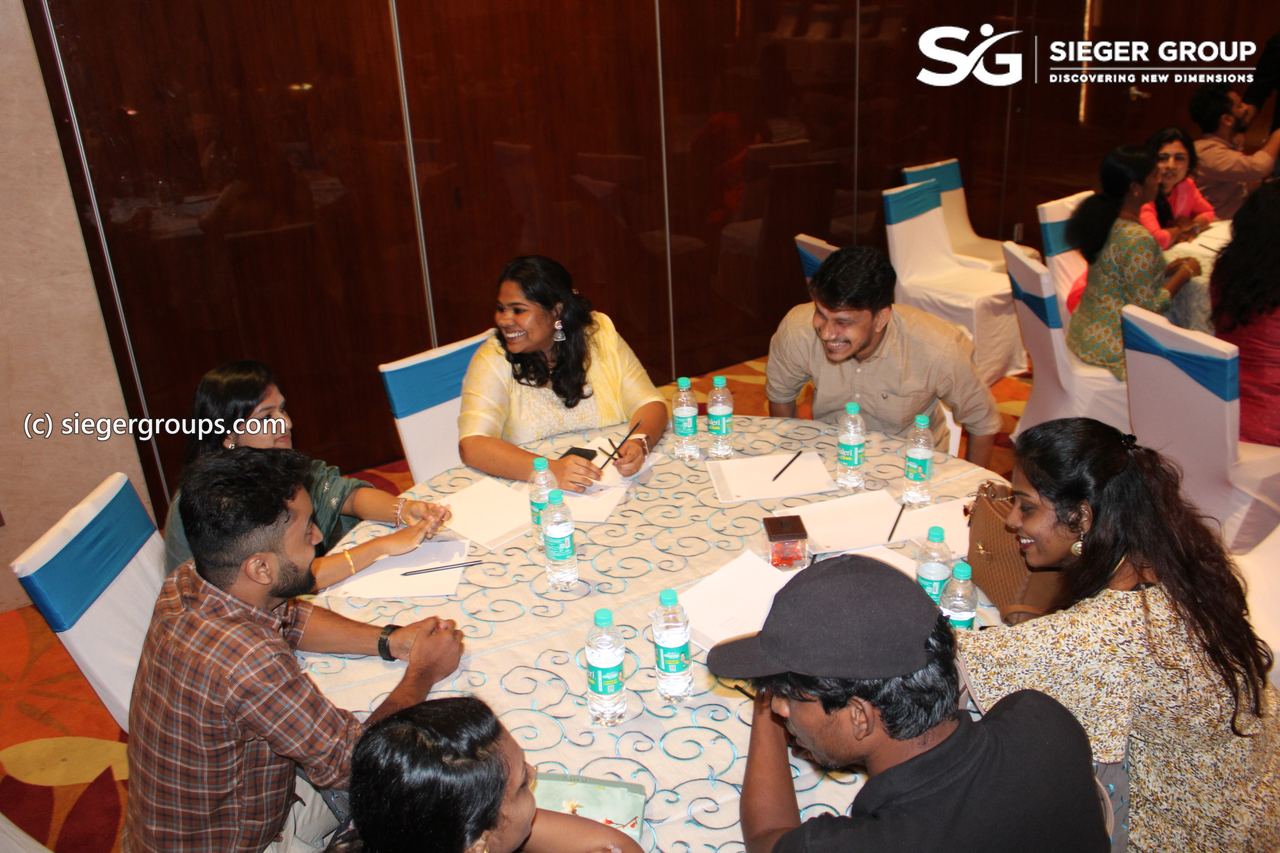
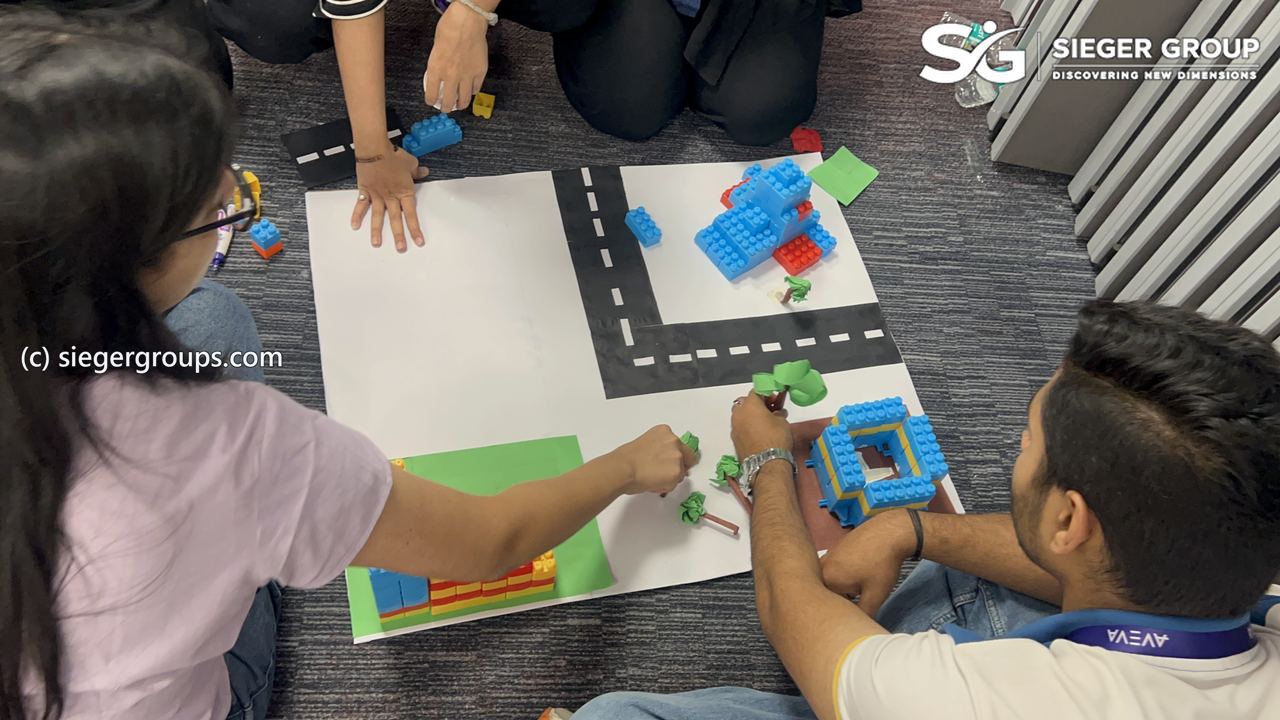
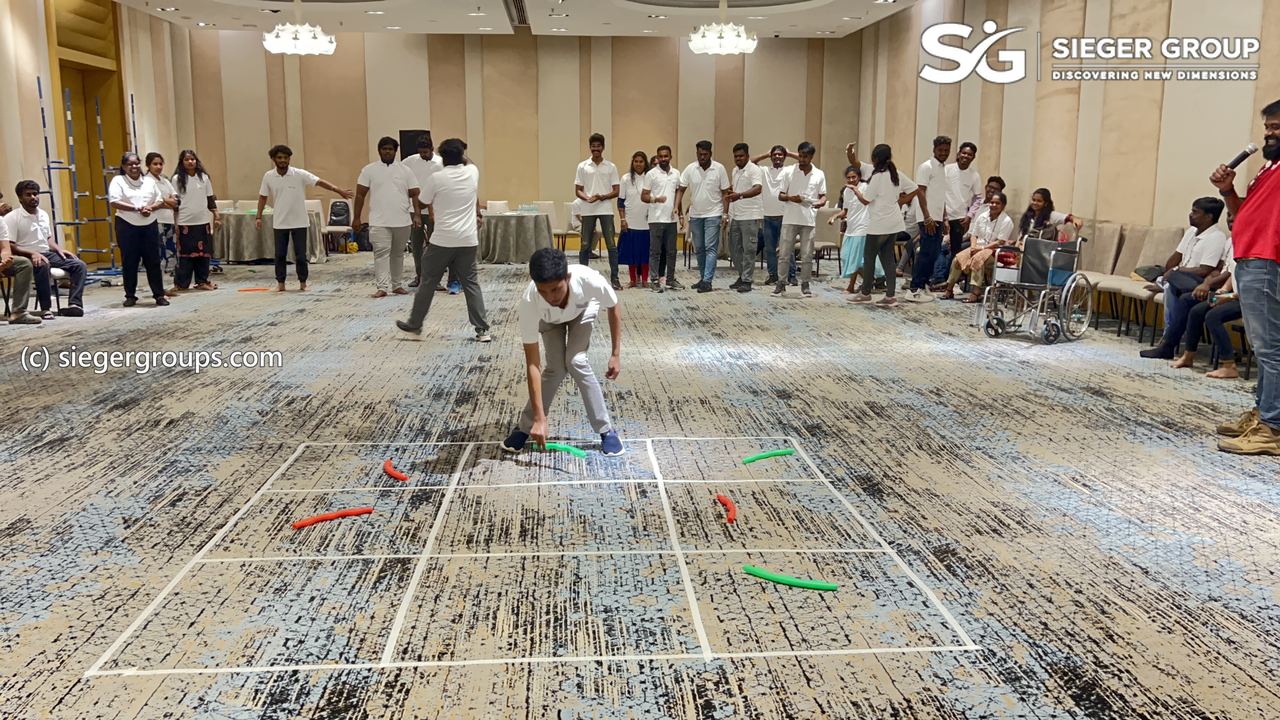
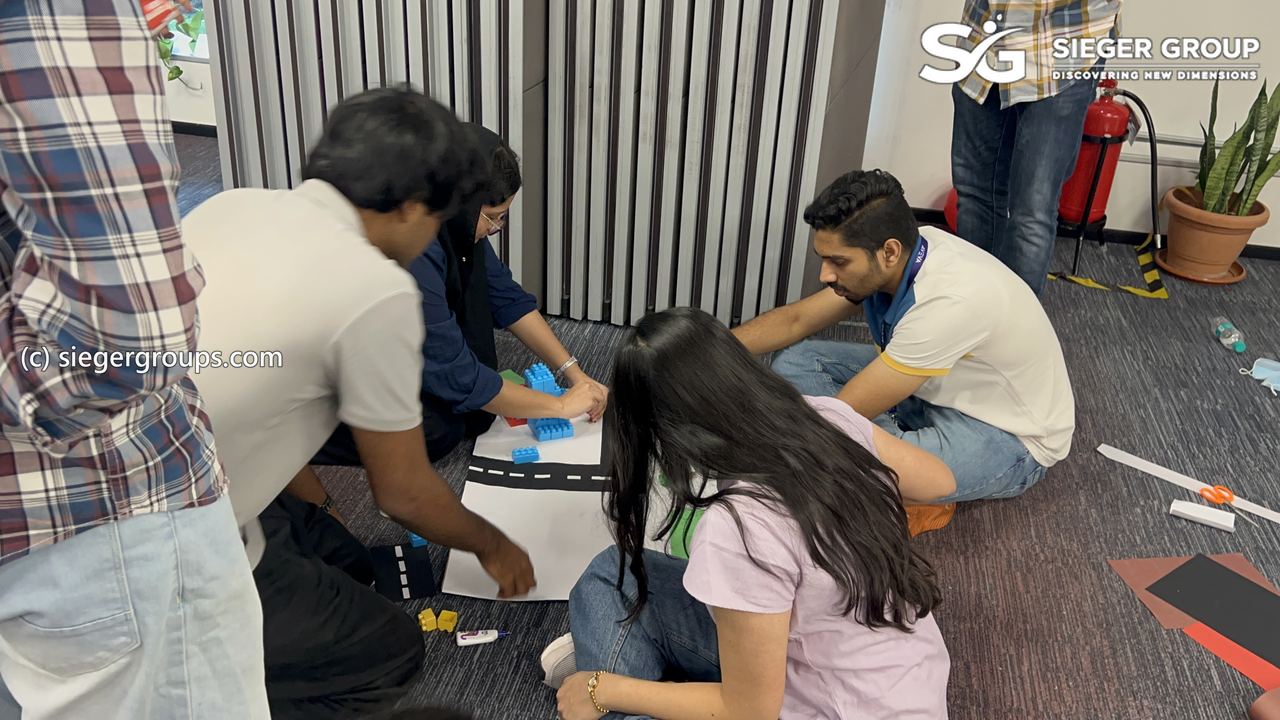
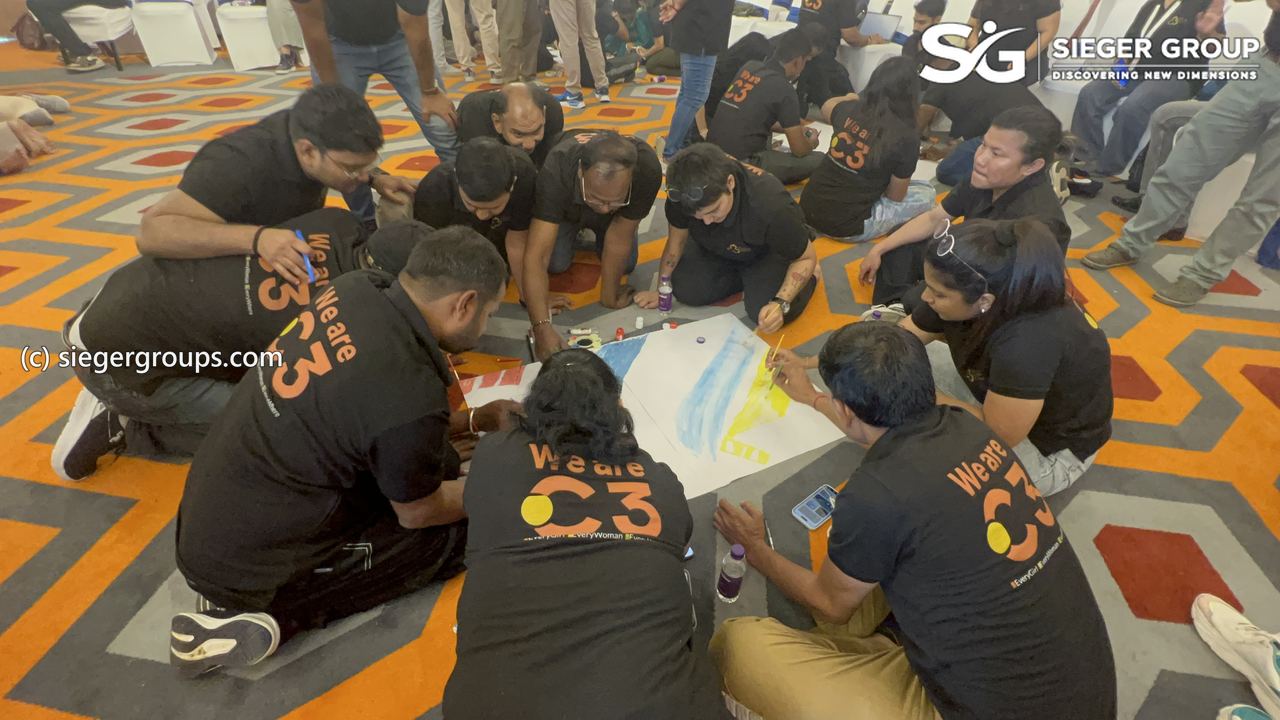
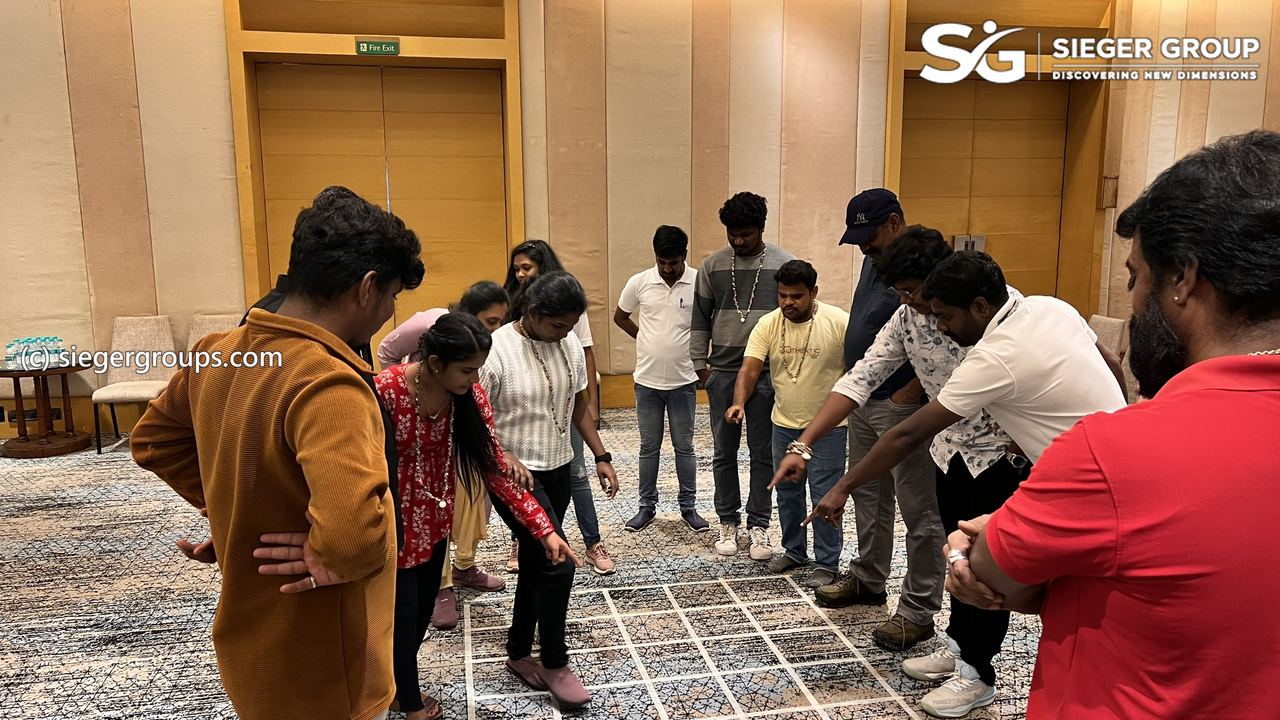
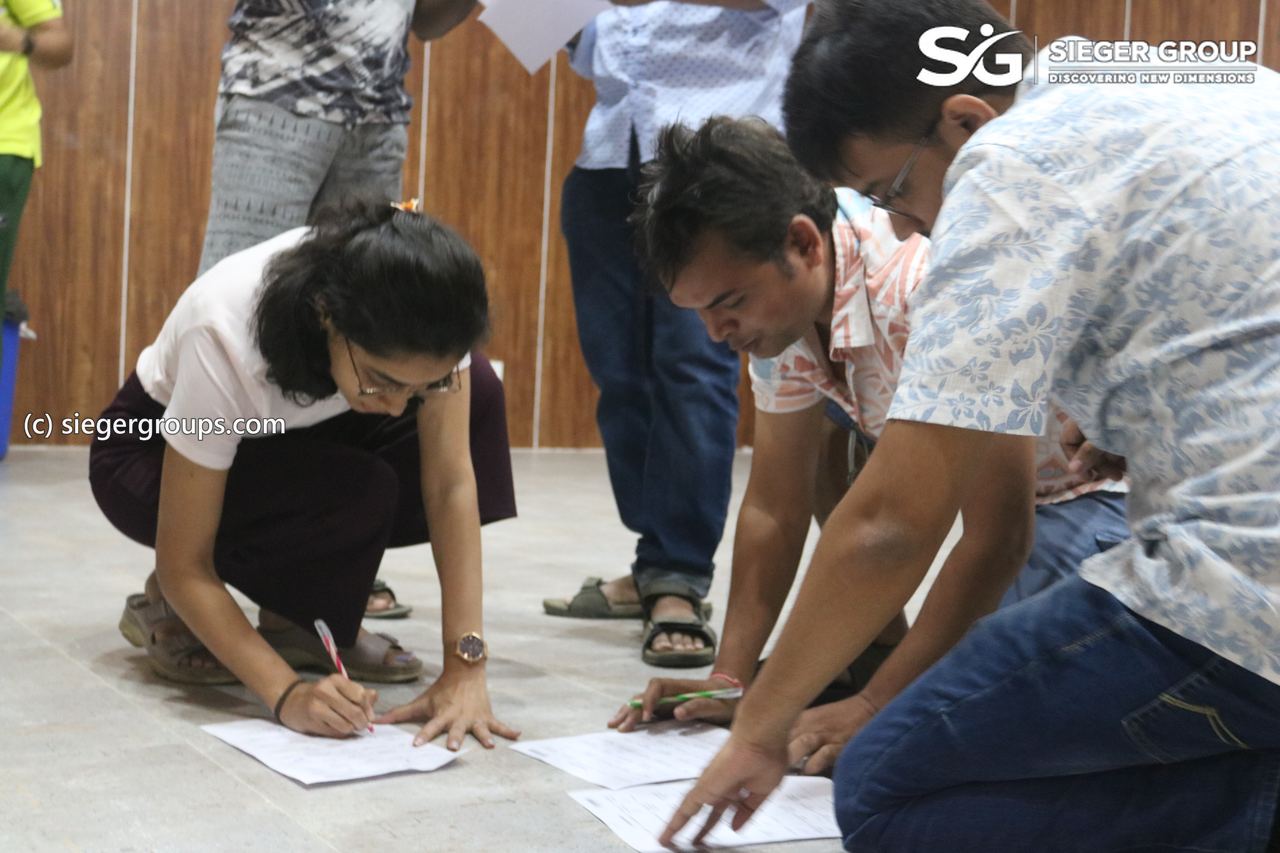
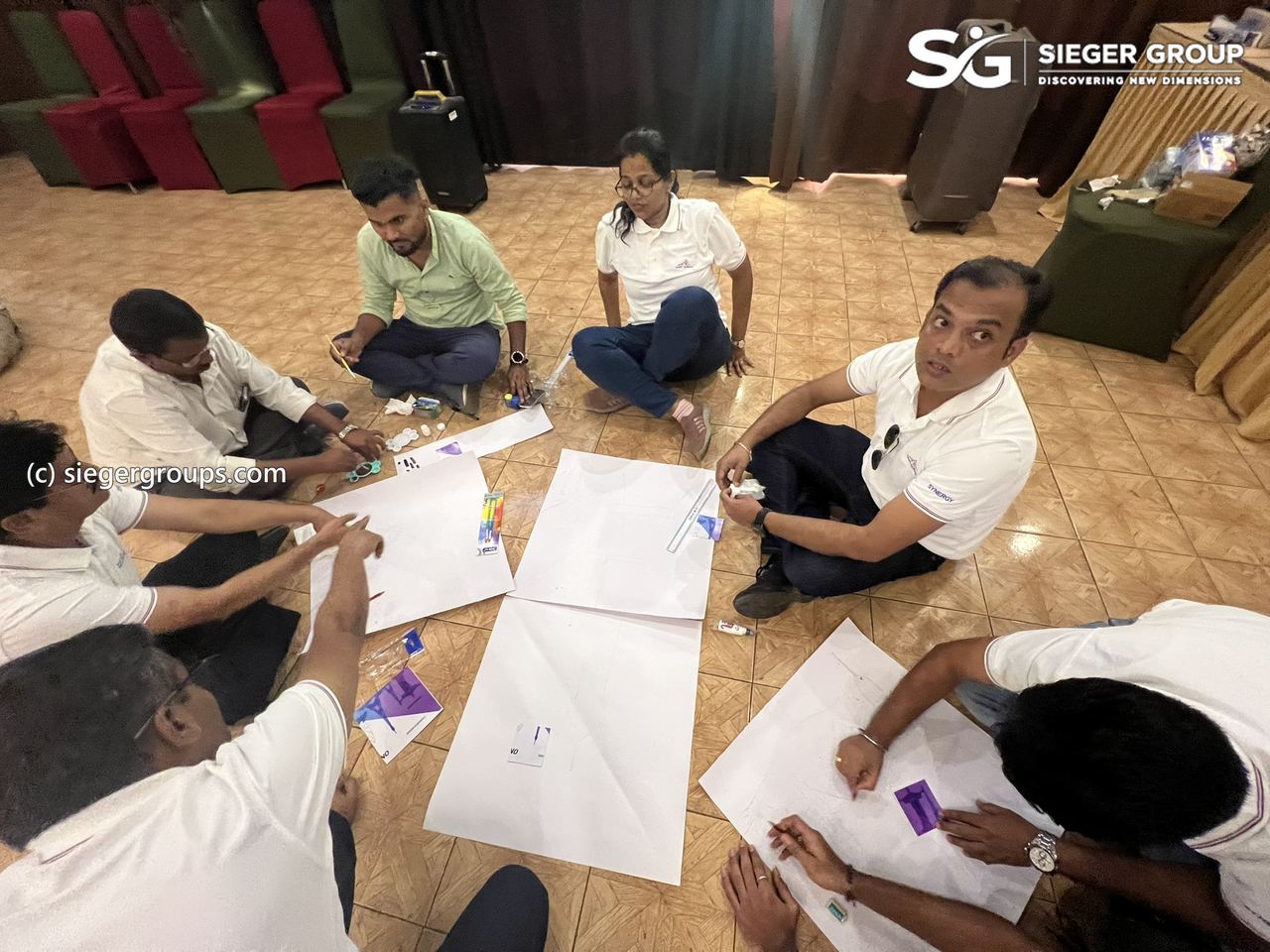
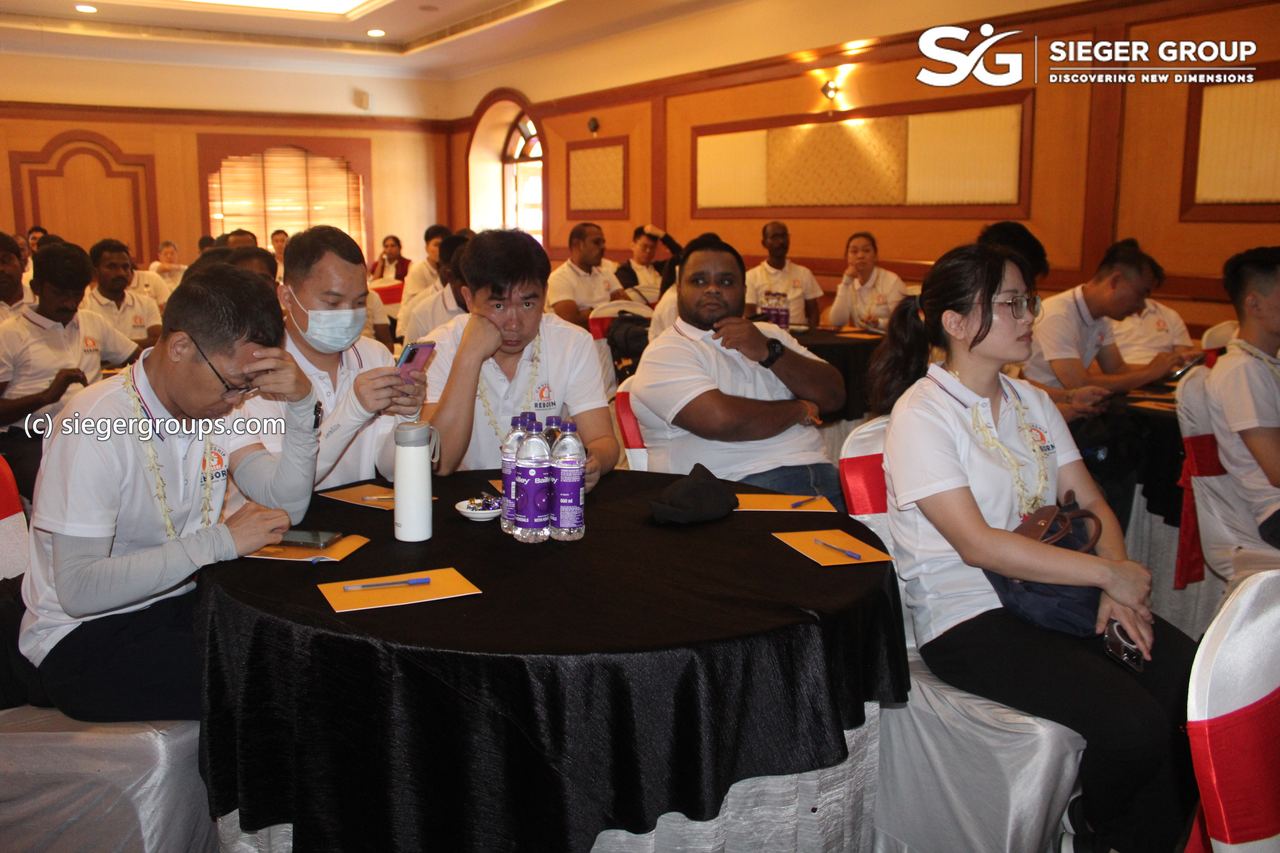
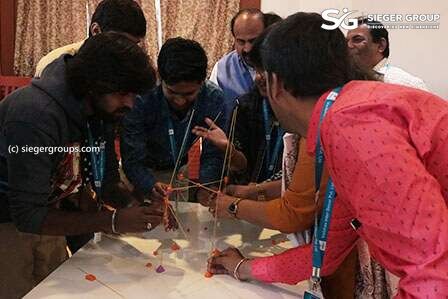
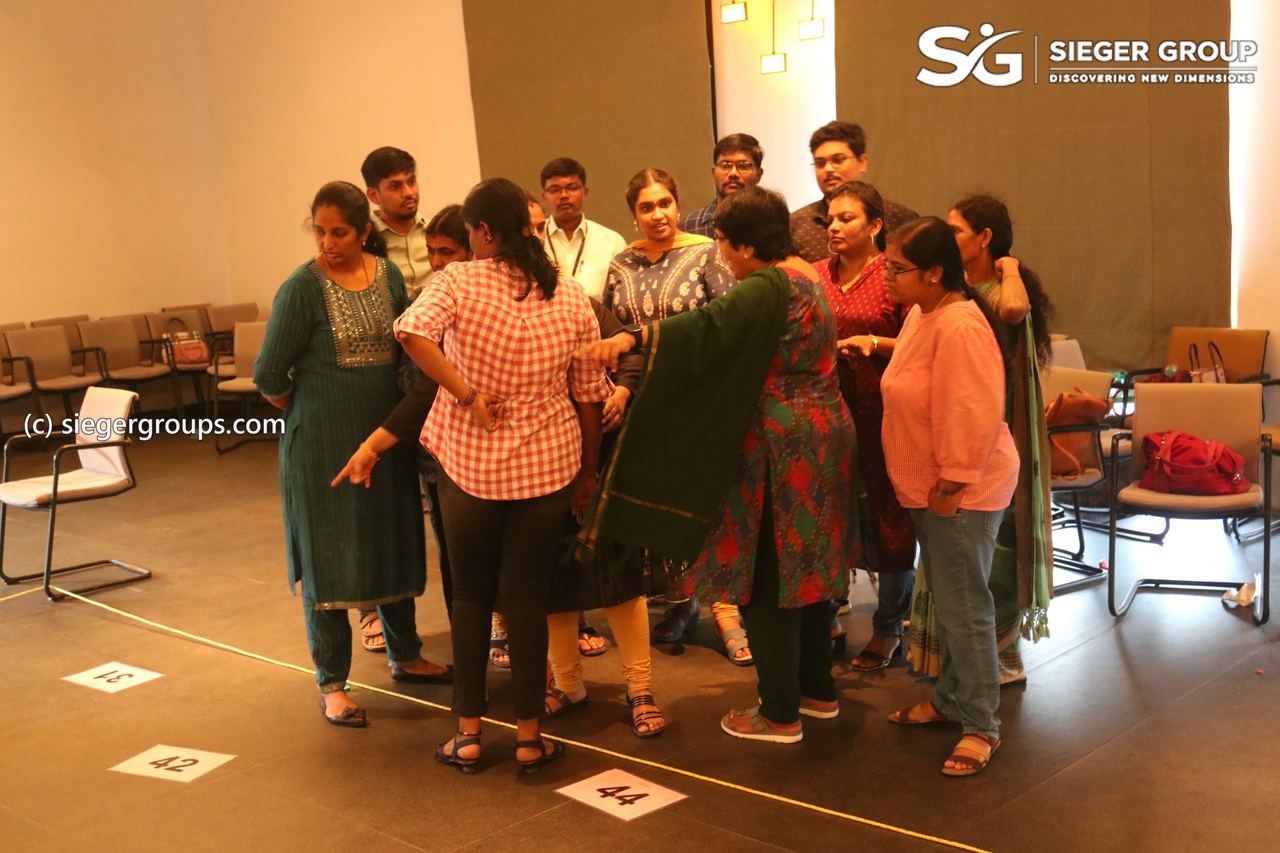
In a business environment evolving faster than ever, conventional problem-solving and linear thinking are no longer sufficient. Our Lateral Strategic Thinking experiential programme is designed to equip your teams with the mindset and tools to navigate complexity, challenge assumptions and deliver innovative outcomes. We combine the rigour of strategic thinking with the creative agility of lateral thinking, all through immersive, experience-based learning rather than traditional “lecture & slides”. Participants engage in dynamic scenarios, applied simulations and rich debriefs that embed thinking skills into action.
Explore these options as starting points for lateral & strategic thinking. The selected formats, materials and participation arrangements are shaped around the group and agreed brief.
Change the point of view
Reframing the Strategic Brief
Teams examine a situation from different stakeholder perspectives before defining the decision they face. They compare how a customer, delivery team or resource owner might interpret it. The review explores which lens revealed an overlooked assumption and how reframing changed the range of possible responses.
Learning focusPerspective shifts · Framing
Connect distant ideas
Unexpected Connection Lab
Groups draw an analogy from an unrelated setting to generate responses to a strategic challenge. They explain where the comparison is useful and where it stops being relevant. This keeps lateral thinking connected to the real brief while creating room for less familiar options.
Learning focusAnalogies · Idea generation
Look beyond the first effect
Consequence Mapping
Participants map what might follow from a proposed choice, including dependencies and unintended effects. Teams distinguish immediate gains from longer-term implications and identify where further evidence is needed. The task considers how an attractive local decision could influence other teams or stakeholders.
Learning focusSystems thinking · Consequences
Choose what matters most
Strategic Choice Forum
Teams compare shortlisted options against an agreed direction and practical constraints. They explain which trade-offs they would make and which conditions might change the decision. Reflection examines whether the strategy guided the choice or was used afterwards to justify an already preferred answer.
Learning focusPrioritisation · Strategic fit
Programme overview
Unlocking Breakthrough Thinking for Organisations
In a business environment evolving faster than ever, conventional problem-solving and linear thinking are no longer sufficient. Our Lateral Strategic Thinking experiential programme is designed to equip your teams with the mindset and tools to navigate complexity, challenge assumptions and deliver innovative outcomes. We combine the rigour of strategic thinking with the creative agility of lateral thinking, all through immersive, experience-based learning rather than traditional “lecture & slides”. Participants engage in dynamic scenarios, applied simulations and rich debriefs that embed thinking skills into action.
What makes it distinctive
Fresh perspectives with a strategic purpose.
A surprising connection is most valuable when it changes how a team understands its real choices. Compare stakeholder lenses, wider consequences and competing priorities, then explain which option supports the direction the group is trying to pursue.
Apply structured lateral-thinking tools to generate creative business solutions
Integrate creative and analytical thinking for strategic clarity
Connect unconventional perspectives with clear strategic choices, consequences and priorities.
A clear purpose
Broader strategic perspectives
Look through different stakeholder lenses before assuming the group shares one definition of the situation or the choice it faces.
Useful participation
Useful unconventional ideas
Explore unexpected connections while checking whether each proposal still serves the purpose and constraints of the strategic brief.
Practical insight
Visible dependencies
Map relationships between choices and other teams so consequences beyond the group’s immediate responsibilities can be considered before action.
Connected choices
Explicit strategic trade-offs
Discuss which priorities an option serves, what it compromises and why the balance might fit the current organisational direction.
Meaningful follow-through
Better scenario conversations
Identify the conditions under which a choice remains useful and the signals that would justify reconsidering that direction.
Programme benefits
Programme Benefits
Explore the behaviours and practical insights your team can review through Lateral & Strategic Thinking. The debrief connects observations from the experience with situations that matter to participants.
Broader strategic perspectives
A useful focus for the group is to look through different stakeholder lenses before assuming the group shares one definition of the situation or the choice it faces.
Useful unconventional ideas
Participants can examine how to explore unexpected connections while checking whether each proposal still serves the purpose and constraints of the strategic brief.
Visible dependencies
The review can highlight ways to map relationships between choices and other teams so consequences beyond the group’s immediate responsibilities can be considered before action.
Explicit strategic trade-offs
Colleagues can explore how to discuss which priorities an option serves, what it compromises and why the balance might fit the current organisational direction.
Better scenario conversations
The experience can prompt discussion of how to identify the conditions under which a choice remains useful and the signals that would justify reconsidering that direction.
Purposeful prioritisation
A practical takeaway is to distinguish interesting possibilities from responses that support the agreed direction with the resources and information currently available.
A testable strategic hypothesis
The team can consider how to state the preferred direction as an assumption to investigate rather than an answer that colleagues must defend indefinitely.
From experience to application
Bring the learning back to work.
Use these reflection prompts to turn Lateral & Strategic Thinking into a focused conversation about what happened, what it means and what to try next.
Identify the initial lens
Recall whose perspective shaped the first interpretation and which relevant viewpoints were initially absent from the group’s discussion of the challenge.
Trace an unexpected connection
Discuss an analogy that changed the thinking and identify which part was actually useful for the strategic brief under consideration.
Examine a wider consequence
Choose a possible effect on another team or stakeholder and identify who could help the group understand that dependency more clearly.
Apply to a real choice
Use the same reframing approach in an upcoming planning decision where colleagues currently see competing priorities or different definitions of success.
State a strategic assumption
Agree what would need to be true for the preferred option to work and how the group could examine that assumption.
Choose review signals
Identify information that would justify continuing, adjusting or stopping the direction and agree who will bring those signals into review.
Programme delivery
How the Programme Works
A suggested flow for Lateral & Strategic Thinking, from setting the brief to reviewing the experience. Activity choices, pace and facilitation are confirmed around your group and setting.
Start with context
Agree the purpose and participation
Connect unconventional perspectives with clear strategic choices, consequences and priorities. Discuss what participants should understand before approaching reframing the strategic brief, including the information, roles and choices relevant to this group.
Perspective shifts · Framing
Connect distant ideas
Explore the selected experience
Groups explore contrasting stakeholder perspectives before debating options. Facilitation connects unconventional suggestions with the actual decision and tests the relevance of each new lens.
Analogies · Idea generation
Look beyond the first effect
Compare and develop the approach
The review follows shortlisted choices beyond their immediate attraction. Colleagues compare dependencies, strategic fit and conditions that would make a different response preferable.
Systems thinking · Consequences
Make the experience useful
Review and carry it forward
Use the same reframing approach in an upcoming planning decision where colleagues currently see competing priorities or different definitions of success. Agree what would need to be true for the preferred option to work and how the group could examine that assumption.
Prioritisation · Strategic fit
Experiential learning outline
Experience. Reflect. Apply.
Connect Lateral & Strategic Thinking with purposeful practice, evidence-based reflection and a next step that fits your working context.
Align the brief
Connect unconventional perspectives with clear strategic choices, consequences and priorities. Clarify what the group needs before beginning the selected experience.
Experience the challenge
Explore reframing the strategic brief through the agreed format. Explore unexpected connections while checking whether each proposal still serves the purpose and constraints of the strategic brief.
Reflect on the evidence
Examine how changing the viewpoint altered the apparent problem and which assumptions became visible when the team considered another way of understanding the brief.
Connect the learning
Relate the exercise to an unresolved planning choice and identify which wider consequence or stakeholder perspective needs to enter that discussion before deciding.
Commit to a next step
Capture a strategic question and the evidence needed to explore it, then agree a review conversation that can challenge the preferred direction as circumstances develop.
Programme details
Programme Overview & Outcomes
When today’s challenges refuse to fit yesterday’s answers, teams must learn to think beyond the obvious. Lateral Strategic Thinking is a signature experiential programme that helps professionals break habitual thought patterns, reframe problems, and discover unconventional solutions that work in the real world. Through immersive experiences, reflective debriefs, and structured facilitation, participants learn to think differently, plan strategically, and act decisively.
Apply structured lateral-thinking tools to generate creative business solutions
Integrate creative and analytical thinking for strategic clarity
Approach challenges with agility and innovation
Build alignment between ideas, execution, and results
build a culture of curiosity and collaboration within teams
Programme details
Experiential Methodology
This programme follows the Experiential Learning Cycle: Experience → Reflect → Conceptualize → Apply. Participants engage in a series of activities, simulations, and group challenges that:
Expose thinking habits and blind spots
Encourage experimentation with new ideas
Create safe space for risk-taking and creative failure
Lead to personal insight and actionable strategy
Our facilitators guide participants through reflective debriefs that transform experience into workplace wisdom.
Programme details
Programme Format
Duration
Half-day / Full-day / Two-day immersive formats
Ideal for
Managers, leaders, and teams responsible for innovation, planning, or transformation
Delivery
Onsite, Offsite, or Virtual experiential sessions
Group Size
20 to 100 participants (customisable for larger teams)
Who should attend
Choose the right audience for the experience.
Discuss participant experience, access needs, language preferences and the purpose of the programme before confirming suitability.
Intact and cross-functional teams
Intact and cross-functional teams interested in perspective shifts · framing. Reframing the Strategic Brief offers one possible starting point for an agreed group experience.
Managers and emerging leaders
Managers and emerging leaders exploring analogies · idea generation. Select a format that fits their responsibilities, working relationships and the purpose of Lateral & Strategic Thinking.
Project teams and newly formed groups
Project teams and newly formed groups bringing different perspectives to systems thinking · consequences. Confirm the learning priorities and participation arrangements before choosing the activity mix.
Programme schedule
An illustrative two-day learning journey.
This sample shows how a programme could flow. Timings, breaks, activity choices and duration are agreed in the final proposal.
Day one
Explore the experience
09:15–10:30
Welcome, context and participation
Introduce Lateral & Strategic Thinking, agree the group’s purpose and discuss participation preferences. Explain the selected formats before the experience begins.
10:45–12:30
Reframing the Strategic Brief
Use a selected version of Reframing the Strategic Brief to explore perspective shifts · framing. Pause to compare observations and clarify the choices that shaped progress.
13:30–15:00
Unexpected Connection Lab
Use a selected version of Unexpected Connection Lab to explore analogies · idea generation. Pause to compare observations and clarify the choices that shaped progress.
15:15–17:00
Reflection and shared takeaways
Review examples of broader strategic perspectives and visible dependencies. Connect the observations with day-to-day team responsibilities and choose a relevant next conversation.
Day two
Deepen and apply the learning
09:15–10:30
Consequence Mapping
Explore an agreed version of Consequence Mapping and compare approaches to systems thinking · consequences. Discuss what the group changes after feedback.
10:45–12:30
Strategic Choice Forum
Explore an agreed version of Strategic Choice Forum and compare approaches to prioritisation · strategic fit. Discuss what the group changes after feedback.
13:30–15:00
Connect the experience with work
Identify a situation in day-to-day team responsibilities where purposeful prioritisation would be useful. Discuss one practical adjustment and the people it affects.
15:15–17:00
Commitments and review
Choose a next step related to a testable strategic hypothesis. Agree responsibility and a useful point for reviewing what happens after the programme.
Planning details
A considered programme starts with the practical details.
People and participation
Share the audience profile, language preferences and access needs for Lateral & Strategic Thinking. Agree options that let different colleagues contribute comfortably.
Venue and resources
Discuss the available space, materials and facilitation arrangements for the selected learning exercises. Confirm the final mix of Reframing the Strategic Brief and any other chosen experiences in the brief.
Scope and delivery
Agree the focus on analogies · idea generation, the programme duration and which materials, facilitation and delivery arrangements are included.
Review and follow-through
Choose how to review purposeful prioritisation and a testable strategic hypothesis. Confirm any follow-up conversation or team commitment that belongs within the programme scope.
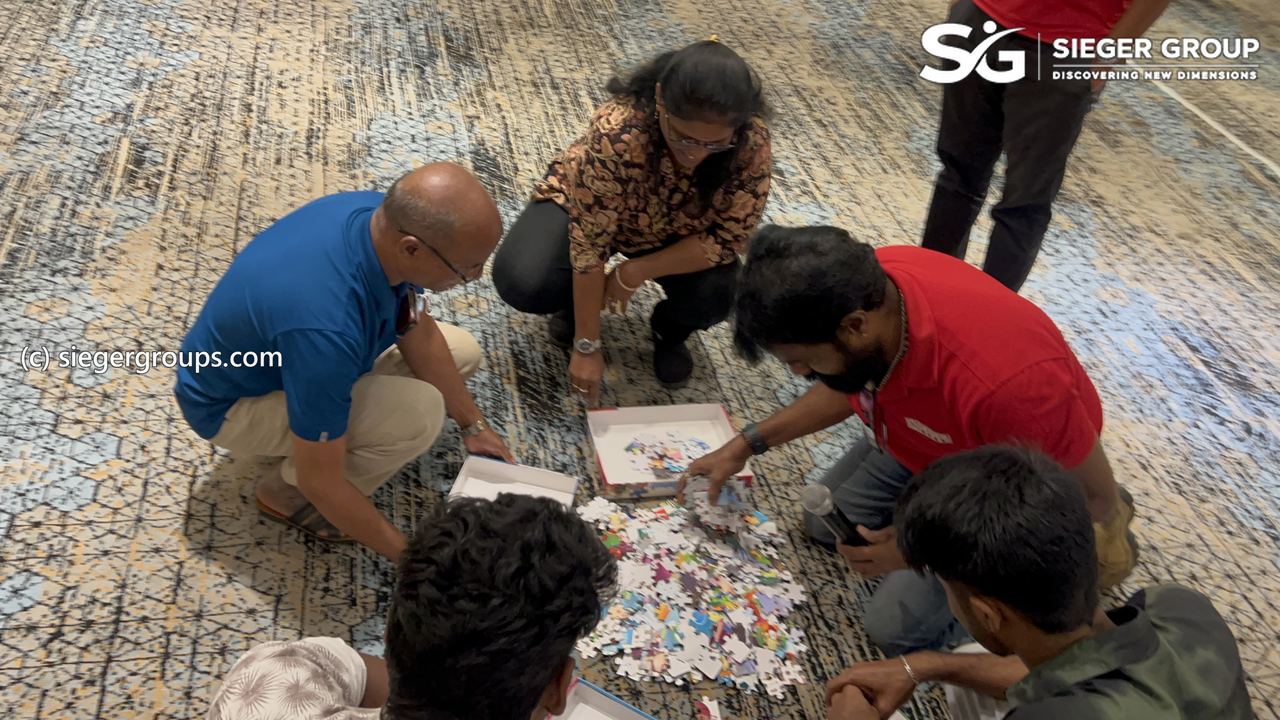
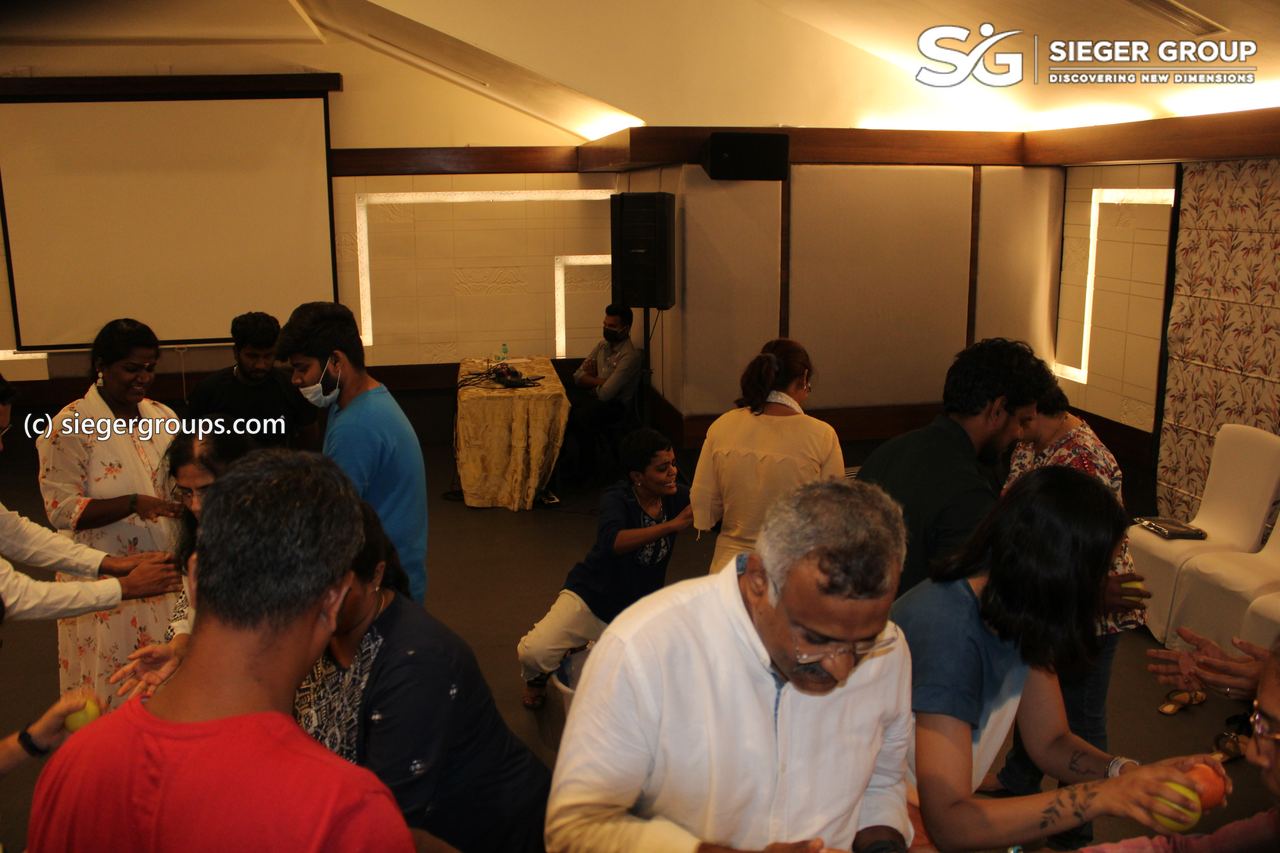
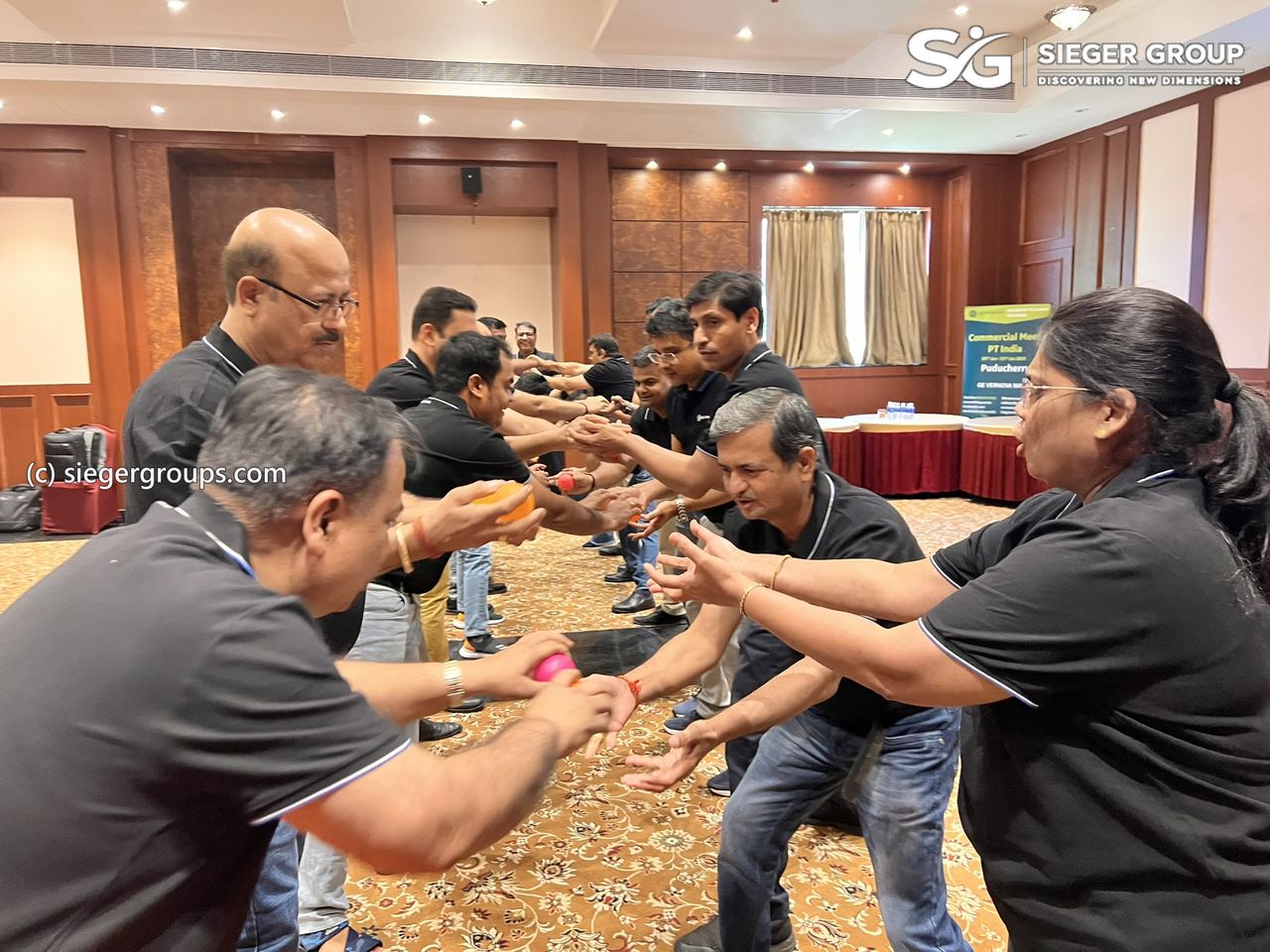
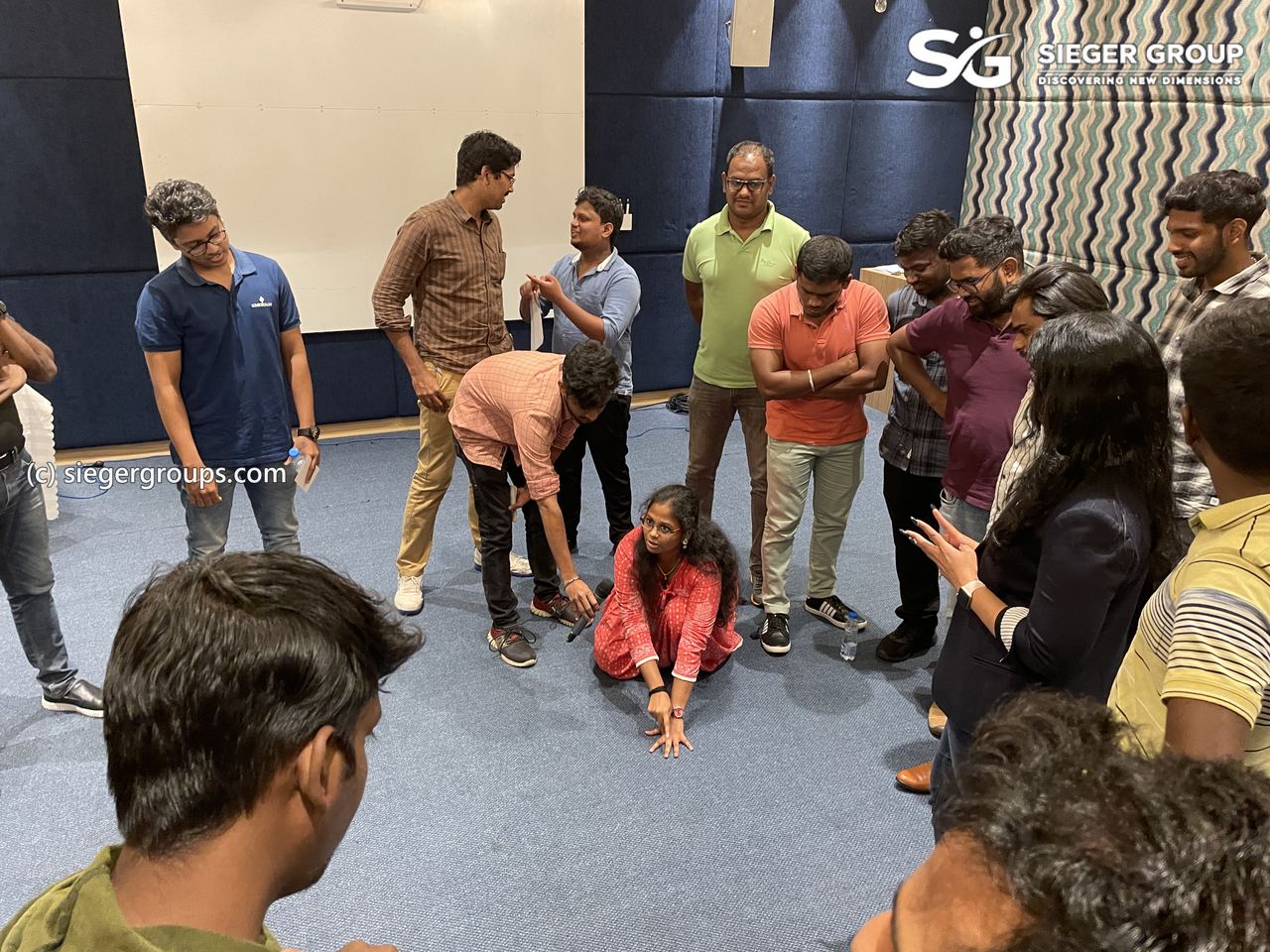
Programme gallery
Lateral & Strategic Thinking in pictures
The final activities and setting depend on your agreed brief.
Explore more programmes
You may also be interested in
Discover other experiences that could complement your team brief.
Sieger Group supports organisations with team-building experiences and facilitated programmes.
Client perspectives
Testimonials
Plan with confidence
Lateral & Strategic Thinking FAQs
12 practical answers to help you plan your programme.
What is Lateral & Strategic Thinking?
In a business environment evolving faster than ever, conventional problem-solving and linear thinking are no longer sufficient. Our Lateral Strategic Thinking experiential programme is designed to equip your teams with the mindset and tools to navigate complexity, challenge assumptions and deliver innovative outcomes. We combine the rigour of strategic thinking with the creative agility of lateral thinking, all through immersive, experience-based learning rather than traditional “lecture & slides”. Participants engage in dynamic scenarios, applied simulations and rich debriefs that embed thinking skills into action.
Who is this programme suitable for?
Lateral & Strategic Thinking can be considered for teams planning a focused learning programme. Share roles, group size, experience levels and participation needs so suitability can be confirmed.
What can participants explore?
The existing programme outline includes: Apply structured lateral-thinking tools to generate creative business solutions; Integrate creative and analytical thinking for strategic clarity; Approach challenges with agility and innovation. The final emphasis and activity selection should be agreed around your brief.
Can the programme be customised for our team?
Yes. Share your team context, goals and preferred tone. The proposed Lateral & Strategic Thinking experience can then be adapted through the activity mix, level of challenge, discussion themes and delivery format, subject to feasibility.
How long does the programme take?
Duration depends on the agreed scope, group size and setting. For Lateral & Strategic Thinking, allow for the briefing, activities, breaks and facilitated reflection and action planning. Request a proposed agenda that fits your available time.
Where can we organise the experience?
Share your preferred city, office, venue or offsite destination in India. Lateral & Strategic Thinking requires a setting suited to the activities and participants. Venue access, usable space, equipment and local delivery arrangements should be confirmed before booking.
What group size works for this programme?
The appropriate group size depends on the activity structure, facilitation and available space. Tell us the expected number of participants for Lateral & Strategic Thinking so team sizes, rotations and staffing can be proposed.
What should participants prepare?
For Lateral & Strategic Thinking, the pre-event briefing should explain the schedule, clothing or equipment requirements and how to take part. Share accessibility needs and relevant participation constraints during planning so suitable arrangements can be discussed.
How are participation and inclusion considered?
Discuss access, mobility, language, sensory needs and comfort levels before confirming Lateral & Strategic Thinking. Agree suitable roles and alternatives where feasible. For specialist activities, confirm delivery responsibilities and participation requirements in advance.
How can we connect the programme with our objectives?
Agree the purpose of Lateral & Strategic Thinking before delivery. Facilitated discussion can link participant decisions and behaviours with workplace or campus situations, followed by practical action commitments. Confirm any follow-up or evaluation support in the proposal.
What does the programme cost?
Pricing for Lateral & Strategic Thinking depends on participant numbers, duration, facilitation, equipment, location and agreed logistics. Request a tailored proposal that clearly states programme inclusions, venue or travel arrangements and applicable charges.
How do we enquire about Lateral & Strategic Thinking?
Use the enquiry form on this page or call +91 98400 97567. Include Lateral & Strategic Thinking, your objectives, group size, preferred dates and location. Sieger Group can then discuss suitability and prepare a proposal for your review.
Ready to plan?
Let’s shape the right programme for your people.
Share your goals, group size, preferred dates and venue. We’ll help you explore a considered programme.
Still finalising the details? Share what you know.
From your brief to a considered programme
Every team is different. Share your people, purpose and preferred setting, and we’ll translate your brief into an experience designed to connect, engage and create lasting impact.