Understand the water-quality objective
Review the simulated water sample and the comparison criteria.
Filter. Test. Improve.
A sustainability engineering challenge where teams design a filtration system and improve it through controlled testing.
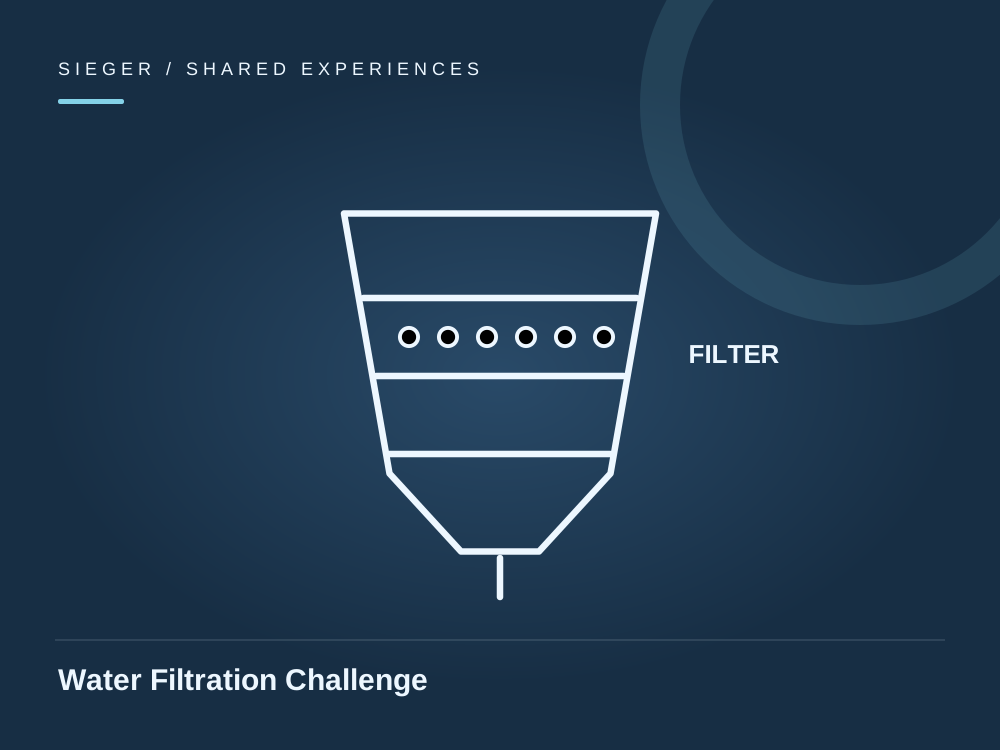
Teams receive a contaminated-water simulation and a constrained set of filtration materials. They must design a process, test the result and improve the system.
Agree the mission rules and success criteria during the briefing, then let your team choose its approach.
A practical progression from the first decision to the final demonstration.
Review the simulated water sample and the comparison criteria.
Choose the filter media and discuss the order of the layers.
Assemble a filter that keeps the materials in place and channels the flow.
Run the simulated sample through it and record the observable result.
Adjust the layers or process and compare performance; the output is not for drinking.
Consider material use alongside the simulated filtration result.
Compare successive trials before claiming an improvement.
Choose media and layering with a clear purpose.
Combine observations to refine the flow and filter arrangement.
The activity connects sustainability to practical systems thinking: teams must balance performance, material use and process design.
Plan Water Filtration Challenge around your participants, the available time and the decisions you want them to practise.
Group sizes and timings are planning guides. Equipment, technical depth and venue suitability are confirmed in the proposal.
Planning details for Water Filtration Challenge. Bring any additional requirements into your conversation with Sieger.
No. The activity uses a controlled simulation and is not a drinking-water treatment exercise.
Yes. Material cost, waste and efficiency can be included in the score.
Yes. Difficulty, narrative, scoring, team size, duration, venue layout and the workplace behaviour being explored can all be customised.
Yes. The experience can be combined with electronics, drones, robotics, STEM, software, AI and mechanical challenges to create a larger technology challenge journey.
The current planning format is 20–80 participants, organised into teams of 5–6. Confirm the final group size with Sieger so equipment, facilitator coverage and team rotations can be planned.
The indicative activity duration is 60–75 min. Briefing, practice, team presentations and debrief requirements can affect the final agenda; agree the complete session timing during planning.
The proposed kit includes Filter media, Containers, Measurement tools, Safe simulated water, and Performance test card. Confirm the final equipment list, participant devices and venue requirements with the programme team.
The existing format is designed with esg programs, leadership teams, engineering groups, corporate sustainability events in mind. Share participants’ experience levels so the technical depth and facilitation can be matched to the group.
The facilitator can use the agreed challenge rules, team decisions and observed results to guide the debrief. The discussion connects sustainability thinking, evidence-based improvement, resource optimisation to situations your team encounters at work.
Send your preferred date, location, participant count and learning objective through the enquiry form or call +91 98400 97567. Sieger can discuss the suitable format, equipment, venue needs and proposal.
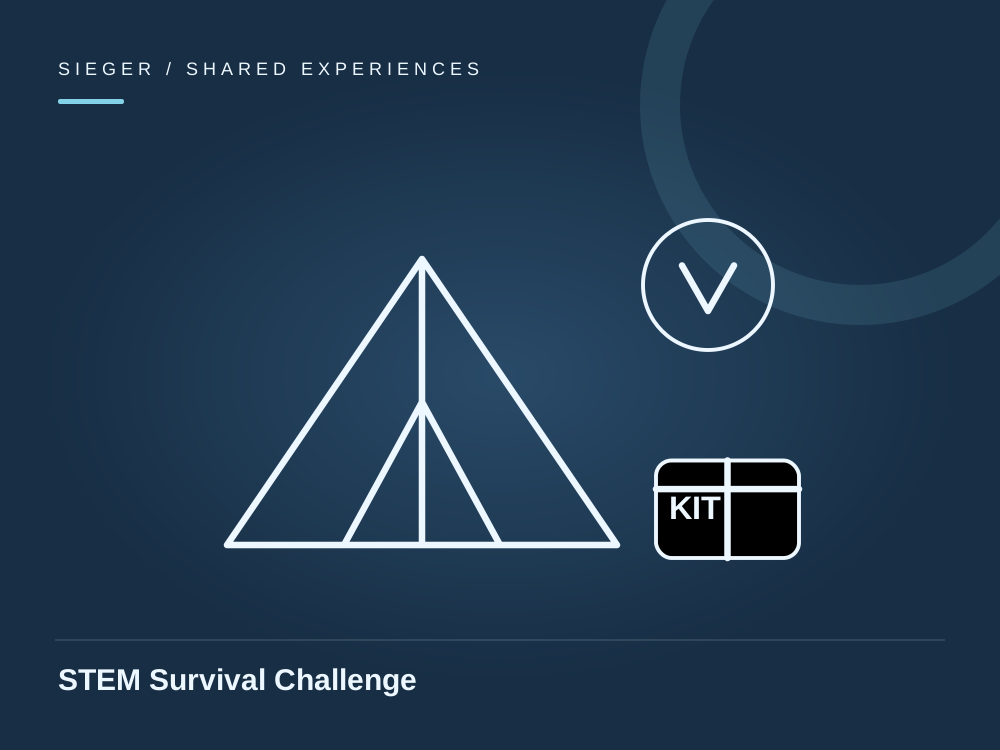
A multi-station STEM mission where teams solve engineering and science problems while managing limited resources.
Explore the experience ↗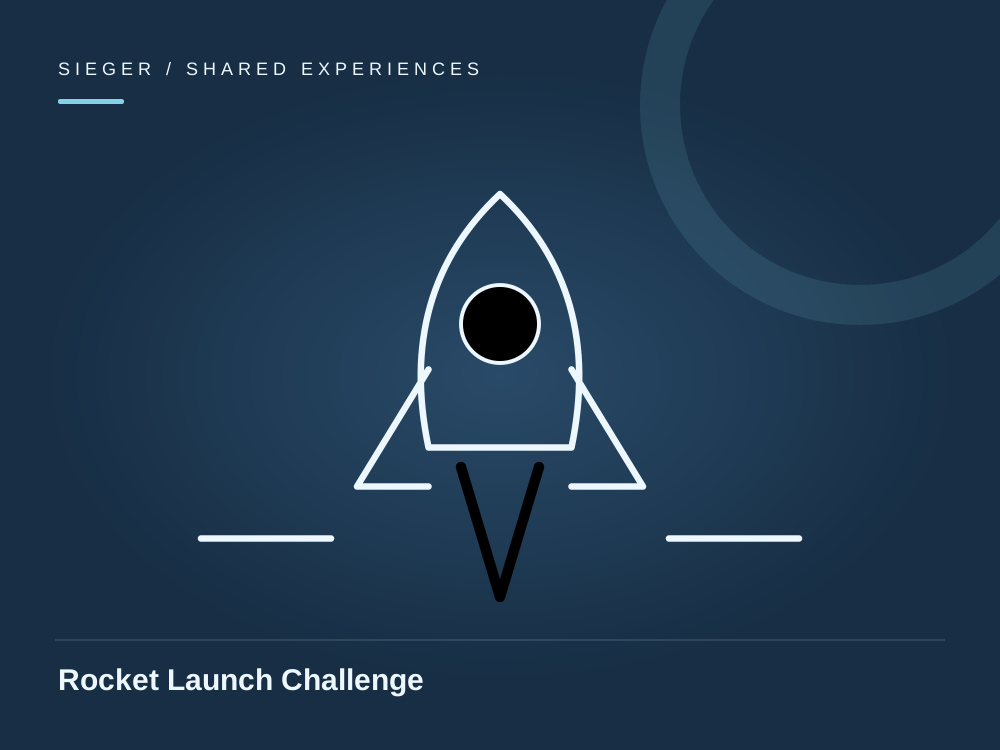
A controlled STEM experiment where teams explore design, trajectory and performance through a safe launch challenge.
Explore the experience ↗
A strength-to-weight challenge where teams create a structure that delivers maximum performance using minimum resources.
Explore the experience ↗Tell us what you have in mind. We will help you explore a programme that fits your people and your occasion.
Still finalising the details? Share what you know.
Every team is different. Share your people, purpose and preferred setting, and we’ll translate your brief into an experience designed to connect, engage and create lasting impact.
Share your brief and preferred contact details.
Choose an experience that connects your people, your purpose and the possibilities of technology.