Understand the target and constraints
Study the target layout and agree the permitted launch method.
Aim. Test. Refine.
A mechanical accuracy challenge where teams design a launcher and use testing data to improve performance.
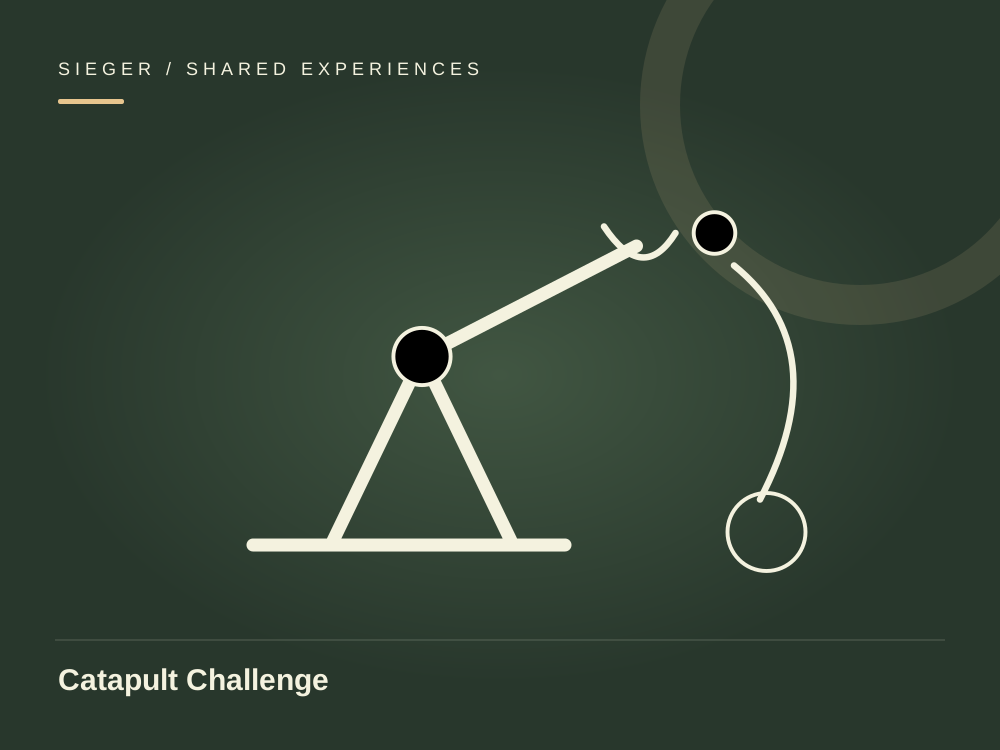
Teams build a controlled launching mechanism and attempt to hit defined targets. The real challenge is learning from each test and improving the design without wasting attempts.
Agree the mission rules and success criteria during the briefing, then let your team choose its approach.
A practical progression from the first decision to the final demonstration.
Study the target layout and agree the permitted launch method.
Construct a stable launcher using the supplied materials and soft projectiles.
Record where each trial lands and note the settings used.
Change one design or launch variable at a time to understand its effect.
Use the calibrated setup in the accuracy round and compare consistency.
Use successive trials to understand the launcher’s behaviour.
Record settings and landing points before making adjustments.
Balance target accuracy with a repeatable launch approach.
Spend limited attempts on changes that answer a specific question.
The activity makes experimentation visible: successful teams learn from misses instead of treating each miss as failure.
Plan Catapult Challenge around your participants, the available time and the decisions you want them to practise.
Group sizes and timings are planning guides. Equipment, technical depth and venue suitability are confirmed in the proposal.
Planning details for Catapult Challenge. Bring any additional requirements into your conversation with Sieger.
The corporate version uses lightweight projectiles and controlled ranges with facilitator supervision.
Yes. Target distance and scoring zones can be adjusted for difficulty.
Yes. Difficulty, narrative, scoring, team size, duration, venue layout and the workplace behaviour being explored can all be customised.
Yes. The experience can be combined with electronics, drones, robotics, STEM, software, AI and mechanical challenges to create a larger technology challenge journey.
The current planning format is 20–100 participants, organised into teams of 5–6. Confirm the final group size with Sieger so equipment, facilitator coverage and team rotations can be planned.
The indicative activity duration is 60 min. Briefing, practice, team presentations and debrief requirements can affect the final agenda; agree the complete session timing during planning.
The proposed kit includes Safe launcher kit, Lightweight projectiles, Target zones, Measurement tools, and Test record sheet. Confirm the final equipment list, participant devices and venue requirements with the programme team.
The existing format is designed with sales and business teams, leadership teams, innovation programs, cross-functional groups in mind. Share participants’ experience levels so the technical depth and facilitation can be matched to the group.
The facilitator can use the agreed challenge rules, team decisions and observed results to guide the debrief. The discussion connects experimentation, data-based improvement, precision to situations your team encounters at work.
Send your preferred date, location, participant count and learning objective through the enquiry form or call +91 98400 97567. Sieger can discuss the suitable format, equipment, venue needs and proposal.
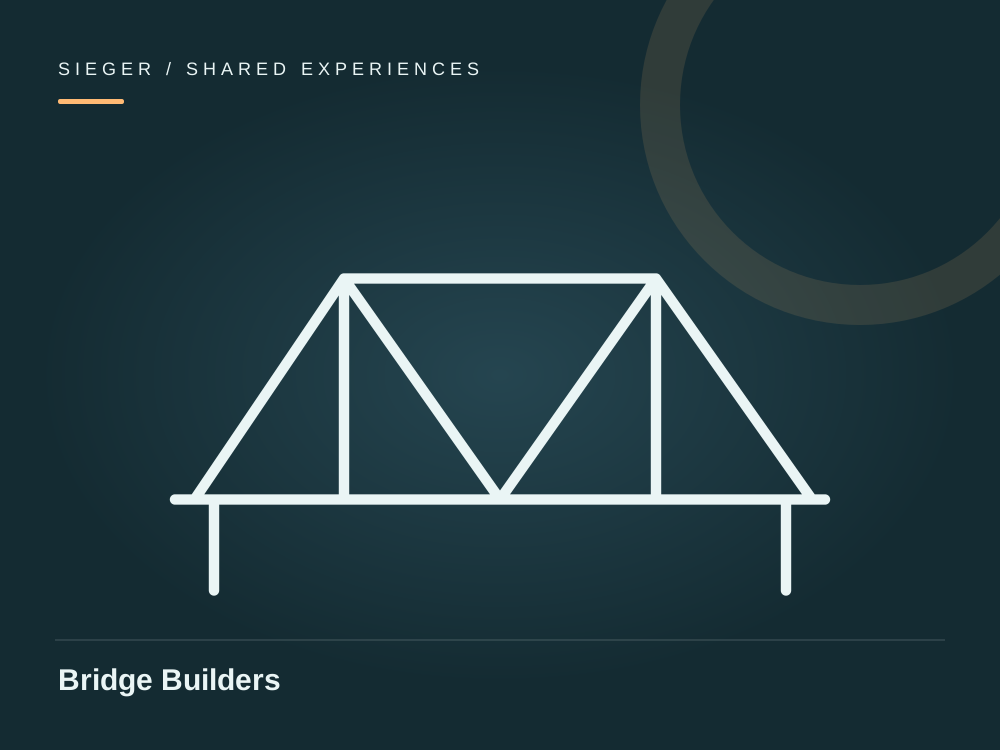
A structural engineering challenge where teams build a bridge that must carry a defined load while using limited materials.
Explore the experience ↗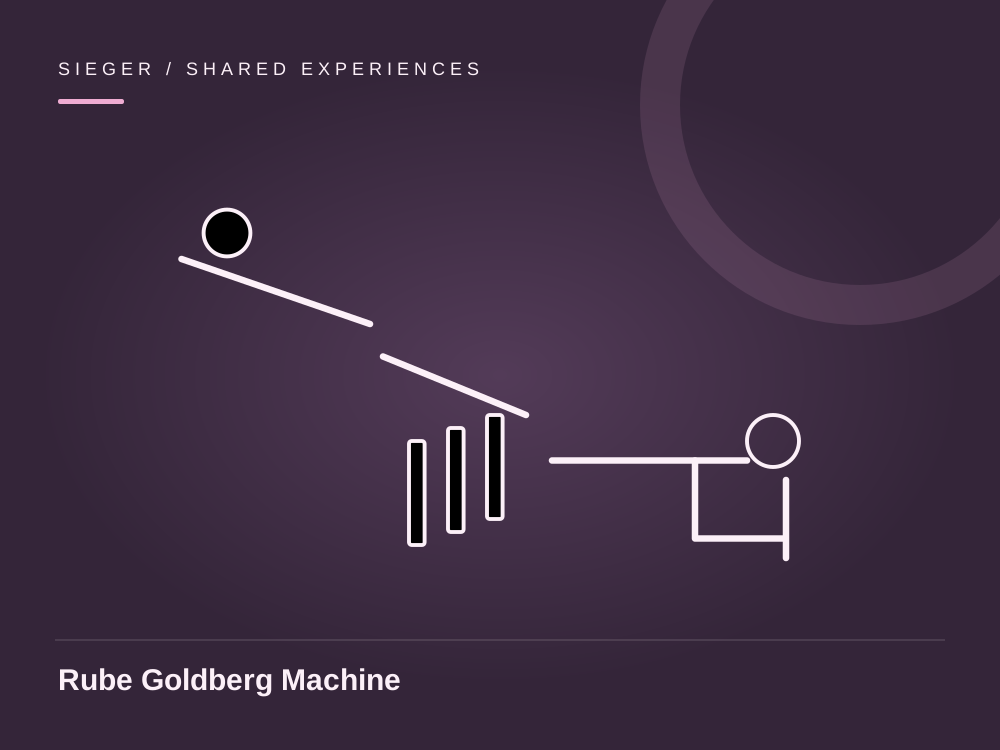
A chain-reaction engineering challenge where every component must trigger the next step to complete a final outcome.
Explore the experience ↗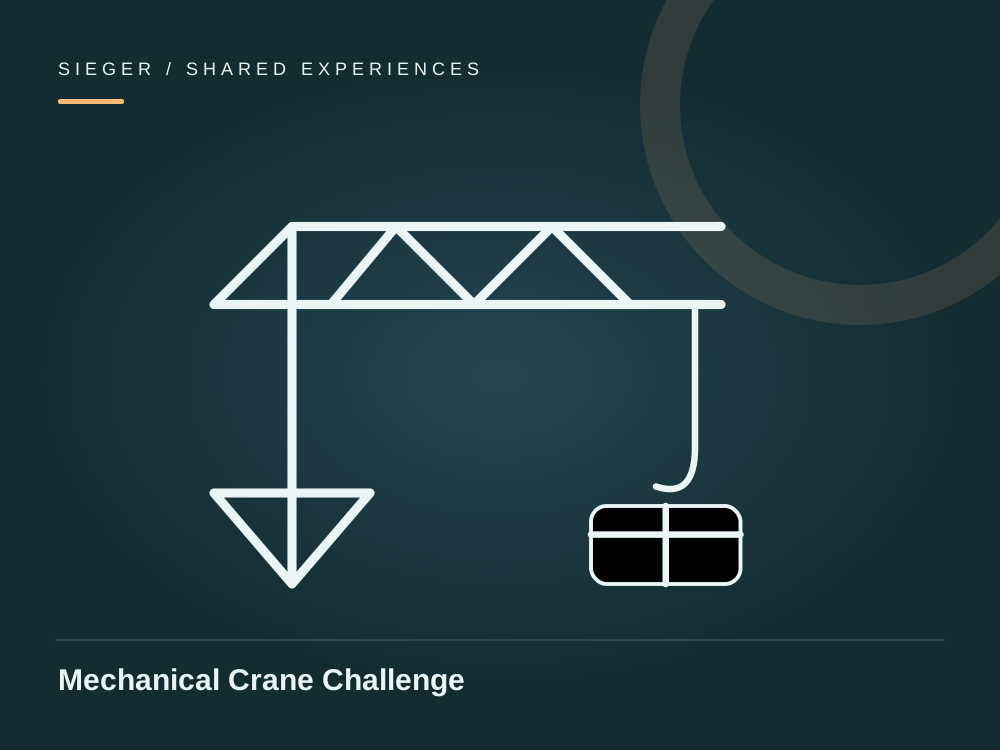
Teams engineer a mechanical crane that can lift and move a defined load accurately and safely.
Explore the experience ↗Tell us what you have in mind. We will help you explore a programme that fits your people and your occasion.
Still finalising the details? Share what you know.
Every team is different. Share your people, purpose and preferred setting, and we’ll translate your brief into an experience designed to connect, engage and create lasting impact.
Share your brief and preferred contact details.
Choose an experience that connects your people, your purpose and the possibilities of technology.