Sieger Group · Team Building

Office Team Challenges

A facilitated experience, designed around your team.

Team Building activities build camaraderie and trust one of the most important aspects of a successful team. Team building activities can help remind people that work is never just about them it’s about the entire group. When you’re encouraged to do something together, rather than solo, it brings to life the idea that the group’s success (and ultimately the company’s) should be a priority. This can be a particularly useful learning experience for teams that struggle with teamwork, are overly competitive, or lack unity and confidence.

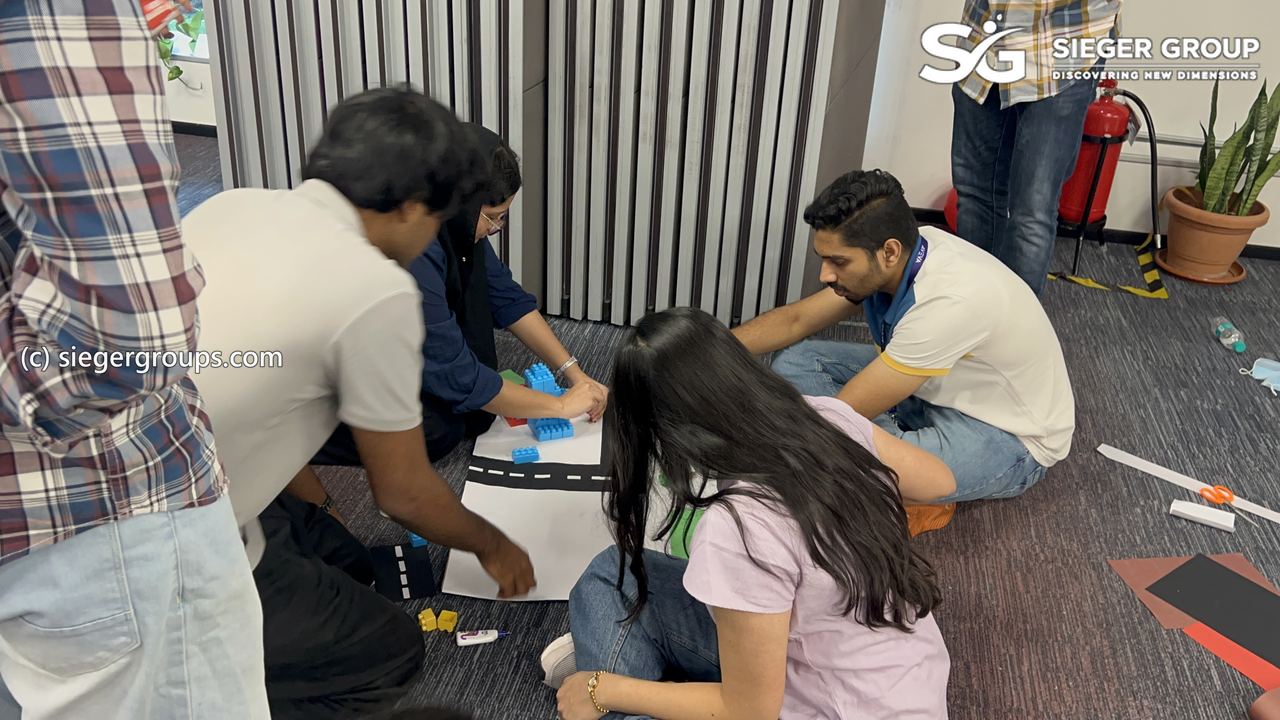
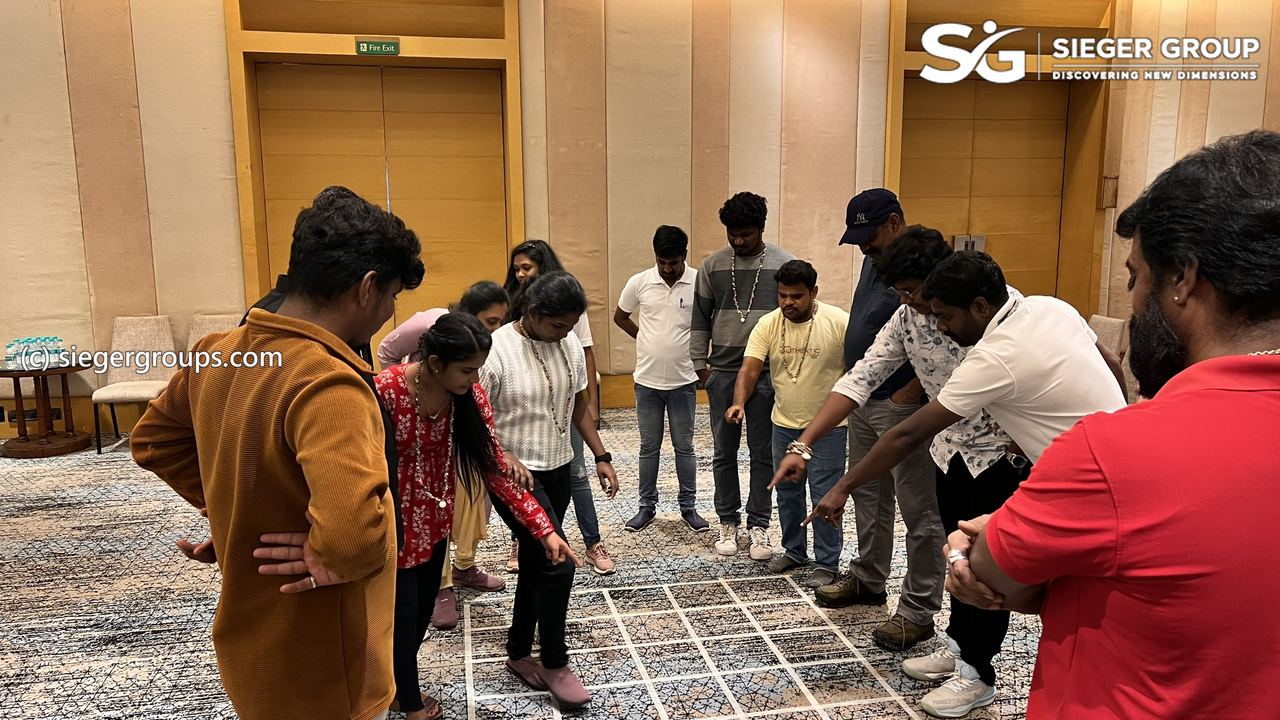
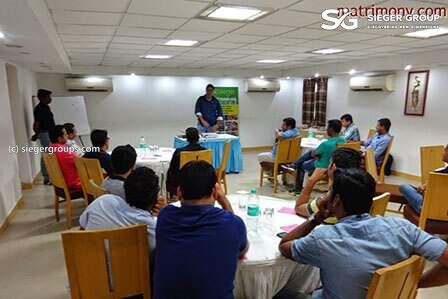
Sieger Group programme photograph — Office Team Challenges

Core Office Team Building Activities

These six activities work around a meeting table or a clear stretch of office floor. Choose Office Trivia to open the room, Blind Drawing to practise precise instructions, or Bridge Build to see how two approaches hold up to the same brief.

Discover what colleagues know

Office Trivia

Teams answer questions built around suitable general knowledge or approved information about their workplace. They compare what different colleagues know and explain how they reached an answer. The format creates an approachable way to discuss knowledge-sharing while avoiding assumptions that longer tenure or seniority always provides the useful insight.

Learning focusSharing knowledge across the room
Human Knot

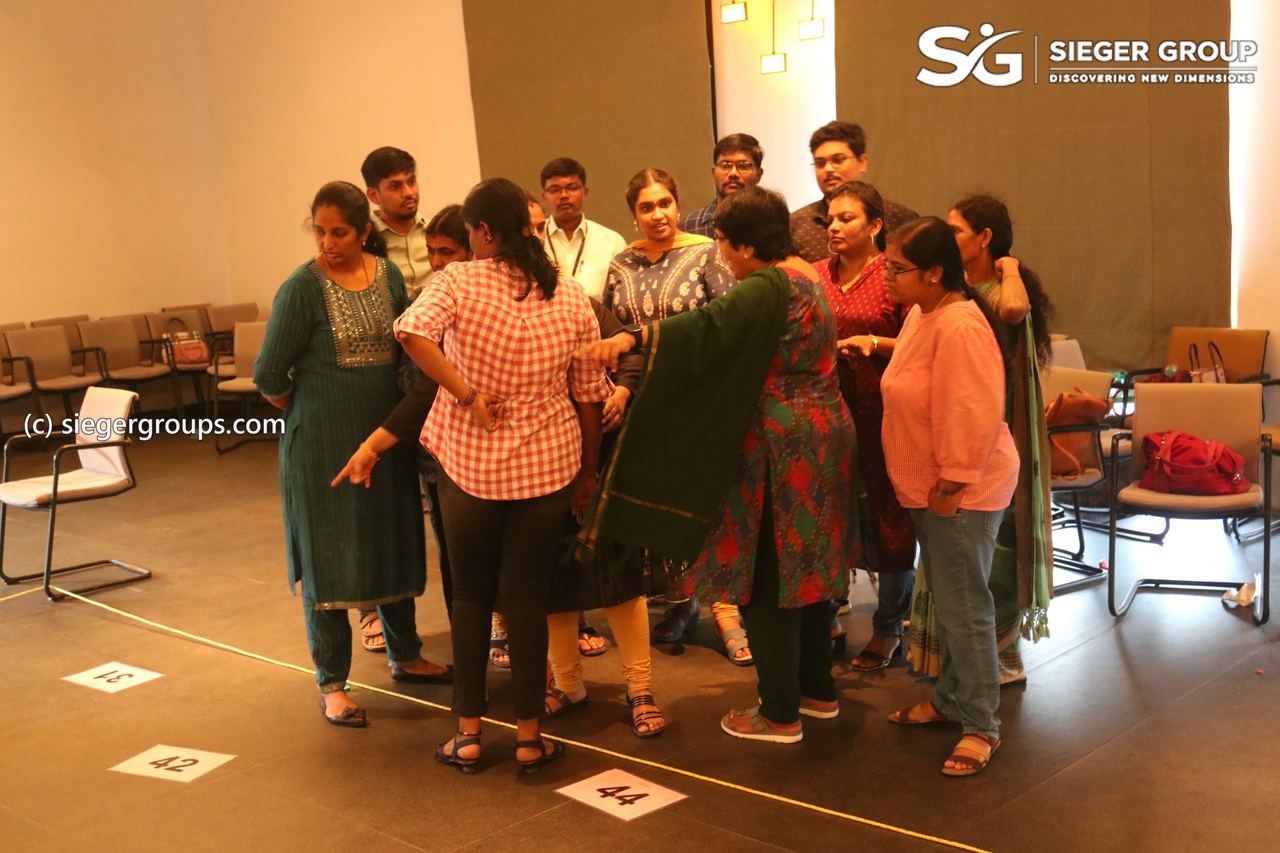
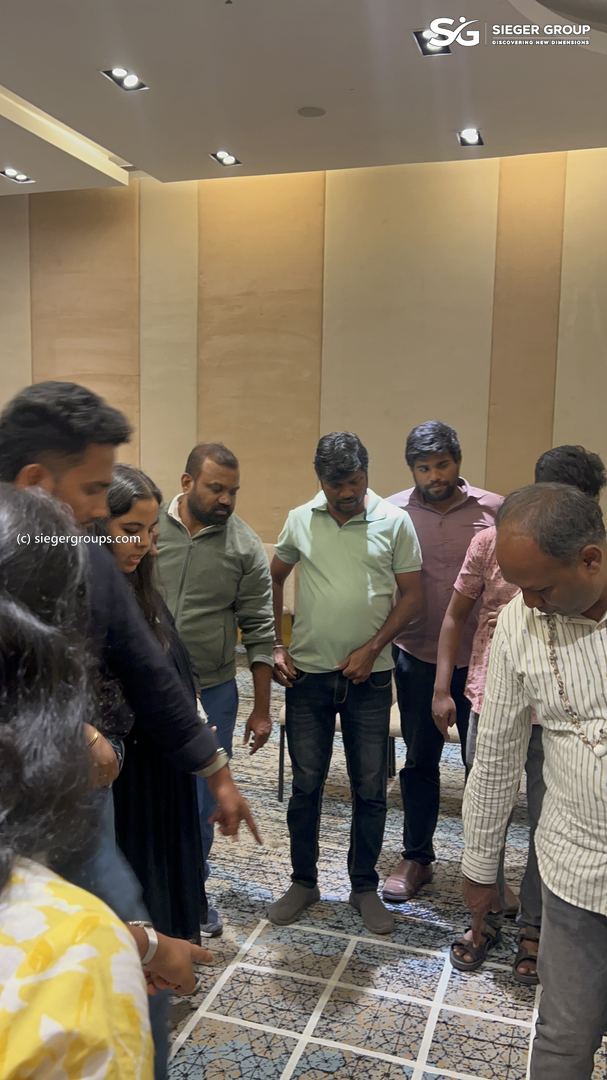
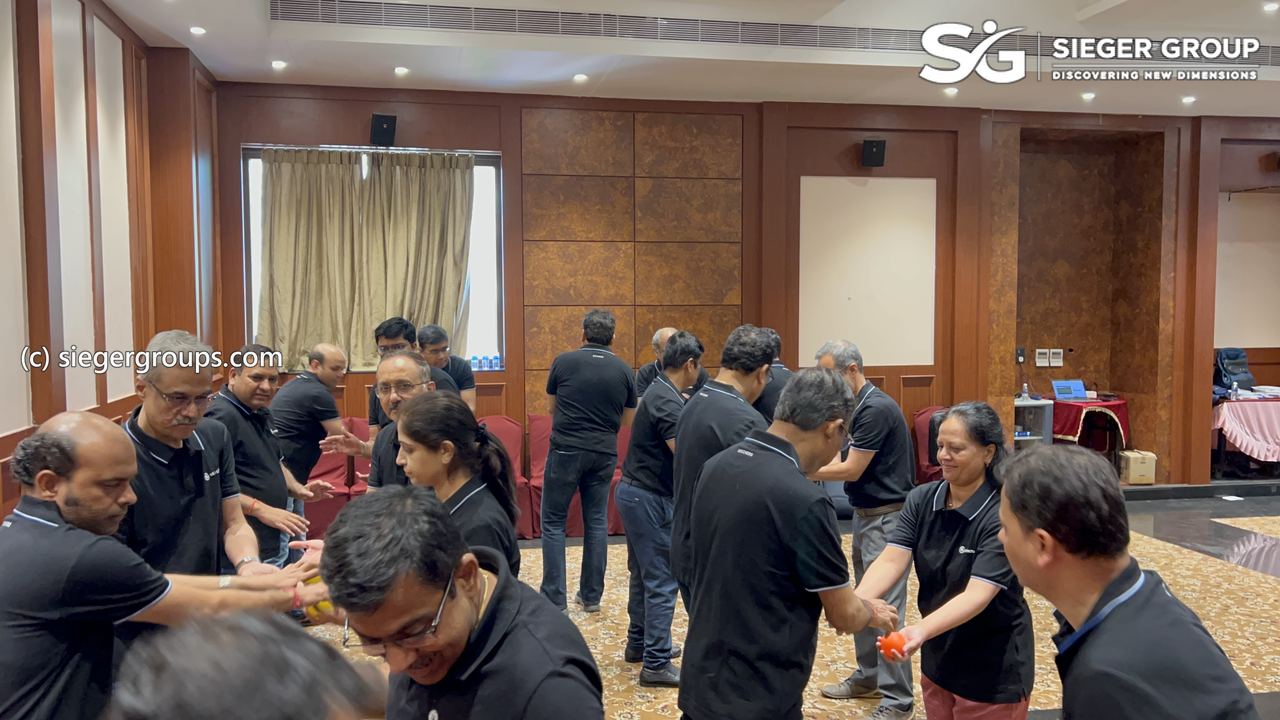
This is a camp favorite, but also a fun way to have team members come together to solve a problem. Have everyone squish together in a circle and grab hands with people not directly next to them.

Learning focusNegotiating space · Checking readiness
Make the message visible

Blind Drawing

A participant describes an agreed image while a teammate recreates it without seeing the reference. Teams compare the result with the original and discuss the instructions and questions that shaped it. Participation arrangements can be adapted, with the emphasis on communication rather than judging artistic ability or speed.

Learning focusDescribing shapes without visual reference
Build for the shared connection

Bridge Build

Groups plan and construct a simple bridge model using agreed materials and a clear brief. Teams coordinate separate contributions and compare the result with the task criteria. Reflection focuses on design choices, handovers and how colleagues balanced individual ideas with the need for components to work together.

Learning focusDesign constraints · Testing a prototype

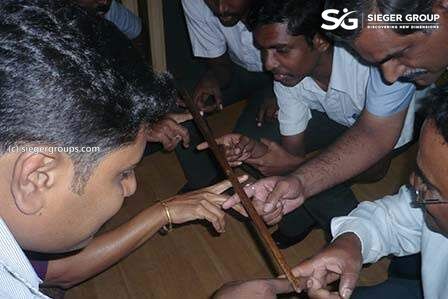
Helium Stick

Simple, yet powerful team building exercise is a great way of learning how to work together as a team and communicate in small to medium-sized groups in order to complete a shared goal.

Learning focusCollective control · Agreeing a slower pace

Group Timeline

This exercise helps show, in a visual way, the different generations and experiences of your team. It leads well into talking about cultural and generational differences and the effects that has on how people work and communicate.

Learning focusSequencing milestones · Connecting perspectives

Stories, Pitches & Performances

Give teams a short brief and an audience. Their work might be a story, an improvised presentation or a film they make together.

Magazine Story

Team has to create an imaginary magazine cover story about a successful project or business achievement. They have to get the right images, come up with headlines, formulate quotes, etc.

Learning focusSelecting a story angle · Editorial agreement

Create a Story - Remote Edition

We, humans, are really good at creating stories that can amaze anyone be it our friends. Doing this is going to be fun and your employees are also going to love it as they unfurl laughter with their stories.

Learning focusBuilding on a remote partner’s idea

Shark Tank

Teams come up with a great new product that will earn the “shark’s” approval? Everyone can let their imagination run wild on this activity. Collaboration is the key to success!

Learning focusMaking a case · Responding to questions

Make Your Own Movie

What better way to stimulate creativity than to get your team to make their own little movie? This fun activity can be done indoors or outdoors.

Learning focusAssigning production roles · Joining scenes

Sell an Item on Your Desk

Call everyone to pick an item from their desk, and then come to the conference room. Now tell them they need to improvise a sales pitch for that particular item that makes the rest of the room compelled to buy it.

Learning focusFraming value for a listener

PowerPoint Karaoke

In this improvisational team building game (also called PowerPoint roulette or Battledecks), each person presents a slideshow to an audience without knowing the contents of the slides.

Learning focusInterpreting a prompt · Speaking spontaneously

Slideshow

The Slideshow activity sparks creativity and pushes members to think on their feet. It also shows how they support each other throughout the process.

Learning focusSequencing ideas · Presenting a coherent story

Skits

Skits are a great team-building activity as it forces employees to get out of their comfort zone and perform with their co-workers. This activity helps develop leadership, creativity, and collaboration.

Learning focusImprovisation · Sharing the spotlight

Shared Movement & Coordination

Pick a challenge that fits the available floor space. A caller, an observer or a timekeeper can contribute just as much as someone moving through the course.

All Board

This team building game will require team members to work together in close physical proximity in order to solve a practical and physical problem.

Learning focusSpace planning · Including every participant

Electric Fence

The fence can be created by tying a rope or shoe string to two chairs or other objects, as long as it is elevated to about waist-height.

Learning focusAgreeing a sequence · Coordinating turns

Hole Tarp

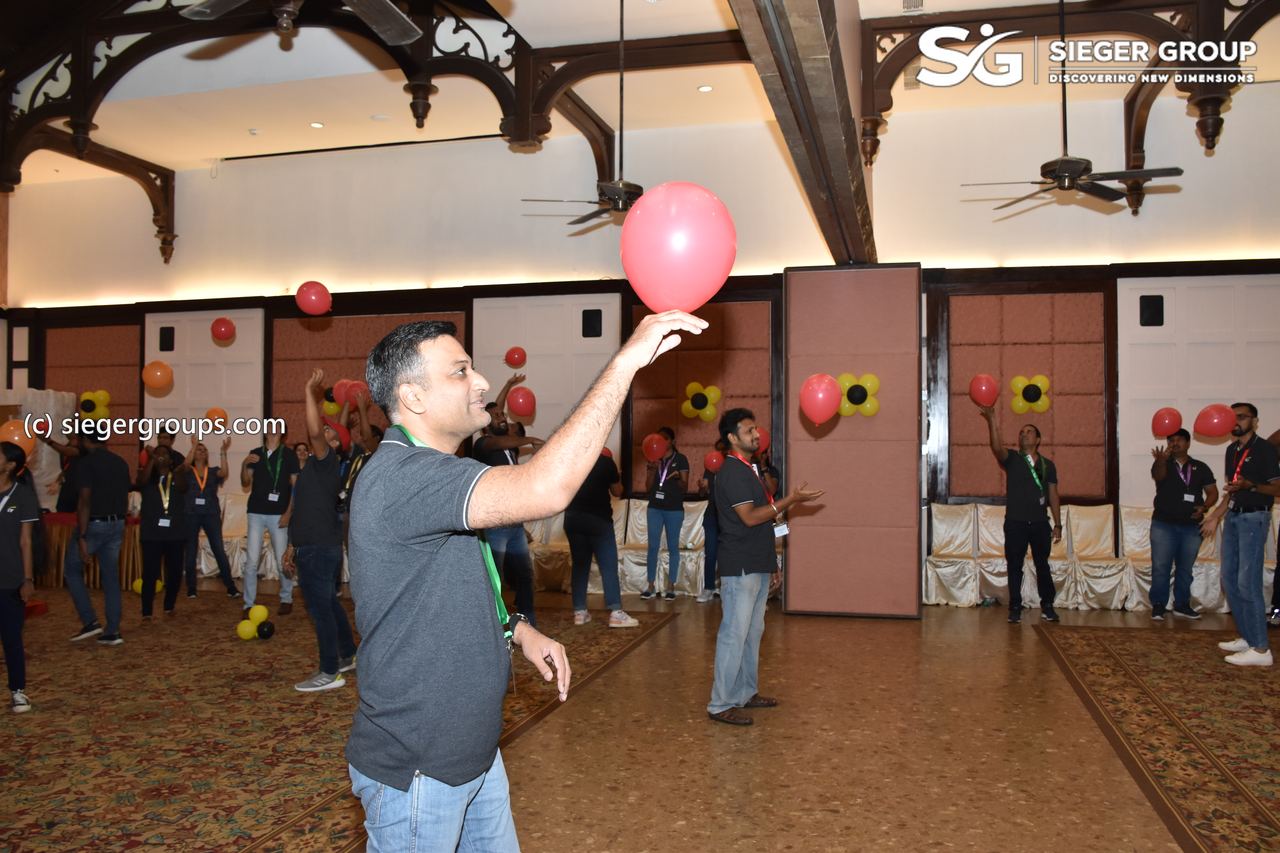
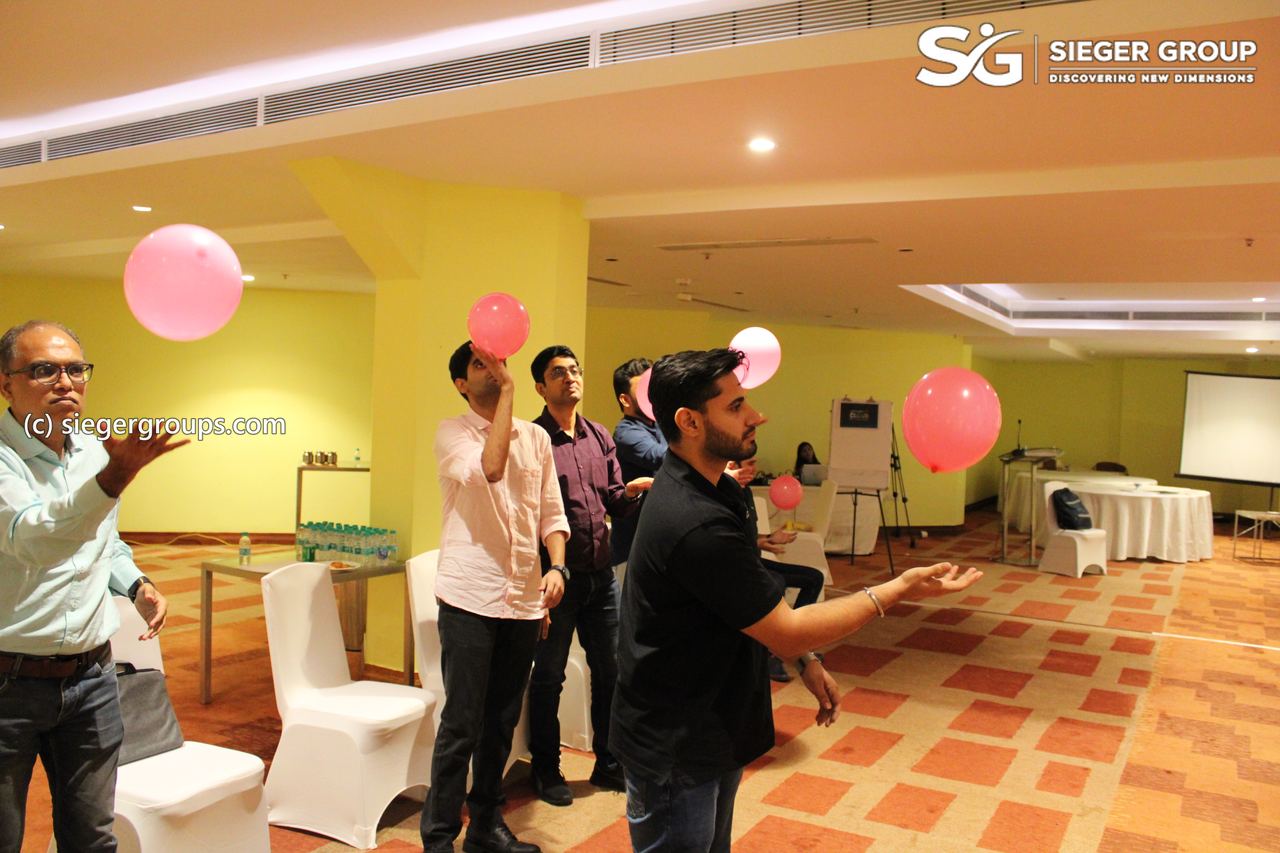
Much like a business, everyone on your team has to keep moving to keep the ball rolling. If someone stops, the ball will drop.

Learning focusReading movement · Adjusting together

River Crossing

This team building activity that requires group coordination. The aim is for all members of the group to cross “the river” without falling or touching the earth.

Learning focusResource allocation · Planning dependencies

Blindfold Square

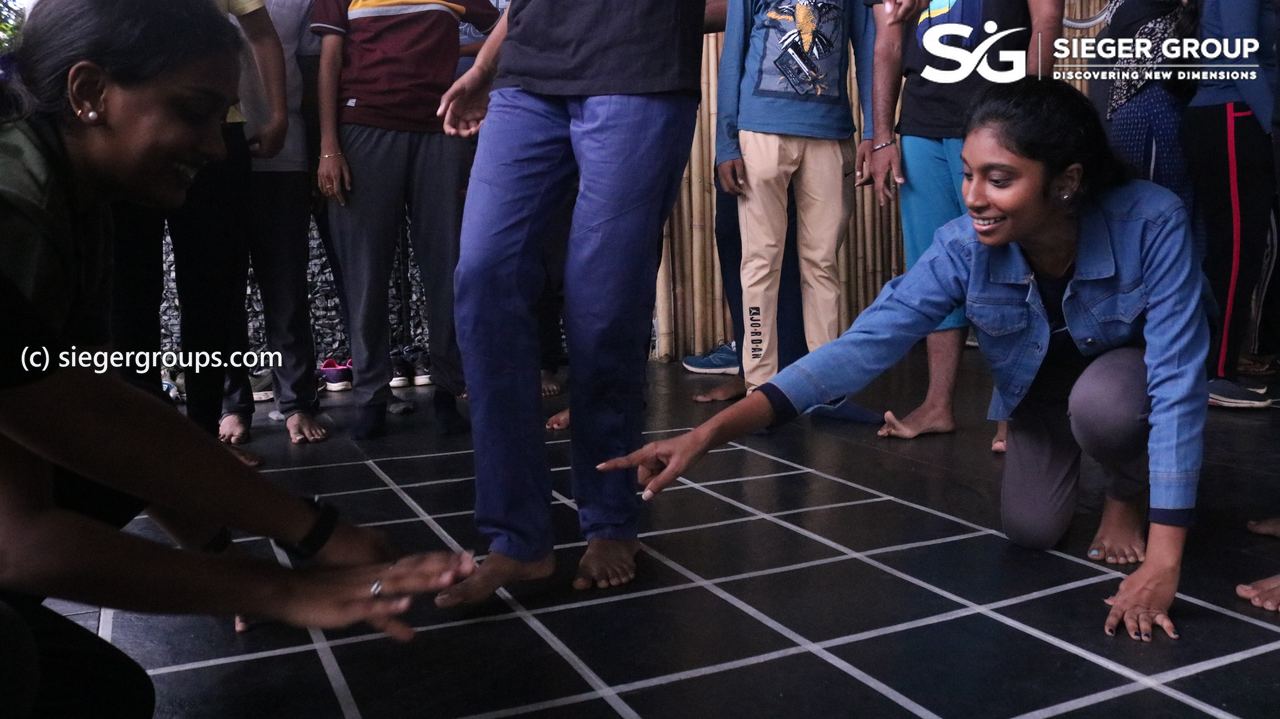
This quick team building game will get small and large teams to communicate when they can’t see one another or their progress.

Learning focusAgreeing reference points · Checking corners

Welded Ankles

This no-prop team building exercise requires a high degree of focus, integrity, and the whole team has to be in sync.

Learning focusSynchronising steps · Neighbour-to-neighbour cues
Guide through shared understanding

Blind crossing

In the selected activity setup, a participant working without visual information follows directions from a seeing partner. The pair agrees how to communicate and check understanding, then reviews which descriptions, pauses or questions helped them coordinate the task together.

Learning focusPacing verbal instructions

Lasertag

It’s entirely fun and requires a good level of communication, collaboration, and coordination. It will also get the team’s heart rates up as it requires a fair amount of running around.

Learning focusAgreeing team roles · Fair play

Flip It Over

The objective is to help people working in groups acquire skills like problem solving, creativity and robust communication.

Learning focusCoordinating space · Testing a sequence

Buckets & Balls

This game is picked right from your favorite old-school game shows. Teams compete against each other to move balls from one bucket to another without using their hands or arms.

Learning focusControlled transfer · Shared timing

Lily Pads

Using anything in the office, teams must work together to get across the room without touching the floor directly. That could be paper, cardboard, or tables!
Learning focusPlanning a crossing · Tracking shared resources

Decisions, Puzzles & Shared Signals

These games give teammates different pieces of a problem. Ask the group to explain its choice before it moves to the next step.

Minefield

Navigating an obstacle course, but with your eyes closed – it might seem tricky, but it’s doable when you have the right peer to guide you.

Learning focusDescribing a route · Confirming a direction

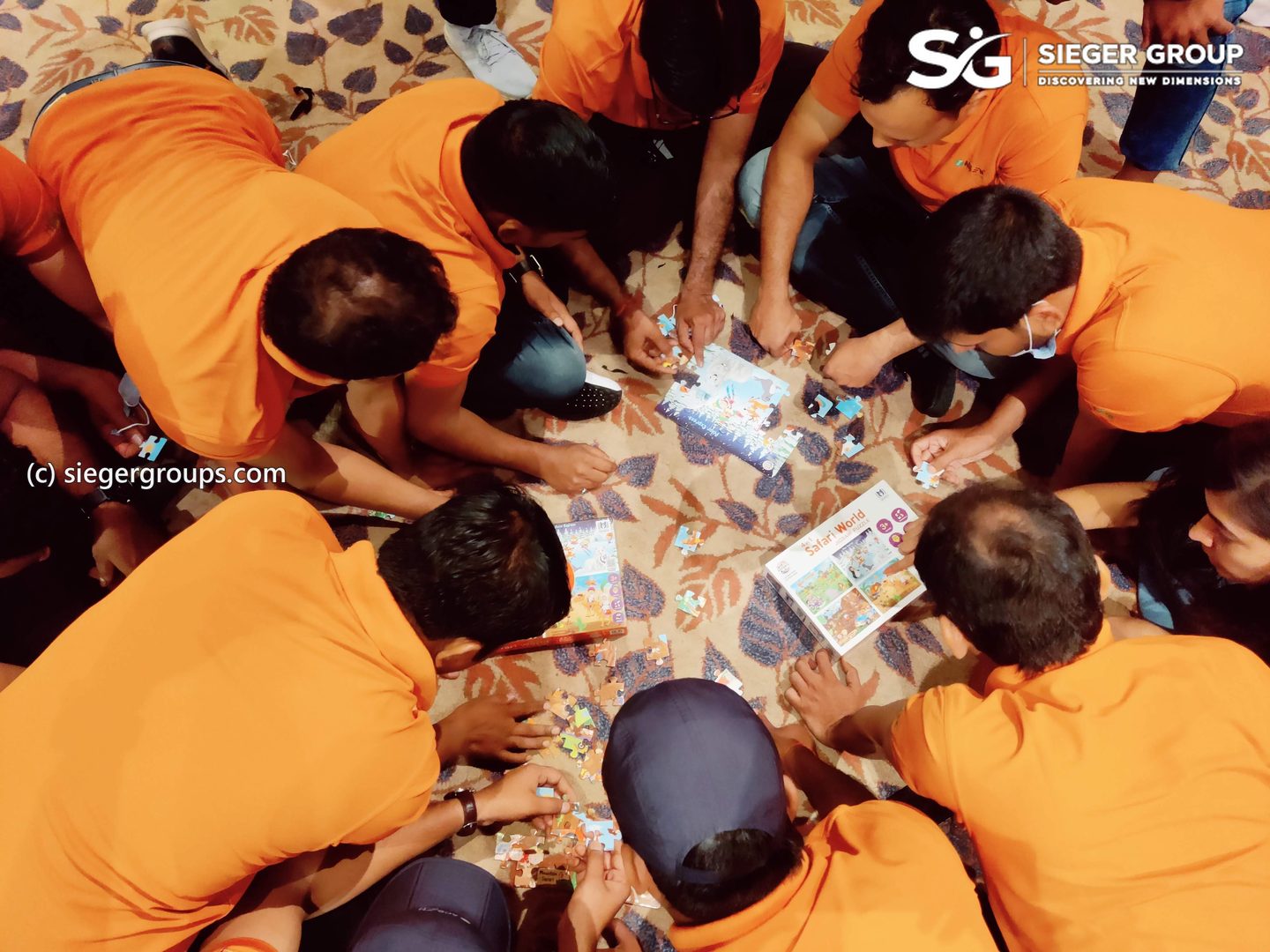
Solve a Puzzle

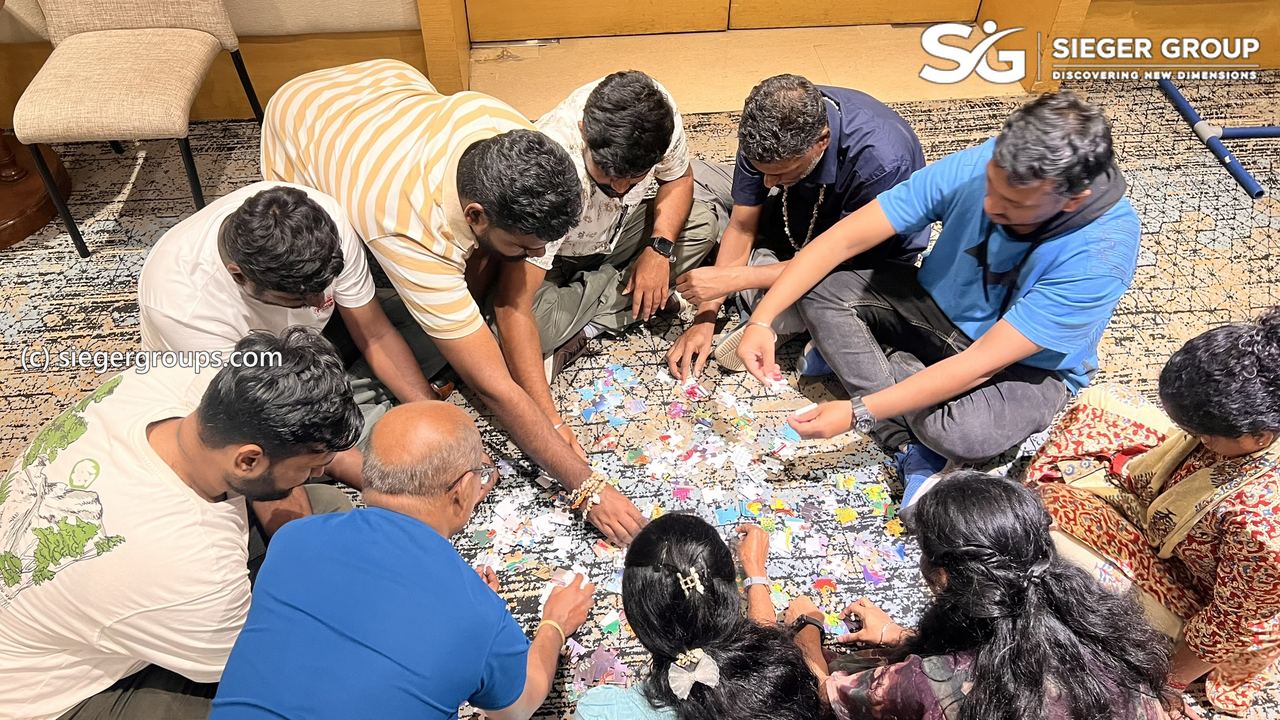
This can be a literal puzzle, like a 500 piece set, or a brain teaser that requires thinking and brainstorming out loud.

Learning focusDividing a problem · Combining partial answers

Count to 20

In this quick improve team building activity, your employees will count to 20 to practice active listening, teamwork, and forward-thinking.

Learning focusListening for a pause · Avoiding overlap

Lost At Sea

This game tests whether teams can share resources equally, arrive at a consensus at the most stressful situations.

Learning focusRanking priorities · Reaching consensus

Daredevil

This game, because of its focus on verbal instructions, is great for building communication skills. It also requires leadership and decision-making; teammates have to decide who will volunteer and who will offer instructions.

Learning focusGiving clear guidance · Respecting choice

Shipwrecked

Teams often devolve into chaos when they can't come to a consensus about the importance of each item in a survival setting. Successful teams will choose a leader and plan their procurement process carefully.

Learning focusWorking with constraints · Negotiating priorities

Keypunch

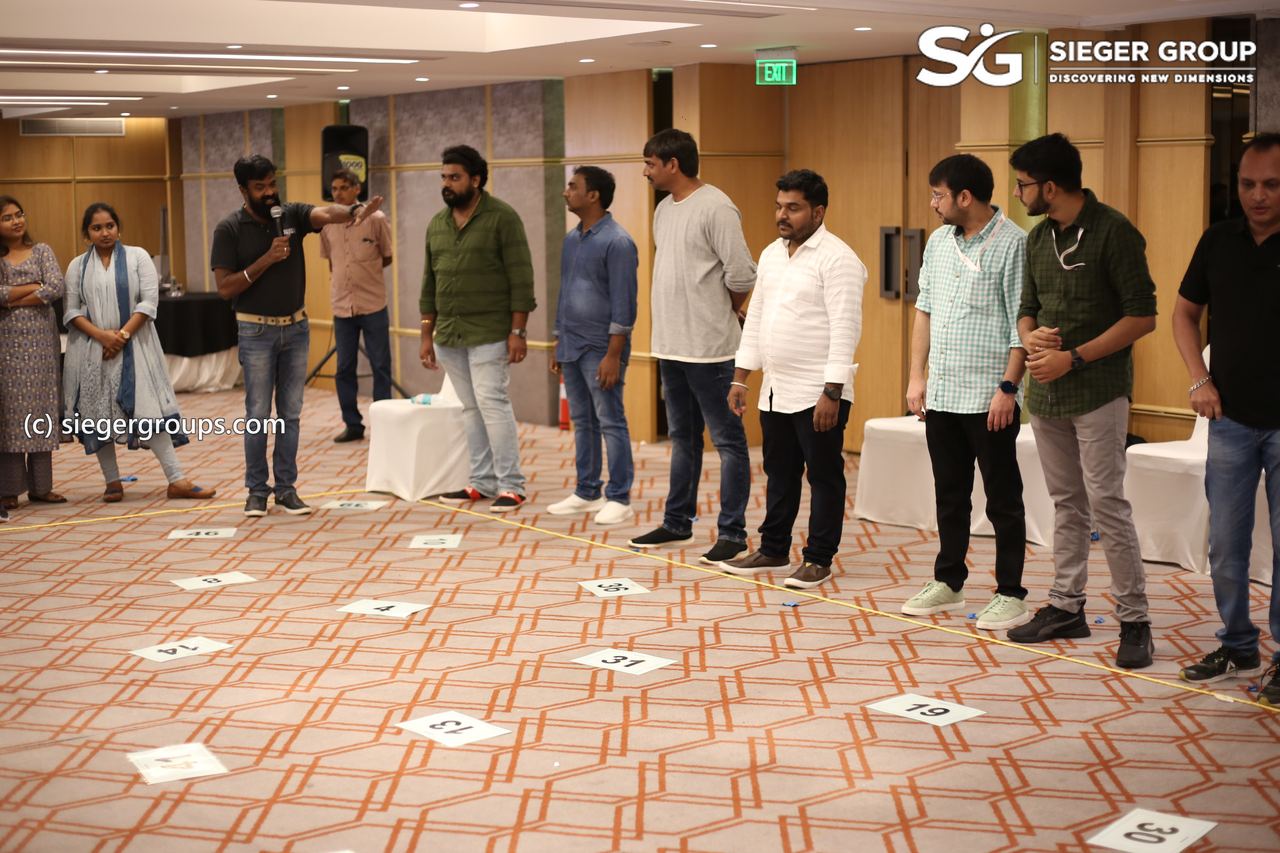
A powerful teambuilding exercise for medium sized groups. Participants must touch the randomly placed numbers, in sequence, within a given time frame in multiple attempts.

Learning focusSequence planning · Reducing missed handovers

Escape

This deceptively simple activity checks the intellectual level of the individuals and how they solve the curious clues for finding their way out. This helps to get an idea of how that person handles unforeseen circumstances at the workplace.

Learning focusLinking clues · Checking a solution

Dog, Rice, Chicken

The team has to collectively brainstorm and come up with a way for the farmer to get all three of his purchases back home safely?

Learning focusLooking ahead · Checking constraints

Construction & Visual Design

Use simple objects, letters or shapes to make an idea visible. Teams can compare the finished result with their starting brief.

Tallest Tower

Find the hidden architect in your company and those who would be better off suited working as demolitionists.

Learning focusStructural stability · Iterating a design

Body of Words

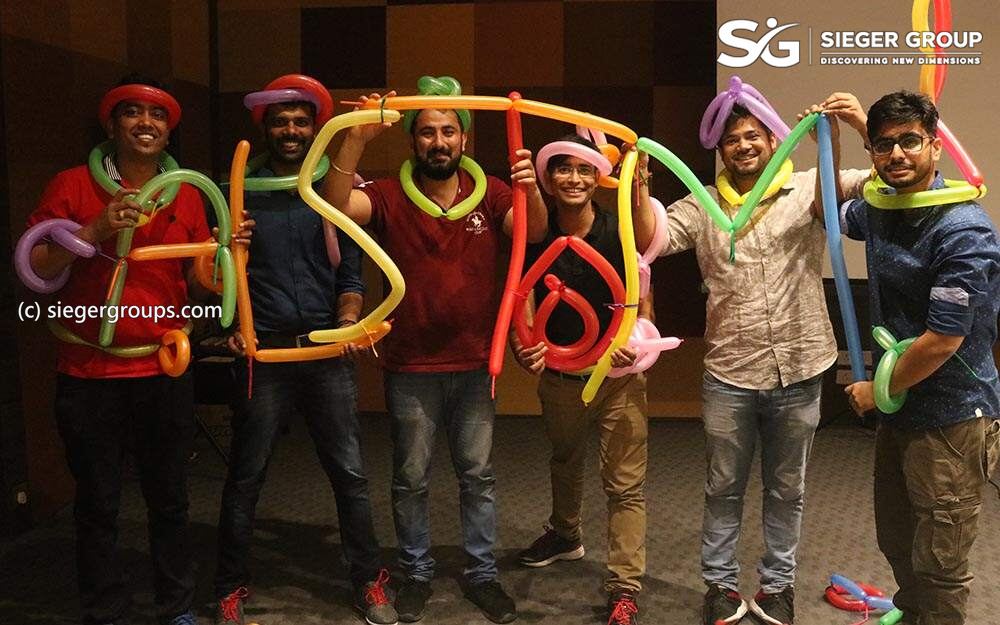
This physical team building activity will engage the entire team and get people to relax and collaborate while also promoting leadership and planning.

Learning focusVisual representation · Group positioning

Cup Pyramid

The aim is to create a tool that can stack cups up. Since you’re not allowed to touch the cups with your hands, the team will need to verbally coordinate to do it properly

Learning focusFine coordination · Shared control

Egg Drop

This activity is a good example of a productive team building activity where everyone engages in completing the same task in a unique way.

Learning focusTesting a design against a clear constraint

Icebreakers & Team Connections

Invite colleagues to tell a short story, find an unexpected connection or build a record of the moments they share.

True Lies - Remote Edition

Remote teams can often work for long periods together without ever really knowing each other. This exercise is meant to help team members understand each other’s histories and backgrounds. It’s particularly helpful for new teams.

Learning focusAsking questions · Reading a remote audience

Code of Conduct

A simple but meaningful activity that sets the tone for an event and builds consensus on shared values. Teams list what matters to them on a whiteboard. Perfect for the start of an event or workshop.

Learning focusTurning values into working agreements

No Smiling

This team building energizer is meant to get a laugh out of even the most serious teams and can re-engage the team in a stressful situation.

Learning focusAttention to expression · Reading a partner

Silver Lining

Going down the memory lane is a great way to get team members to bond with each other. Pointing out the silver lining will help people see things from their coworkers’ perspectives.

Learning focusReframing an experience · Listening with care

Odd Couples

This team building activity will let people appreciate their differences, and at the same time find something in common to improve team bonding.

Learning focusFinding common ground across differences

Dance Party

Dancing as a group takes a lot of the pressure and embarrassment out of it. Plus, Dance Party fosters healthy competition and can energize teams and prepare them for the next challenge.

Learning focusFollowing rhythm · Inviting participation

Reverse Charades

Reverse Charades, it is necessary for everyone that is acting it out to communicate and plan together. Because there is one person is guessing and everyone else is acting, everyone is involved throughout the entire game.

Learning focusCoordinating gestures · Interpreting a group

Cartoon Character

Everyone introduces themselves to one other person as the cartoon character they would be if they were not who they are.

Learning focusExplaining a choice · Learning about colleagues

Memory Wall

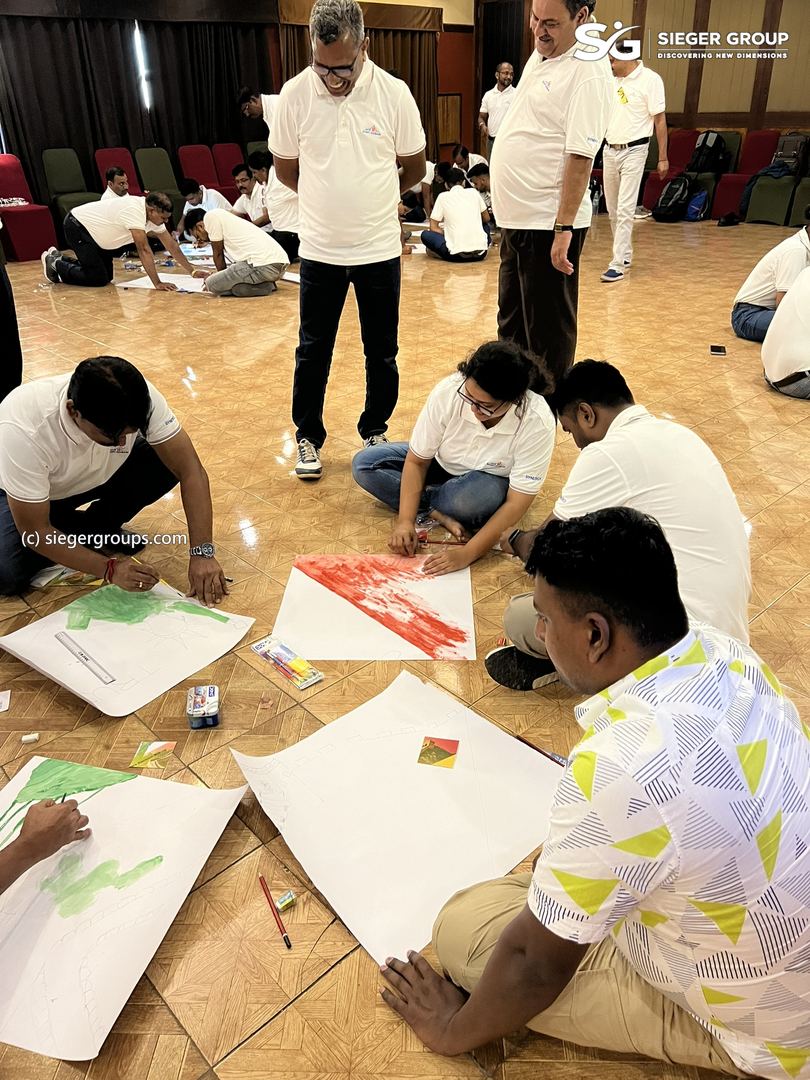
Teams sketch their shared memories with each other and place them on a wall. The wall remains up throughout the event, working as a focal point of the team’s camaraderie.

Learning focusRecalling shared experiences · Giving recognition
Programme overview

OFFICE TEAM BUILDING

Team Building activities build camaraderie and trust one of the most important aspects of a successful team. Team building activities can help remind people that work is never just about them it’s about the entire group. When you’re encouraged to do something together, rather than solo, it brings to life the idea that the group’s success (and ultimately the company’s) should be a priority. This can be a particularly useful learning experience for teams that struggle with teamwork, are overly competitive, or lack unity and confidence.

Building a sense of trust amongst teammates allows people to bring the full power of their skills, personalities, and who they are to work. “When people don’t have trust to do that, they hold back, thus sometimes limiting their abilities to be at their best.”

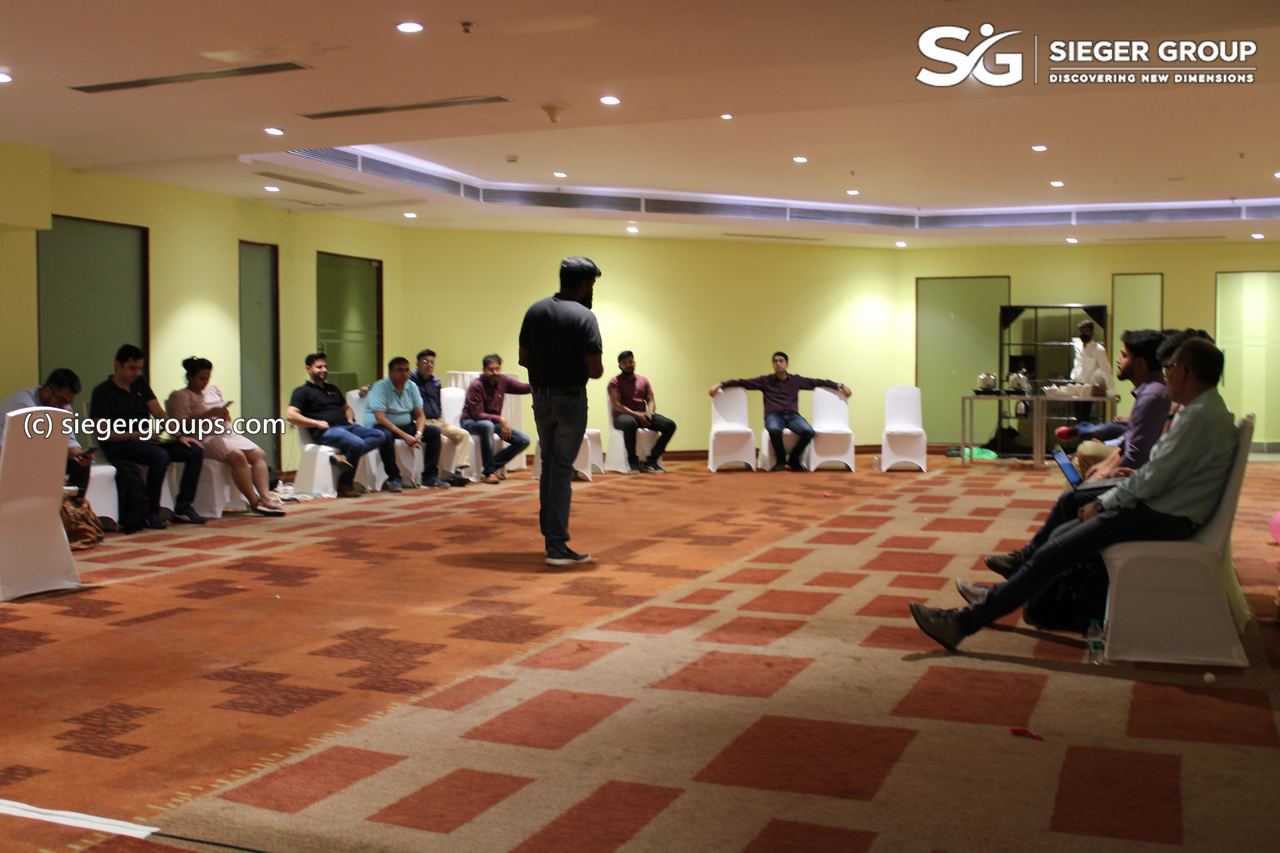
Office Team Challenges programme photograph
Office Team Challenges — programme library photograph
What makes it distinctive

Turn familiar space into a shared challenge.

An office-friendly task can make an ordinary interaction easier to examine. Explore how a description becomes a drawing, separate pieces become a bridge or individual knowledge becomes a group answer, using practical experiences to discuss the work between colleagues.

Shape your team brief
Sieger Group programme photograph — Office Team Challenges
Why this programme

Why Organisations Choose Office Team Challenges

Use office-friendly challenges to explore shared information, creative choices and coordination within the space and participation arrangements agreed for the group.

A clear purpose

Practical use of familiar space

Choose activities that fit the agreed office environment and participation needs instead of assuming every team challenge requires travel or a large outdoor venue.

Useful participation

Everyday communication examined

Make instructions and questions visible through a simple task so colleagues can discuss clarity using a shared example rather than a broad criticism.

Practical insight

Knowledge across the team

Invite different facts and perspectives into a group answer while recognising that useful information may come from colleagues in any role or tenure.

Connected choices

Creative contributions combined

Use a making or design brief to explore how separate ideas can form one workable result without losing sight of the shared criteria.

Meaningful follow-through

Approachable colleague conversations

Offer structured prompts that help people learn about one another while respecting boundaries around personal information and public sharing.

Programme benefits

Programme Benefits

Explore the behaviours and practical insights your team can review through Office Team Challenges. The debrief connects observations from the experience with situations that matter to participants.

Practical use of familiar space

A useful focus for the group is to choose activities that fit the agreed office environment and participation needs instead of assuming every team challenge requires travel or a large outdoor venue.

Everyday communication examined

Participants can examine how to make instructions and questions visible through a simple task so colleagues can discuss clarity using a shared example rather than a broad criticism.

Knowledge across the team

The review can highlight ways to invite different facts and perspectives into a group answer while recognising that useful information may come from colleagues in any role or tenure.

Creative contributions combined

Colleagues can explore how to use a making or design brief to explore how separate ideas can form one workable result without losing sight of the shared criteria.

Approachable colleague conversations

The experience can prompt discussion of how to offer structured prompts that help people learn about one another while respecting boundaries around personal information and public sharing.

Visible coordination choices

A practical takeaway is to observe how groups divide attention, pass work and check progress when several contributions must connect within one practical office-friendly task.

A relevant working agreement

The team can consider how to choose a communication or coordination habit from the experience that the team can try during its next ordinary meeting or shared assignment.

From experience to application

Bring the learning back to work.

Use these reflection prompts to turn Office Team Challenges into a focused conversation about what happened, what it means and what to try next.

  1. Notice an instruction gap

    Identify where participants understood a message differently and discuss which clarification question would have made the shared task easier to follow.

  2. Recognise useful knowledge

    Recall a contribution that came from an unexpected colleague and consider how the team invited or made space for that information.

  3. Review a design handover

    Choose a moment when one person’s work needed to connect with another’s and examine whether the shared criteria were clear enough.

  4. Connect to an office routine

    Select a meeting, introduction or project handover where the same issue about information or participation appears in everyday work.

  5. Agree one small change

    Choose a practical habit such as checking understanding or inviting a different viewpoint and identify when the team can try it next.

  6. Return to the example

    Review what happened when the habit was tried, comparing specific observations rather than assuming a successful office game guarantees a change in working relationships.

Programme delivery

How the Programme Works

A suggested flow for Office Team Challenges, from setting the brief to reviewing the experience. Activity choices, pace and facilitation are confirmed around your group and setting.

  1. Start with context

    Agree the purpose and participation

    Use office-friendly challenges to explore shared information, creative choices and coordination within the space and participation arrangements agreed for the group. Discuss what participants should understand before approaching office trivia, including the information, roles and choices relevant to this group.

    Knowledge-sharing · Participation
  2. Make the message visible

    Explore the selected experience

    Selected tasks begin with clear arrangements for the office space and ways to participate. Teams make their instructions and coordination choices visible through practical, knowledge or creative challenges.

    Clear descriptions · Listening
  3. Build for the shared connection

    Compare and develop the approach

    A review after each task identifies an observation for the next round. Colleagues compare its effect on communication or collaboration through another office-friendly challenge.

    Planning · Coordination
  4. Make the experience useful

    Review and carry it forward

    Select a meeting, introduction or project handover where the same issue about information or participation appears in everyday work. Choose a practical habit such as checking understanding or inviting a different viewpoint and identify when the team can try it next.

    Creative introduction · Awareness
Experiential learning outline

Experience. Reflect. Apply.

Connect Office Team Challenges with purposeful practice, evidence-based reflection and a next step that fits your working context.

  1. Align the brief

    Use office-friendly challenges to explore shared information, creative choices and coordination within the space and participation arrangements agreed for the group. Clarify what the group needs before beginning the selected experience.

  2. Experience the challenge

    Explore office trivia through the agreed format. Make instructions and questions visible through a simple task so colleagues can discuss clarity using a shared example rather than a broad criticism.

  3. Reflect on the evidence

    Examine a mismatch between instruction and interpretation, discussing which description or clarification question helped colleagues rebuild a shared understanding of the office-friendly task.

  4. Connect the learning

    Consider an ordinary meeting or handover where people interpret the same message differently and identify what context would make the next action clearer for everyone.

  5. Commit to a next step

    Choose a communication adjustment and an occasion to try it, stating what colleagues should notice when the new approach makes an instruction or handover easier to use.

Who should attend

Choose the right audience for the experience.

Discuss participant experience, access needs, language preferences and the purpose of the programme before confirming suitability.

Intact and cross-functional teams

Intact and cross-functional teams interested in knowledge-sharing · participation. Office Trivia offers one possible starting point for an agreed group experience.

Managers and emerging leaders

Managers and emerging leaders exploring clear descriptions · listening. Select a format that fits their responsibilities, working relationships and the purpose of Office Team Challenges.

Project teams and newly formed groups

Project teams and newly formed groups bringing different perspectives to planning · coordination. Confirm the learning priorities and participation arrangements before choosing the activity mix.

Programme schedule

An illustrative session schedule.

This sample shows how a programme could flow. Timings, breaks, activity choices and duration are agreed in the final proposal.

Example session

Brief, experience and reflect

  1. 09:30–09:45

    Welcome, context and participation

    Introduce Office Team Challenges, agree the group’s purpose and discuss participation preferences. Explain the selected formats before the experience begins.

  2. 09:45–10:30

    Office Trivia

    Use a selected version of Office Trivia to explore knowledge-sharing · participation. Pause to compare observations and clarify the choices that shaped progress.

  3. 10:30–11:15

    Blind Drawing

    Use a selected version of Blind Drawing to explore clear descriptions · listening. Pause to compare observations and clarify the choices that shaped progress.

  4. 11:15–11:30

    Reflection and shared takeaways

    Review examples of practical use of familiar space and knowledge across the team. Connect the observations with day-to-day team responsibilities and choose a relevant next conversation.

Planning details

A considered programme starts with the practical details.

People and participation

Share the audience profile, language preferences and access needs for Office Team Challenges. Agree options that let different colleagues contribute comfortably.

Venue and resources

Discuss the available space, materials and facilitation arrangements for the selected learning exercises. Confirm the final mix of Office Trivia and any other chosen experiences in the brief.

Scope and delivery

Agree the focus on clear descriptions · listening, the programme duration and which materials, facilitation and delivery arrangements are included.

Review and follow-through

Choose how to review visible coordination choices and a relevant working agreement. Confirm any follow-up conversation or team commitment that belongs within the programme scope.

Organisations we work with

Trusted by teams across industries

Sieger Group supports organisations with team-building experiences and facilitated programmes.

Client perspectives

Testimonials

Plan with confidence

Office Team Challenges FAQs

12 practical answers to help you plan your programme.

What is Office Team Challenges?

Team Building activities build camaraderie and trust one of the most important aspects of a successful team. Team building activities can help remind people that work is never just about them it’s about the entire group. When you’re encouraged to do something together, rather than solo, it brings to life the idea that the group’s success (and ultimately the company’s) should be a priority. This can be a particularly useful learning experience for teams that struggle with teamwork, are overly competitive, or lack unity and confidence.

Who is this programme suitable for?

Office Team Challenges can be considered for teams planning a shared experience or employee engagement event. Share roles, group size, experience levels and participation needs so suitability can be confirmed.

What can participants explore?

The existing programme outline includes: Team Building activities build camaraderie and trust one of the most important aspects of a successful team. Team building activities can help remind people that work is never just about them it’s about the entire group. When you’re encouraged to do something together, rather than solo, it brings to life the idea that the group’s success (and ultimately the company’s) should be a priority. This can be a particularly useful learning experience for teams that struggle with teamwork, are overly competitive, or lack unity and confidence.. The final emphasis and activity selection should be agreed around your brief.

Can the programme be customised for our team?

Yes. Share your team context, goals and preferred tone. The proposed Office Team Challenges experience can then be adapted through the activity mix, level of challenge, discussion themes and delivery format, subject to feasibility.

How long does the programme take?

Duration depends on the agreed scope, group size and setting. For Office Team Challenges, allow for the briefing, activities, breaks and group review. Request a proposed agenda that fits your available time.

Where can we organise the experience?

Share your preferred city, office, venue or offsite destination in India. Office Team Challenges requires a setting suited to the activities and participants. Venue access, usable space, equipment and local delivery arrangements should be confirmed before booking.

What group size works for this programme?

The appropriate group size depends on the activity structure, facilitation and available space. Tell us the expected number of participants for Office Team Challenges so team sizes, rotations and staffing can be proposed.

What should participants prepare?

For Office Team Challenges, the pre-event briefing should explain the schedule, clothing or equipment requirements and how to take part. Share accessibility needs and relevant participation constraints during planning so suitable arrangements can be discussed.

How are participation and inclusion considered?

Discuss access, mobility, language, sensory needs and comfort levels before confirming Office Team Challenges. Agree suitable roles and alternatives where feasible. For specialist activities, confirm delivery responsibilities and participation requirements in advance.

How can we connect the programme with our objectives?

Agree the purpose of Office Team Challenges before delivery. A group review can explore communication, contribution and teamwork, alongside the shared enjoyment of the event. Confirm any follow-up or evaluation support in the proposal.

What does the programme cost?

Pricing for Office Team Challenges depends on participant numbers, duration, facilitation, equipment, location and agreed logistics. Request a tailored proposal that clearly states programme inclusions, venue or travel arrangements and applicable charges.

How do we enquire about Office Team Challenges?

Use the enquiry form on this page or call +91 98400 97567. Include Office Team Challenges, your objectives, group size, preferred dates and location. Sieger Group can then discuss suitability and prepare a proposal for your review.

Ready to plan?

Let’s shape the right programme for your people.

Share your goals, group size, preferred dates and venue. We’ll help you explore a considered programme.

Request a tailored proposal
Back to programme overview
LET'S CREATE YOUR NEXT SHARED MOMENT

What could your team
do together?

Tell us what you have in mind. We will help you explore a programme that fits your people and your occasion.

  • Your peopleGroup size, audience and participation needs.
  • Your plansDate, destination, venue and time available.
  • Your purposeTeam connection, learning or a celebration.
  • Your outcomesWhat you want your team to experience or take away.
+91 98400 97567 ↗

Still finalising the details? Share what you know.

From your brief to a considered programme

Every team is different. Share your people, purpose and preferred setting, and we’ll translate your brief into an experience designed to connect, engage and create lasting impact.

  • Choose a format suited to your participants.
  • Align the experience with your event goals.
  • Tailor the programme to your team’s needs.
  • Plan the flow, venue and logistics.
  • Create an experience people will remember.
ENQUIRE WITH SIEGER GROUP

Start the conversation.

Share your brief and preferred contact details.