Inclined Log
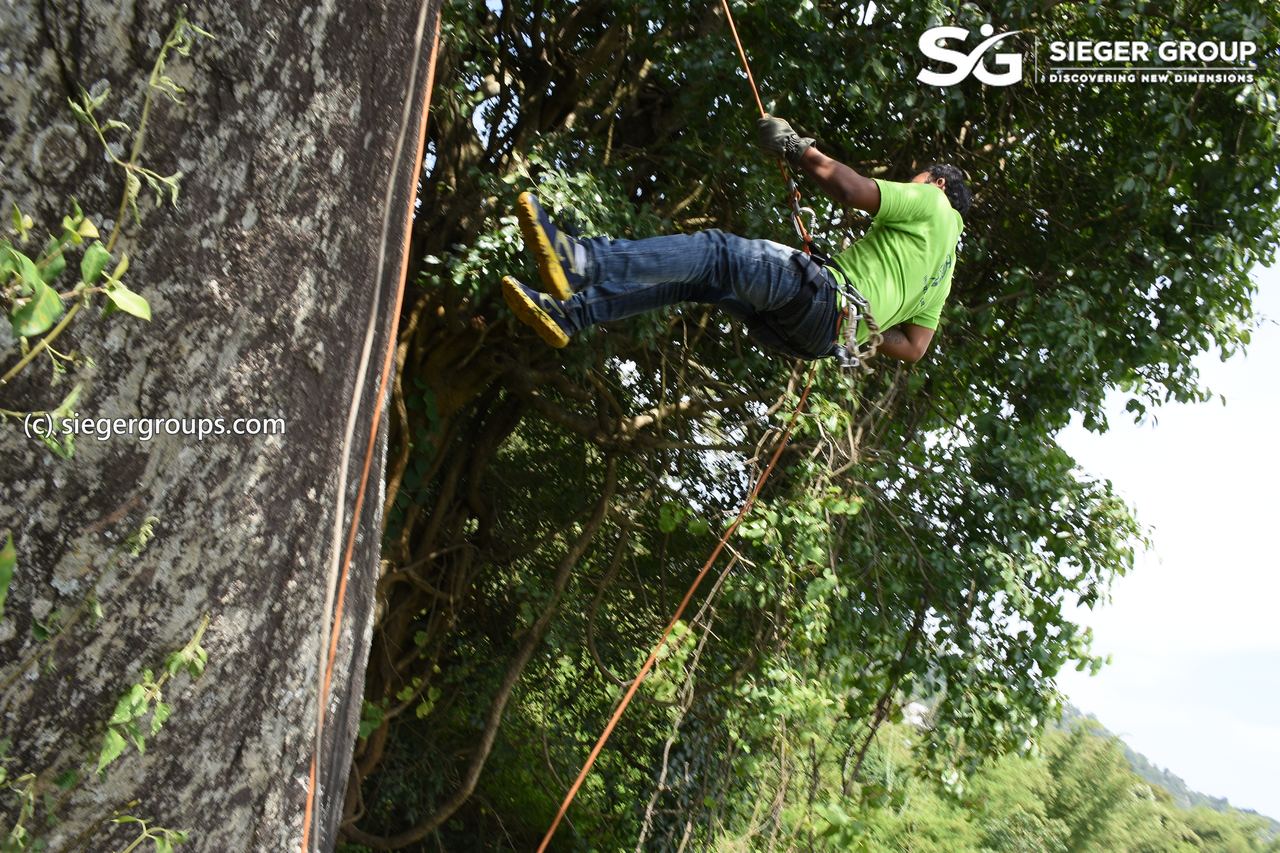
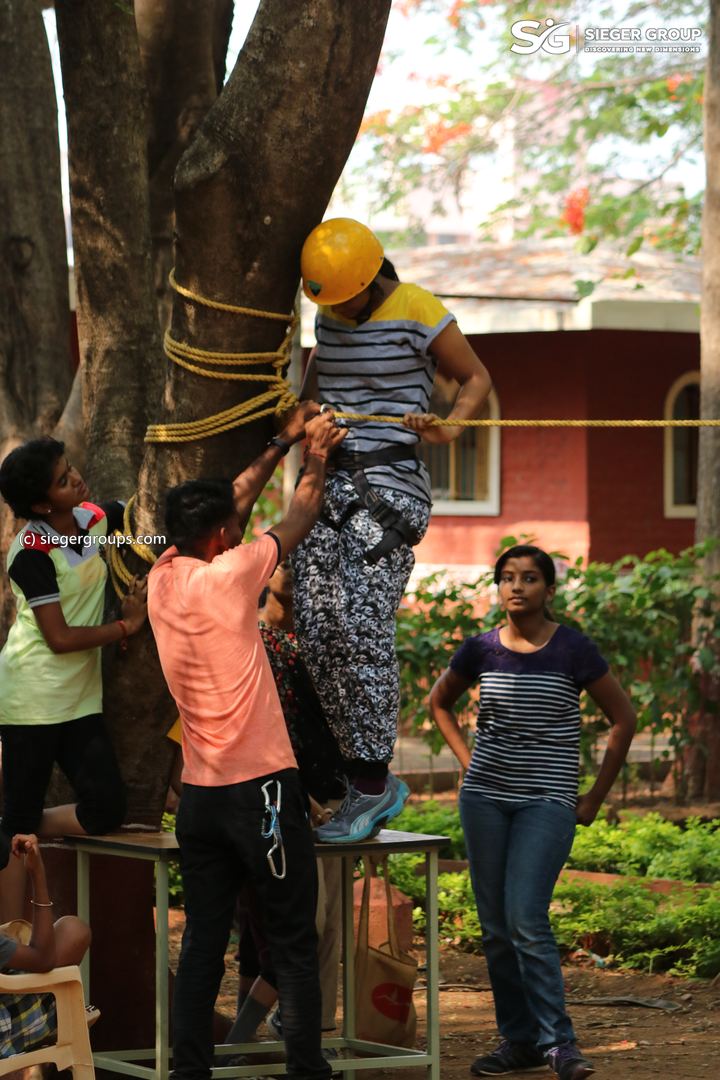
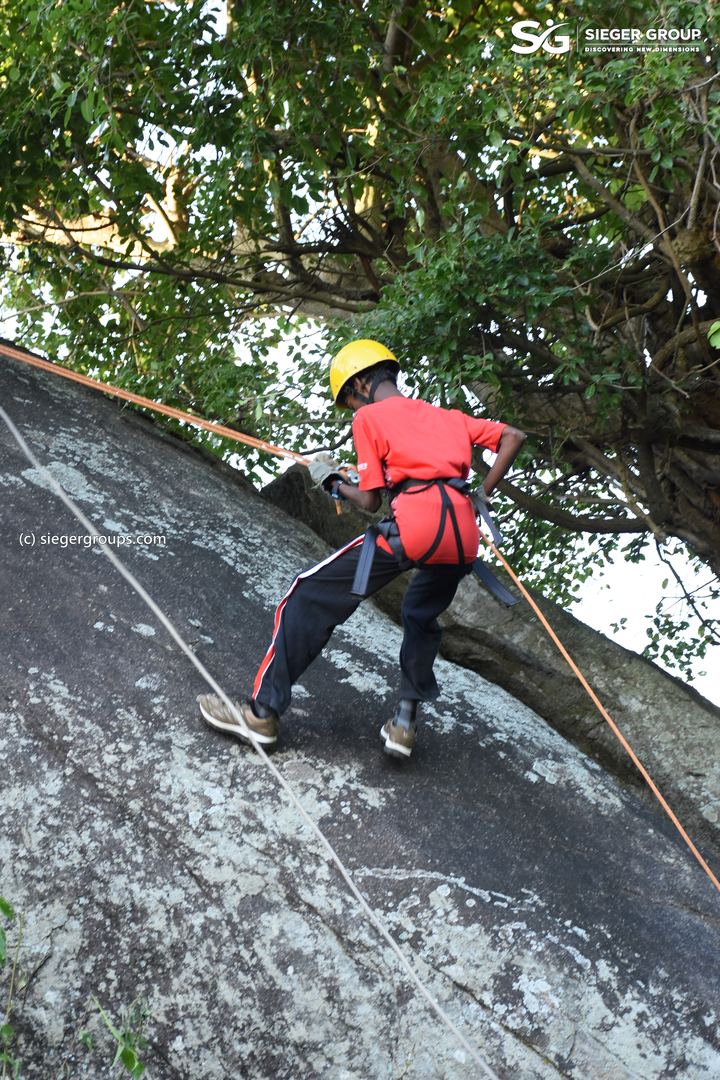
Explore the selected inclined-log element under the course provider’s briefing and review how preparation, focus and encouragement shaped the participant’s approach to the crossing.
Learning focusChoosing a pace · Expressing readiness
A facilitated experience, designed around your team.
Create a shared experience of focus, confidence and encouragement through a facilitated high-rope programme. Explore a selection of elevated challenges, then agree a course suited to your participants, venue and intended outcomes.
An inclined log, a two-line bridge and a partner climb each ask something different of a participant. Use these six examples to discuss which installed elements, participation choices and ground roles fit your group.
Explore the selected inclined-log element under the course provider’s briefing and review how preparation, focus and encouragement shaped the participant’s approach to the crossing.
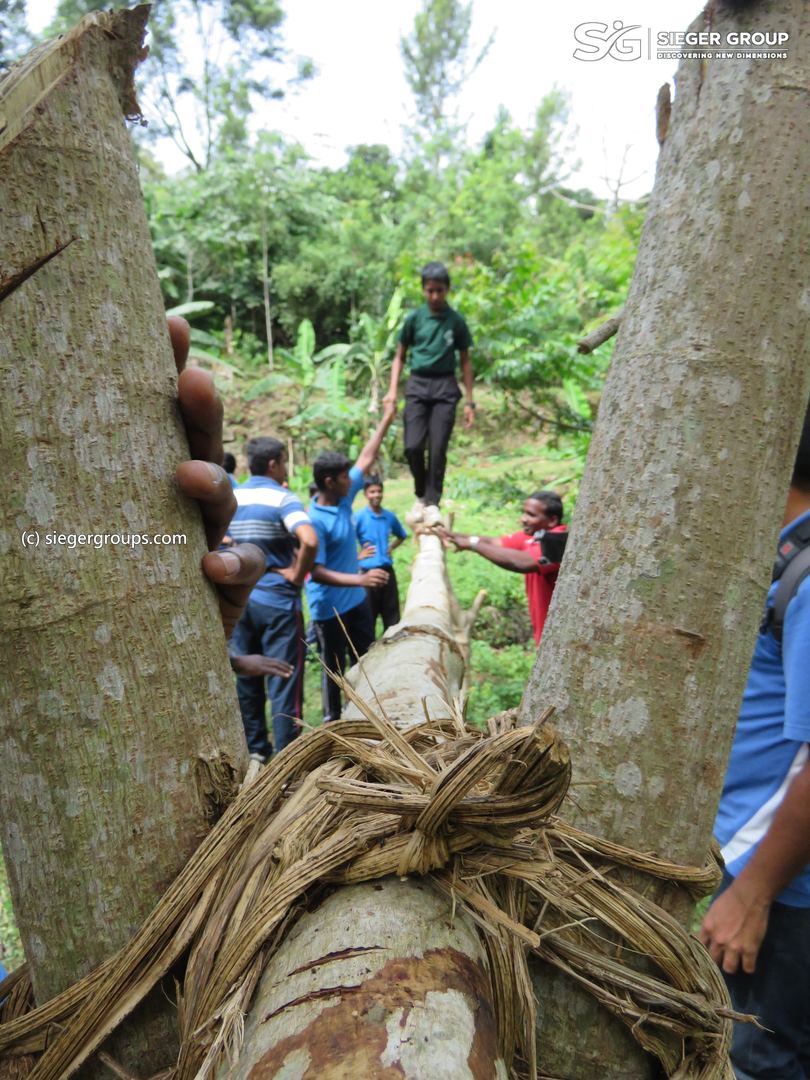
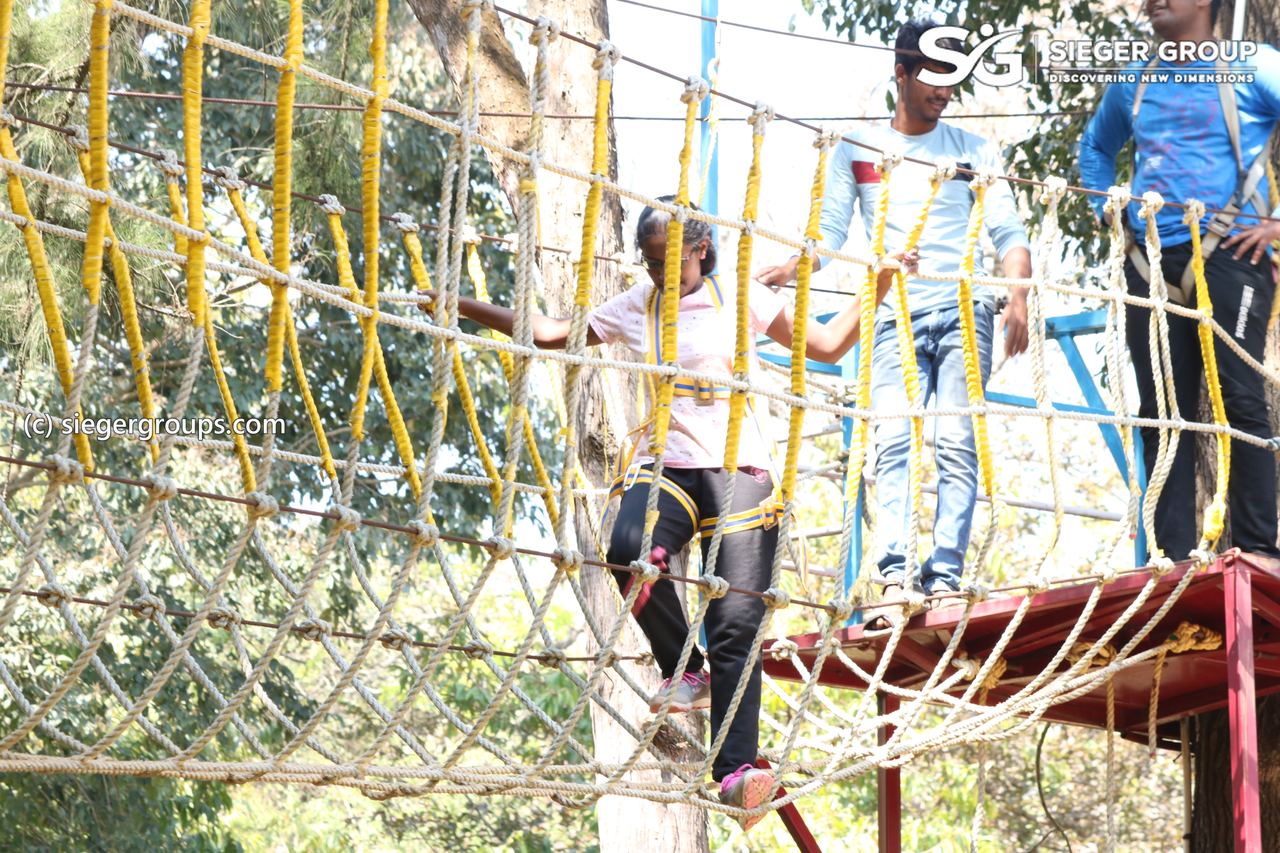
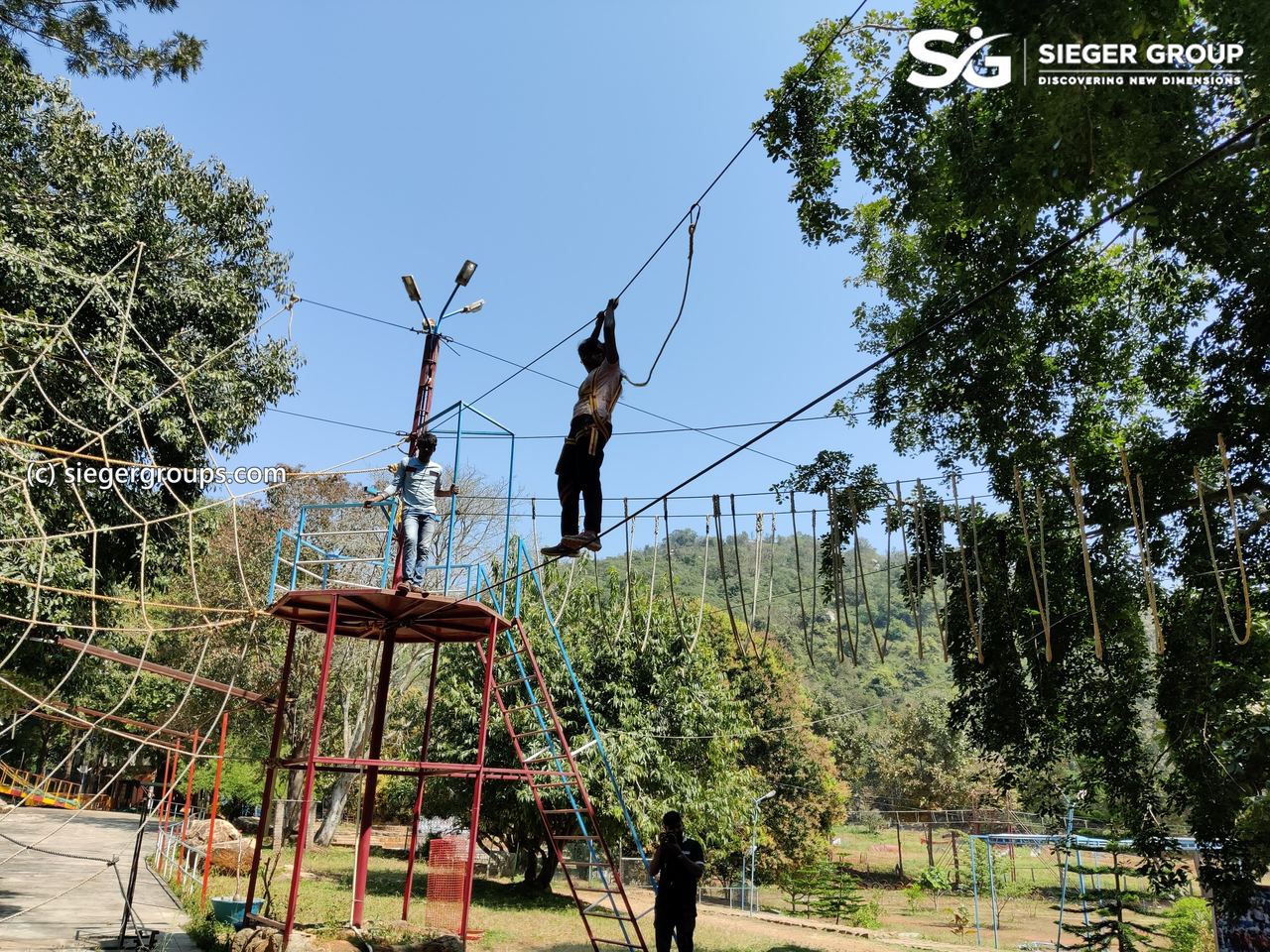
Consider how a participant approaches the selected two-line crossing while teammates observe the communication and encouragement that help without taking over the individual’s own decision.
Most people can walk on the beam easily without holding the belay rope, however, the perceived ability is usually much lower than the actual ability to walk the beam.
This element proves to be the most entertaining of all. The High Wild Woozy presents an excellent visual dichotomy between perceived risk and the supported activity environment.
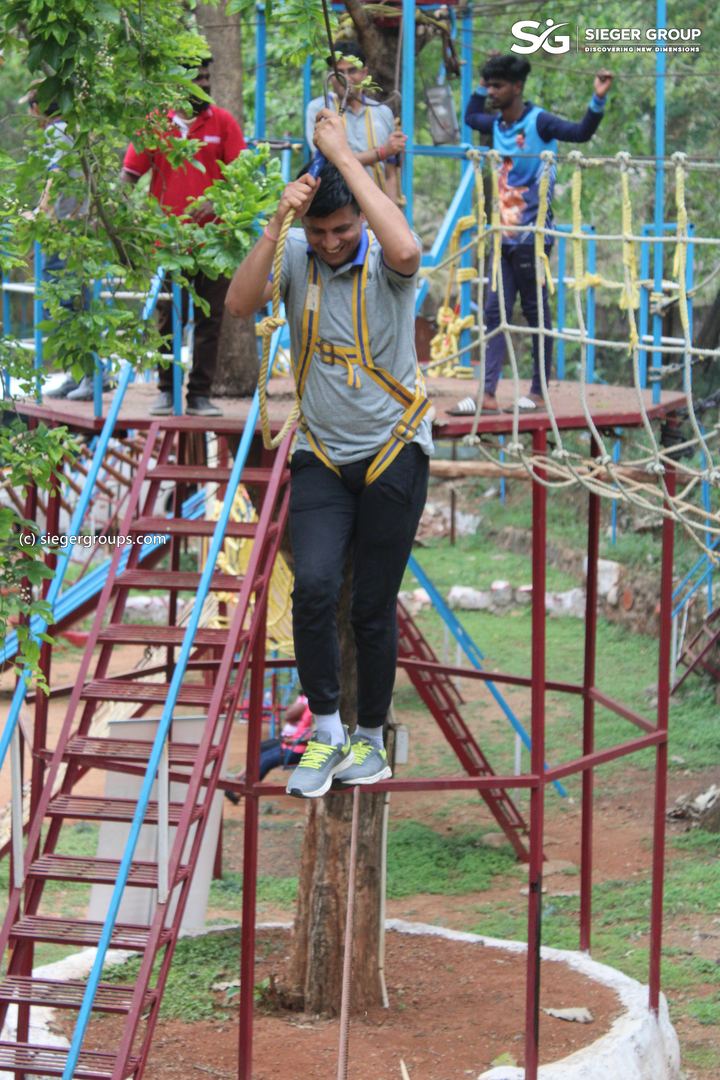
Explore the agreed partner element and discuss how two participants coordinate movement, communicate changing needs and adapt their approach while following the course provider’s operating guidance.
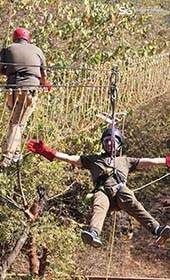
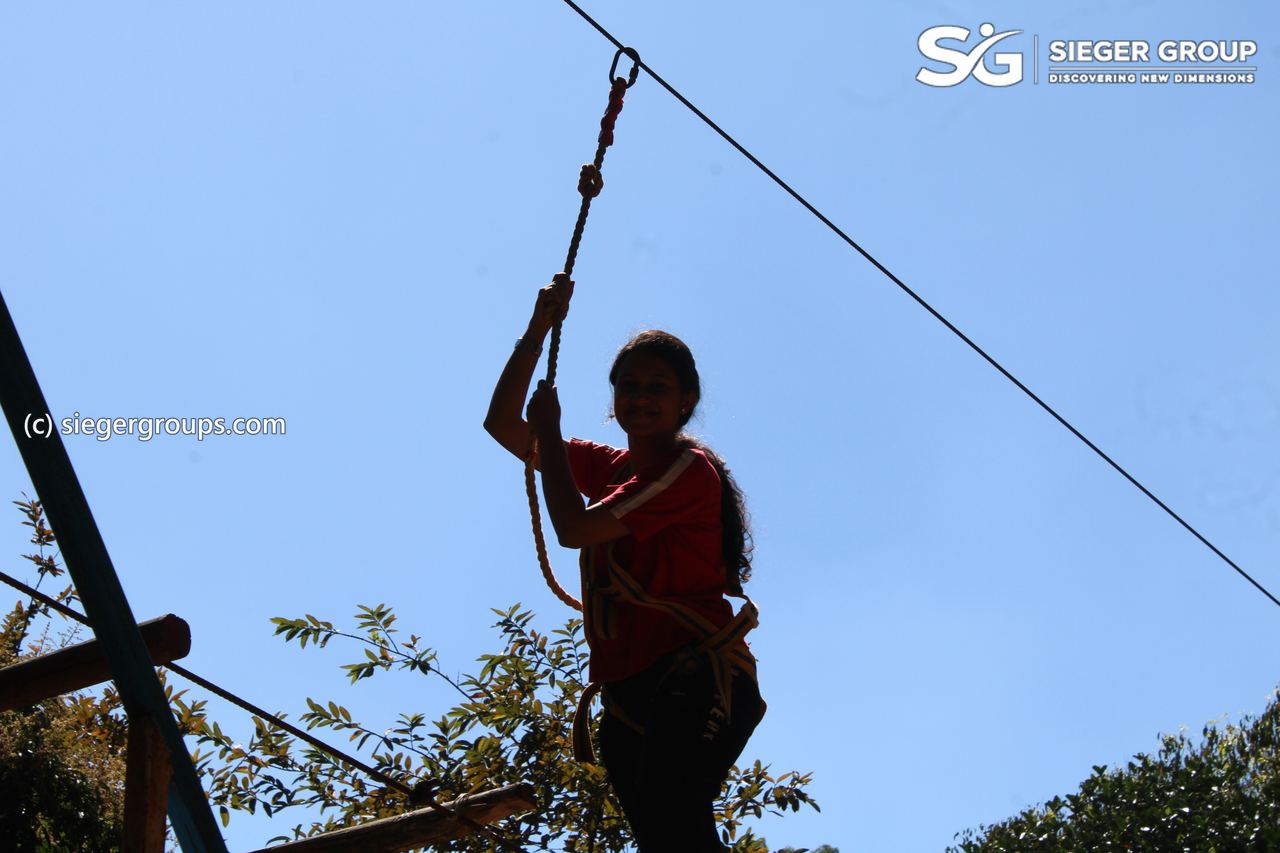
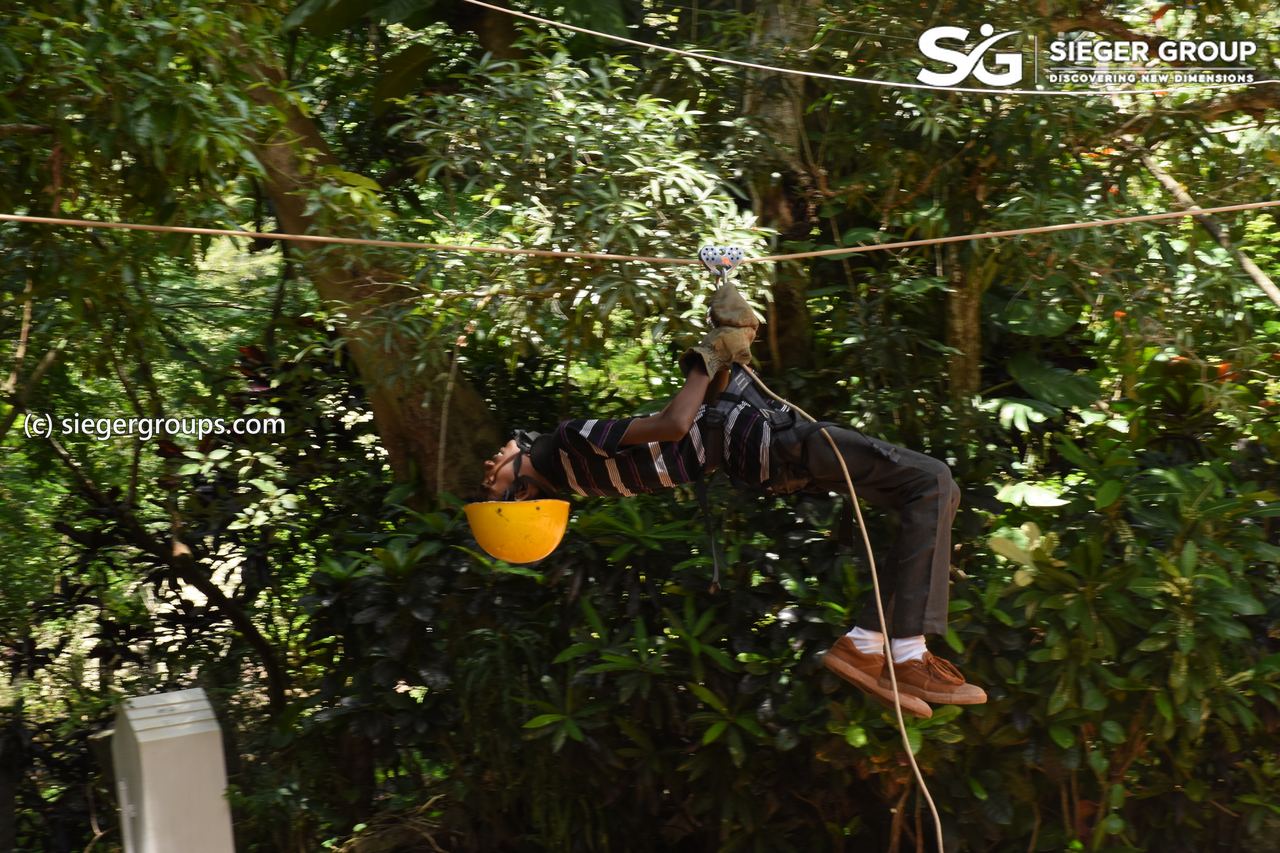
A Zip Wire is constructed as a single cable between two trees or poles which participants slide down with the use of a pulley attached to the participant's harness. It is one of the most highlighted elements in a high challenge course program and is used as a tower exit element.
Choose a crossing by its demands on balance, attention and communication. The briefing for the installed course determines how each element is experienced.
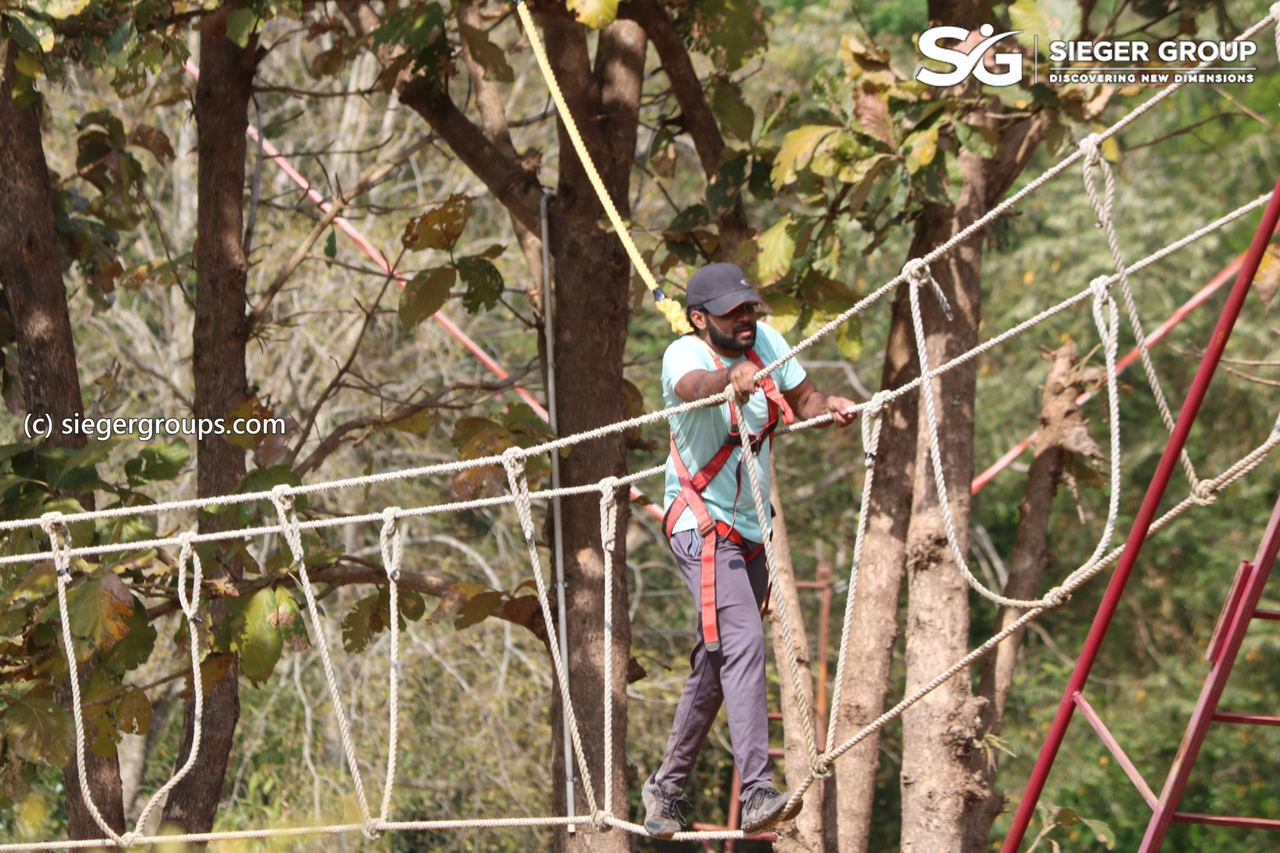
The Burma Bridge stands out as the easiest high element physically and mentally. It is constructed with a foot cable and a cable for each hand.
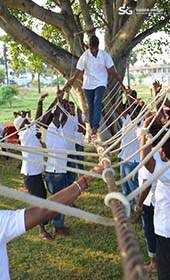
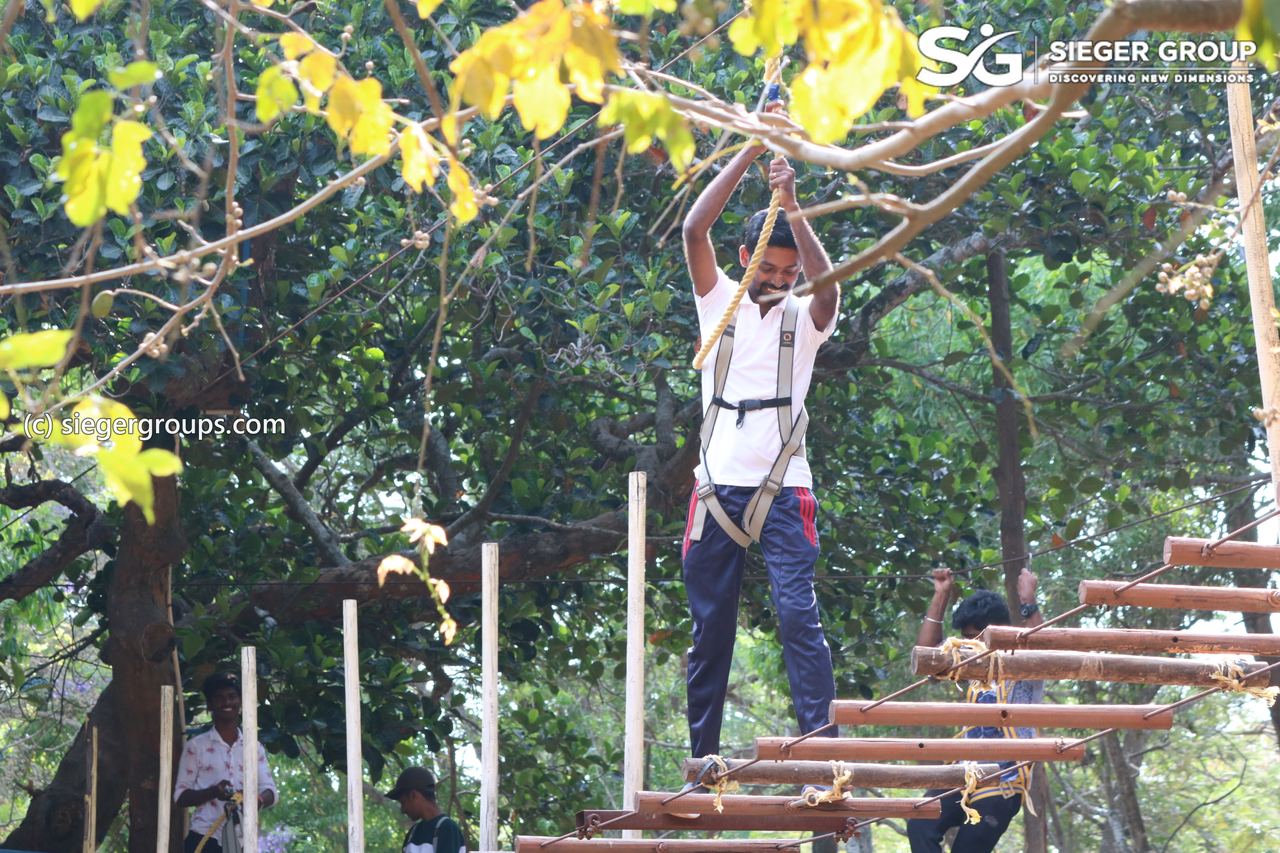
The selected course element uses parallel foot cables as part of a facilitated traverse. Participants follow the course briefing and agreed participation arrangements, while teammates observe communication and encouragement. The review explores focus, asking for support and responding to an unfamiliar task.
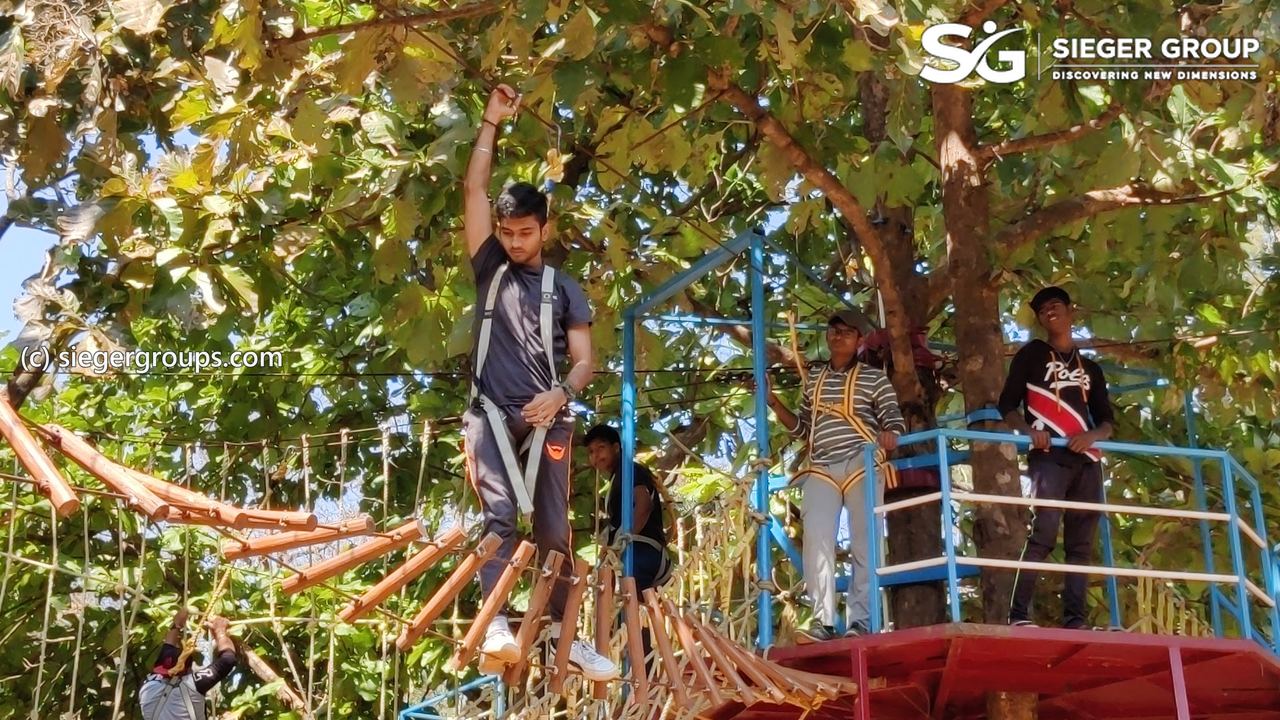
This element has two foot cables that are attached together by small boards. These boards are spaced at various lengths from each other and the participant must walk across them. This becomes difficult because some of the boards can move and the whole bridge swings, making balance difficult.
Ever tried walking along a rope just above the ground without falling off? Could you do it at height? This element requires you to do just that. Simply climb up a ladder onto the rope and walk from one end to the other.
Higher still and above the Balance Beam this elements requires you to traverse a cable from one end to the other using only the cable for your feet and a head high rope for your hands. Just don't lean too far back!
A fun activity for all age groups. Your group builds a raft using ropes and other equipment to get your team across the canal. The task is to get your team across the canal without getting wet!! Why not try it and see how many of your team stay dry.
A ladder with a difference. Laid horizontally makes climbing a ladder a doddle! No hands and only 10 feet off the ground!
The Three Line Bridge takes the high ropes course visitor from 20 feet up to 30 in just a few steps. On your way up you pass over the tops of cedar trees and all of your team mates below. All of our guests go through detailed instructions on the safety equipment we use.
These elements vary the support underfoot or within reach. Participants and observers can compare how they communicate a change in pace.
The Multivine provides participants with the challenge of balance, concentration, and focus. The participant traverses the foot cable with the use of dangling ropes to grasp as they move.
Two crossed wires are connected to a horizontal cable. The crossed cables are for holding and the horizontal cable is for traversing.
Use the selected paired beam challenge as a starting point for discussing balance between shared planning, clear signals and responsiveness to another person’s experience during the task.
Can you pull and stand up on top of the beam ? If only it was a short distance off the ground, but it’s not, it’s 40ft high!
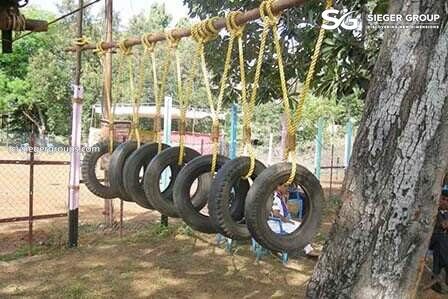
Swings that are not to sit on but to stand on! all you need to do is to cross the gap by stepping from Swing to swing! Sounds simple? We’ll see!
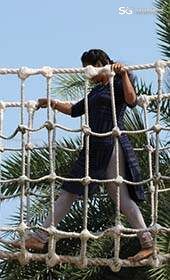
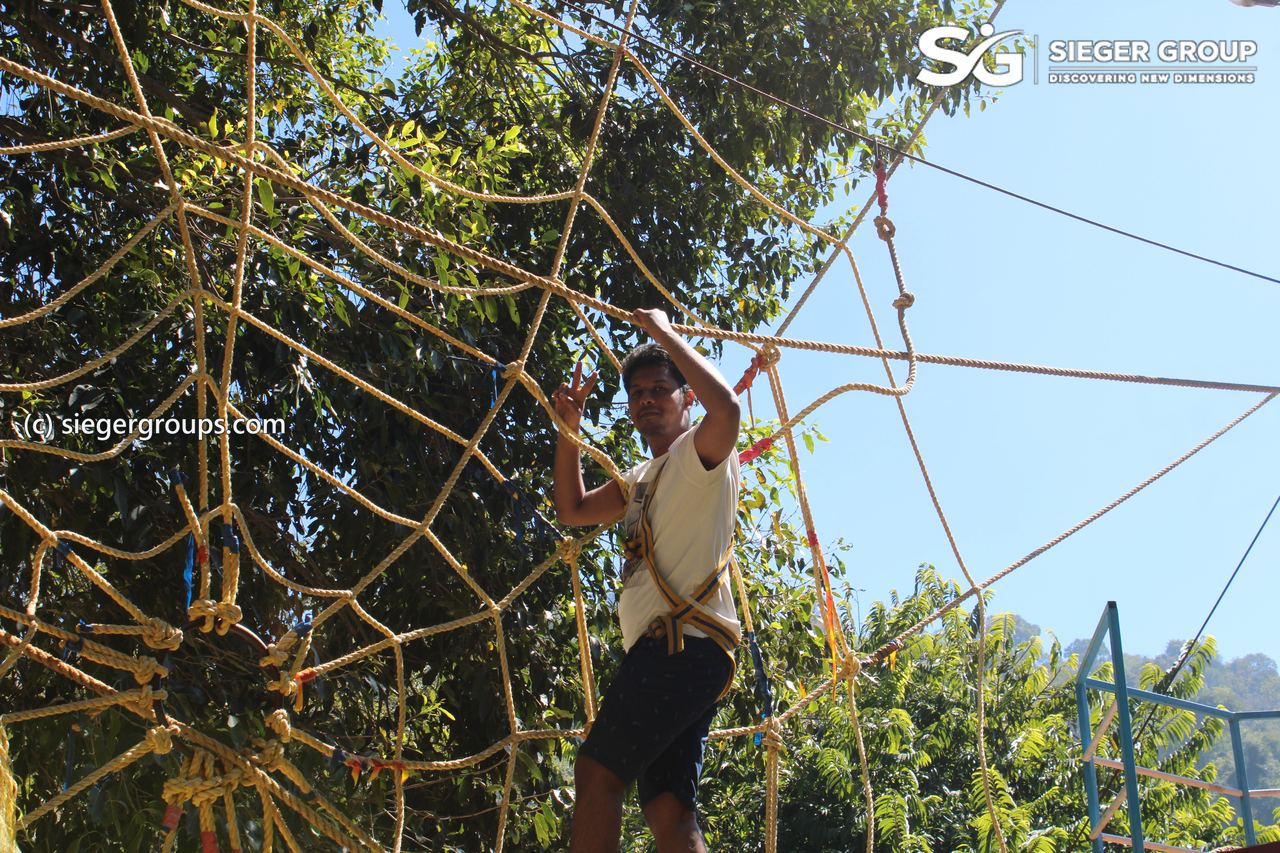
Crossing ropes form the distinctive pattern of this selected course element. Within the facilitator’s instructions, participants consider how to approach the task and communicate their needs. Colleagues can reflect on concentration, coordination and the value of useful encouragement during an unfamiliar challenge.
If height's are not a problem then this is for you! Trying to hold on to those vines while you cross the divide is not as easy as you think!
This is a great individual activity (although it can be done in pairs), get yourself into a knot, no fear of heights required. This element is a great filler activity while participants are waiting for other elements on the High Ropes Course.
Above the Balance Beam and Postman's Walk, this crossing requires you to walk along another cable with only the help of the rope vines hanging down for you to hold on to. Rather annoyingly however they are a full arm span apart and more than a little unstable!
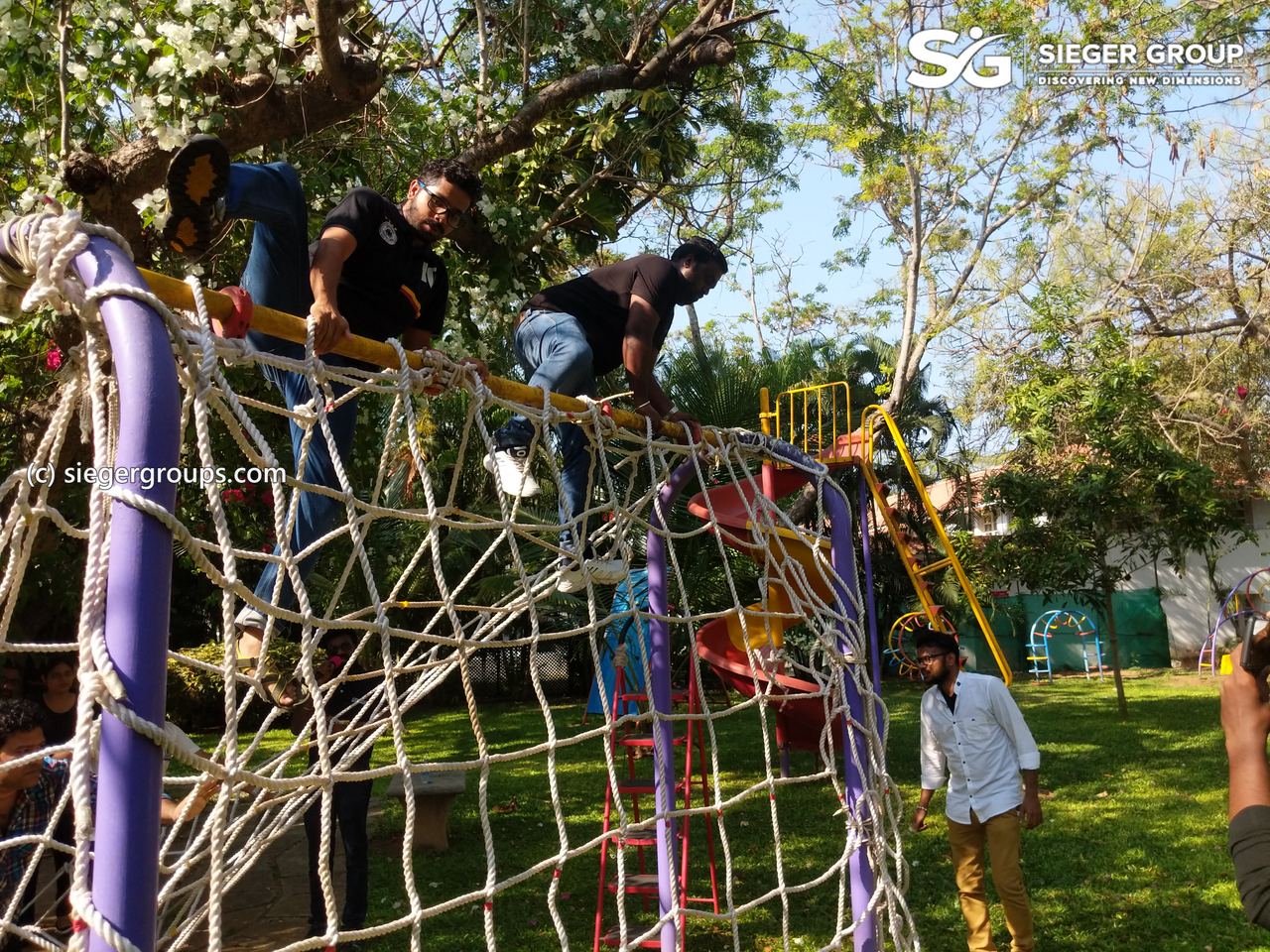
Discuss the installed climbing options with the course team and agree how colleagues on the ground will support the participant taking a turn.
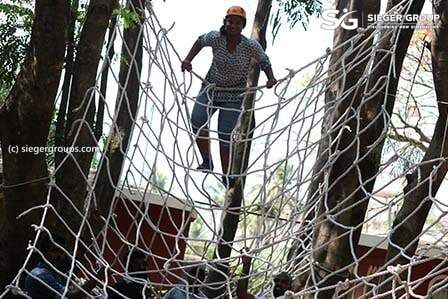
An excellent high element for all ages and abilities. The Cargo Net is challenging but has so many options for climbing. Unlike a Rock Wall, you always have a hand hold and a foot hold which makes it simpler, but no less of a challenge.
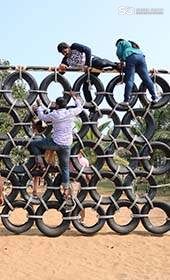
This combination climbing apparatus includes rock climbing holds, cargo nets, suspended tires, and ladders. It is a physically challenging as well as a visually interesting addition to your course.
Working as a team you need to try and climb the Jacobs Ladder. The higher you climb, the further apart the rungs become. With up to 4 people on the ladder at a time you'll end up in some positions that you didn't think possible.
The challenge is to build a tower of crates while climbing as high as possible with. Get your group as high as they can by collaboratively working as a whole team through organised stacking, climbing & rope work.
Climb up the 10 meter high pole using removable pegs and rungs until you reach the small platform at the top. Then try and stand up!!! The only problem is that the higher you climb, the more wobbly the pole becomes!
This side of the tower provides a great abseiling wall, once over the edge, you’ll be wanting to go backup to the top for more.
Two sides of the 40ft tower have been specially designed to accommodate a wide range of climbing routes from steep sides to a more gentle slope for starting off.
Offer these as individual choices. The review can focus on how a participant signals readiness and how teammates respond to that choice.
In order to exit the element there must be a ladder system to get the participant off the zip tether. There are several ladder options that are acceptable for zip line exit use. These options include a-frame ladders, rolling staircases, and even mechanical lift systems.
The Power Pole usually brings out the height of emotional, mental, and physical challenge. Used often as a culmination activity, the Power Pole provides the ultimate goal for many participants.
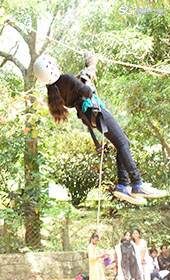
This element is also known as a Breathtaker, Screamer, or a Pendulum Swing. The participant is attached to a cable that is pulled up by their team to the height of their choice. When ready, a release cord is pulled and the participant swings.
Once you’ve climbed the wobbly telegraph pole and mastered standing on the small platform, prepare yourself for a ‘leap of faith’ towards the trapeze bar which swings high above the ground. Not to worry if you miss it; each person is attached to a rope.
Challenge course high elements are challenges experienced by individuals, partners, and groups at a height of ten to forty feet above ground level. Heights above forty feet may be obtained if trees, structures, and taller poles are available.
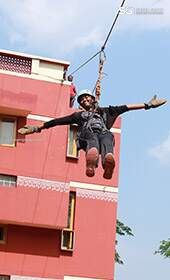
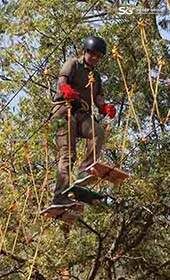
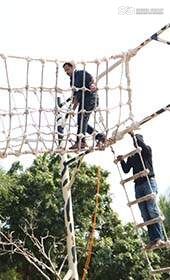
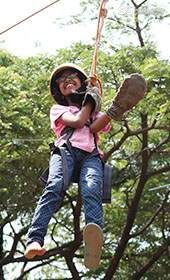
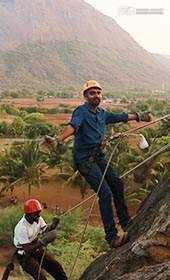
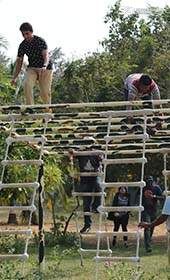
An elevated challenge makes personal choice and team expectation especially visible. Participants can examine how colleagues offer encouragement, communicate clearly and respect different decisions about participation. The review connects those observations with the support people find useful when approaching an unfamiliar responsibility.
Shape your team brief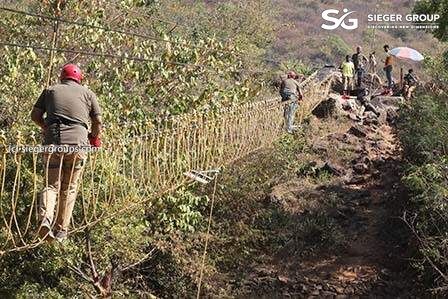
Explore how individual challenge choices and team encouragement interact within an agreed high-rope course. The suggested experience connects practical participation with reflection on the choices, contributions and questions that matter to this group.
Respect individual participation decisions rather than treating height as a universal test. Ask what support a colleague wants before assuming how to encourage them.
Compare supportive communication with pressure that assumes everyone experiences the challenge similarly. Clarify instructions when an unfamiliar task has important participation or operating requirements.
Notice how participants clarify guidance before approaching an unfamiliar course element. Notice whether your language offers choice or creates unnecessary pressure for others.
Communicate changing needs when progress depends on another person’s movement or timing. Use a specific observation to discuss coordination rather than judging someone’s confidence.
Compare expectations before the element with what the participant actually experienced. Compare what you expected from a challenge with what the experience actually showed.
Explore the behaviours and practical insights your team can review through High Rope Courses. The debrief connects observations from the experience with situations that matter to participants.
Respect individual participation decisions rather than treating height as a universal test.
Compare supportive communication with pressure that assumes everyone experiences the challenge similarly.
Notice how participants clarify guidance before approaching an unfamiliar course element.
Communicate changing needs when progress depends on another person’s movement or timing.
Compare expectations before the element with what the participant actually experienced.
Recognise that attentive support and specific observations can contribute beyond direct participation.
Match chosen elements with participant needs and the relevant provider’s operating arrangements.
Use these reflection prompts to turn High Rope Courses into a focused conversation about what happened, what it means and what to try next.
Ask what support a colleague wants before assuming how to encourage them.
Clarify instructions when an unfamiliar task has important participation or operating requirements.
Notice whether your language offers choice or creates unnecessary pressure for others.
Use a specific observation to discuss coordination rather than judging someone’s confidence.
Compare what you expected from a challenge with what the experience actually showed.
Discuss how different participation roles can contribute to a shared work objective.
A suggested flow for High Rope Courses, from setting the brief to reviewing the experience. Activity choices, pace and facilitation are confirmed around your group and setting.
Agree questions to explore about how individual challenge choices and team encouragement interact within an agreed high-rope course. Clarify the audience, participation preferences and suitable activity options before deciding the programme’s focus.
Explore the selected inclined-log element under the course provider’s briefing and review how preparation, focus and encouragement shaped the participant’s approach to the crossing. Explore focus and support as participants test an approach together.
Review moments connected with clear encouragement and partner coordination. Compare what different participants noticed, then discuss which decisions helped the group and which assumptions deserve another look.
Discuss how different participation roles can contribute to a shared work objective. Connect the observation with a relevant working or team situation, choosing a useful action and a point for discussing what happens next.
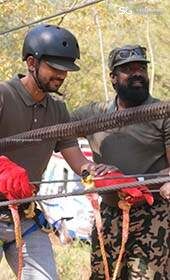
Connect High Rope Courses with purposeful practice, evidence-based reflection and a next step that fits your working context.
Discuss how individual challenge choices and team encouragement interact within an agreed high-rope course. Choose a useful question to explore together during the agreed activity.
Explore focus and support through the selected activity. Observe how participants explain their choices and respond as the task develops around them.
Review clear encouragement through specific examples from the activity. Compare how different participants understood their roles and what they noticed as the task developed.
Connect an observation about partner coordination with a relevant working or team situation. Discuss what the group could keep, reconsider or try differently.
Identify a practical application: discuss how different participation roles can contribute to a shared work objective. Agree when to review the action and what evidence would help.
Discuss participant experience, access needs, language preferences and the purpose of the programme before confirming suitability.
Intact and cross-functional teams interested in focus and support. Inclined Log offers one possible starting point for an agreed group experience.
Managers and emerging leaders exploring clear encouragement. Select a format that fits their responsibilities, working relationships and the purpose of High Rope Courses.
Project teams and newly formed groups bringing different perspectives to partner coordination. Confirm the learning priorities and participation arrangements before choosing the activity mix.
This sample shows how a programme could flow. Timings, breaks, activity choices and duration are agreed in the final proposal.
Introduce High Rope Courses, agree the group’s purpose and discuss participation preferences. Explain the selected formats before the experience begins.
Use a selected version of Inclined Log to explore focus and support. Pause to compare observations and clarify the choices that shaped progress.
Use a selected version of Two Line Bridge to explore clear encouragement. Pause to compare observations and clarify the choices that shaped progress.
Review examples of choice within challenge and attention to instructions. Connect the observations with day-to-day team responsibilities and choose a relevant next conversation.
Share the audience profile, language preferences and access needs for High Rope Courses. Agree options that let different colleagues contribute comfortably.
Confirm the chosen venue, course availability, relevant provider arrangements and participation options for the selected elements. Confirm the final mix of Inclined Log and any other chosen experiences in the brief.
Agree the focus on clear encouragement, the programme duration and which materials, facilitation and delivery arrangements are included.
Choose how to review useful observer contributions and considered programme selection. Confirm any follow-up conversation or team commitment that belongs within the programme scope.
The final activities and setting depend on your agreed brief.
Sieger Group supports organisations with team-building experiences and facilitated programmes.
12 practical answers to help you plan your programme.
Challenge course high elements are challenges experienced by individuals, partners, and groups at a height of ten to forty feet above ground level. Heights above forty feet may be obtained if trees, structures, and taller poles are available.
High Rope Courses can be considered for teams planning a shared experience or employee engagement event. Share roles, group size, experience levels and participation needs so suitability can be confirmed.
The existing programme outline includes: Challenge course high elements are challenges experienced by individuals, partners, and groups at a height of ten to forty feet above ground level. Heights above forty feet may be obtained if trees, structures, and taller poles are available.. The final emphasis and activity selection should be agreed around your brief.
Yes. Share your team context, goals and preferred tone. The proposed High Rope Courses experience can then be adapted through the activity mix, level of challenge, discussion themes and delivery format, subject to feasibility.
Duration depends on the agreed scope, group size and setting. For High Rope Courses, allow for the briefing, activities, breaks and group review. Request a proposed agenda that fits your available time.
Share your preferred city, office, venue or offsite destination in India. High Rope Courses requires a setting suited to the activities and participants. Venue access, usable space, equipment and local delivery arrangements should be confirmed before booking.
The appropriate group size depends on the activity structure, facilitation and available space. Tell us the expected number of participants for High Rope Courses so team sizes, rotations and staffing can be proposed.
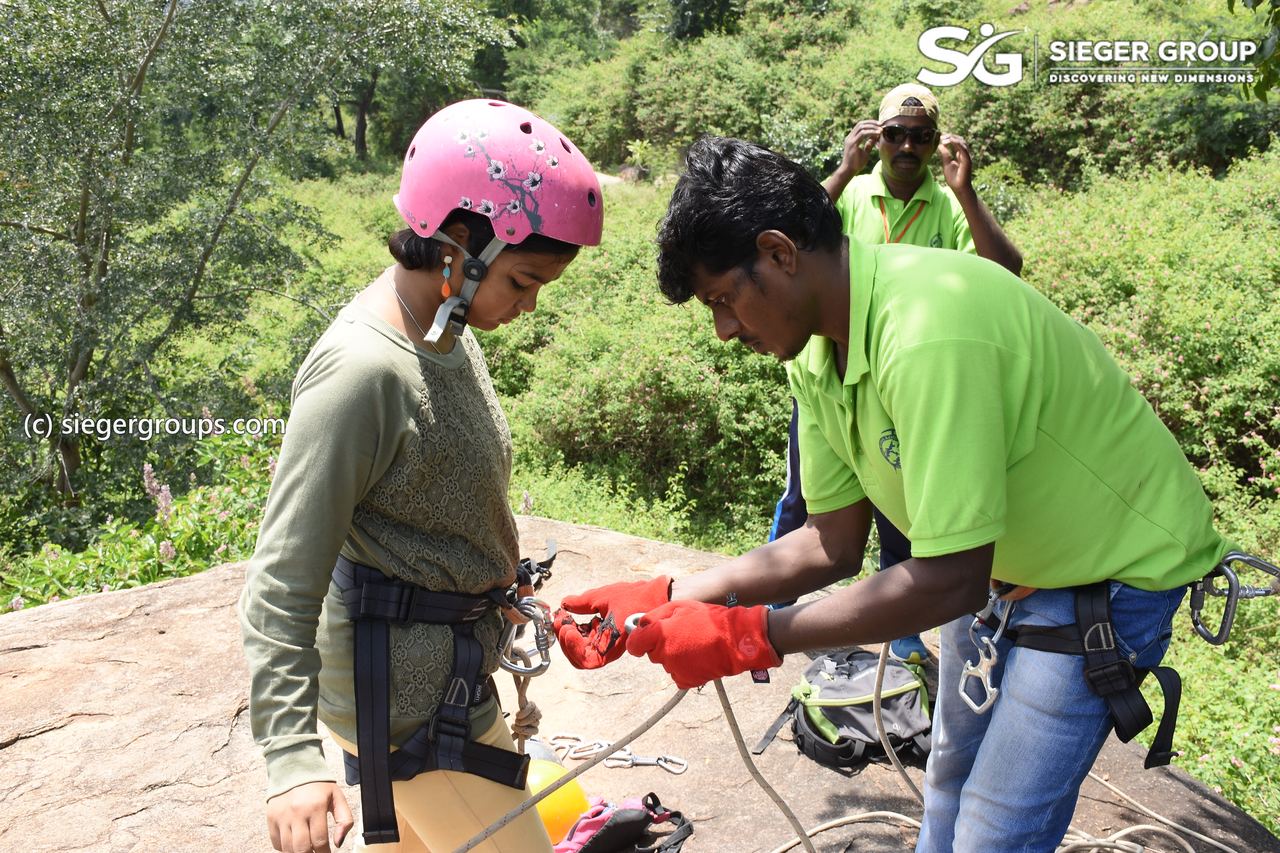
For High Rope Courses, the pre-event briefing should explain the schedule, clothing or equipment requirements and how to take part. Share accessibility needs and relevant participation constraints during planning so suitable arrangements can be discussed.
Discuss access, mobility, language, sensory needs and comfort levels before confirming High Rope Courses. Agree suitable roles and alternatives where feasible. For specialist activities, confirm delivery responsibilities and participation requirements in advance.
Agree the purpose of High Rope Courses before delivery. A group review can explore communication, contribution and teamwork, alongside the shared enjoyment of the event. Confirm any follow-up or evaluation support in the proposal.
Pricing for High Rope Courses depends on participant numbers, duration, facilitation, equipment, location and agreed logistics. Request a tailored proposal that clearly states programme inclusions, venue or travel arrangements and applicable charges.
Use the enquiry form on this page or call +91 98400 97567. Include High Rope Courses, your objectives, group size, preferred dates and location. Sieger Group can then discuss suitability and prepare a proposal for your review.
Share your goals, group size, preferred dates and venue. We’ll help you explore a considered programme.
Tell us what you have in mind. We will help you explore a programme that fits your people and your occasion.
Still finalising the details? Share what you know.
Every team is different. Share your people, purpose and preferred setting, and we’ll translate your brief into an experience designed to connect, engage and create lasting impact.
Share your brief and preferred contact details.